An inverter power source can reduce equipment weight, improve arc response and support controlled welding programs, but those advantages do not make a machine aerospace-qualified. You will be able to judge the investment by matching the source, process, quality controls and total cell cost to a specific aerospace part and approved welding procedure.
Key takeaways
- Choose an inverter when heat control and repeatability improve measurable production results.
- Match MIG, TIG or pulsed transfer to the alloy, thickness and joint design.
- Specify the robot, torch, shielding gas, fixturing and monitoring with the power source.
- Require procedure qualification, gas verification and weld traceability before production release.
When an inverter earns its place in aerospace production
Is a welding machine inverter worth it for aerospace production in Ahilya Nagar? Only when it delivers a measurable production gain, not merely a lower electricity bill. Its fast electronic response improves heat-input control and transfer stability, while a compact power source can reduce floor space and operator fatigue.
The industrial MIG welder benefits matter most on repeatable joints using pulsed or synergic programs.
Look for measurable gains in:
- Lower energy use at the required duty cycle, rather than the no-load figure on the brochure.
- Reduced spatter, rework or takt time through more stable arc control.
- Easier movement between workstations without sacrificing the specified output.
Local support affects the business case. Confirm certified calibration, approved consumables, shielding-gas quality, spare parts and repair response in or near Ahilya Nagar; a low purchase price loses value when every fault stops production until equipment travels to another city.
Maintenance and qualification still carry a cost. Protect the electronics from dust and unstable power, keep cooling and wire-feeding systems serviced, and budget for procedure trials, operator qualification and inspection records. The inverter is not aerospace-qualified by itself.
ISO 3834 helps assess welding controls, but it does not approve an aerospace part. Customer requirements such as AWS D17.1 or Nadcap remain separate obligations, and FAA AC 43.13-1B is repair guidance rather than blanket production approval. Buy the inverter only after a specific qualified cell shows savings in energy, rework or cycle time.
Match the process to the alloy, thickness and joint
The alloy, section thickness and joint access should decide the process, not the inverter’s advertised duty cycle. TIG suits thin aluminium, stainless steel and nickel-alloy sheet, tube, butt joints and critical fillet joints where root appearance, heat input and distortion require close control.
| Process | Suitable aerospace work | Main limitation |
|---|---|---|
| TIG (GTAW) | Thin sheet, tubing, precision butt joints, root passes, aluminium and nickel alloys | Slower deposition and high operator skill |
| MIG (GMAW) | Medium-thickness aluminium, stainless steel and nickel-alloy brackets, lap joints, fillets and repetitive assemblies | Less forgiving of gaps, contamination and shielding loss |
| ARC (SMAW) | Carbon-steel tooling, repair work and robust non-flight hardware with accessible joints | Poor fit for thin sheet, clean production and tight visual requirements |
MIG welding equipment for aerospace earns its place when the approved procedure supports GMAW and production benefits from repeatable deposition. A pulsed waveform can control heat input on aluminium and reduce spatter, but it does not make every thin or flight-critical joint suitable for MIG.
Choose TIG when you need a controlled root, a narrow heat-affected zone or a clean visible weld on thin material. A small gap, poor torch angle or excessive travel speed can still produce lack of fusion or burn-through.
Use ARC equipment selectively. It belongs more often on fixtures, tooling and maintenance work than on primary aerospace structures, where slag removal, spatter and variable arc control complicate inspection and qualification.
Before selecting an inverter welding machine aerospace manufacturing cell, map each weld to:
- alloy and thickness
- joint type and access
- required deposition rate
- approved procedure and inspection method
Specify the complete welding cell, not only the power source
An inverter becomes repeatable aerospace welding equipment only when it is specified as a controlled cell: power source, feeding, fixturing, shielding, motion, monitoring and inspection must work as one qualified process.
1. Pair the source with a matched wire feeder, torch, contact-tip system and approved consumables. For TIG, specify the torch, tungsten preparation method, high-frequency start and remote amperage control; for MIG, lock the feeder settings and waveform program.
2. Install a regulated shielding-gas system with cylinder or bulk supply, two-stage regulator, flowmeter, solenoid, purge lines and gas-flow verification. Add a water cooler when torch duty or current demands it. Poor flow, leaks or contaminated lines can ruin an otherwise sound weld.
3. Use rigid fixtures and a positioner that control joint gap, torch angle and travel speed. Add seam tracking or laser sensing when joint variation exceeds the operator’s ability to correct it. Integrate the positioner, feeder and inverter so the cell records the selected program and motion parameters together.
4. Provide local fume extraction without disturbing shielding gas, plus guarding, interlocks and a qualified control interface. Include calibration checks for current, voltage, wire-feed speed and gas flow at the intervals required by your quality system.
5. Connect weld identification to the part, operator, consumable lot and program or waveform. Retain current, voltage, travel speed, gas details and inspection results against that traceability record, then qualify the complete cell to AWS D17.1/D17.1M, customer requirements and the approved welding procedure—not to the inverter’s duty-cycle label alone.
Build qualification, gas control and traceability into the decision
A smooth bead is not proof of an acceptable aerospace weld. Before approving an inverter welding machine for aerospace manufacturing, establish the qualified procedure, approved consumables, qualified personnel, inspection route and part traceability required by AWS D17.1/D17.1M, the customer and the aircraft or engine manufacturer.
- Procedure qualification records showing the alloy, thickness, joint design, filler metal, shielding gas, preheat and post-weld treatment
- Welder or operator qualification records tied to the process and position used
- Inspection results, including visual examination and the specified radiographic, ultrasonic, dye-penetrant or destructive tests
- Calibration records for the power source, wire feeder, gas flowmeter and monitoring equipment
- Production data identifying the program or waveform, current, voltage, wire-feed speed, travel speed and operator
- Traceability linking the weld to the part number, weld location, consumable lot, shielding-gas certificate and inspection report
Gas control deserves its own acceptance check. Verify cylinder identification, gas grade, regulator condition, flow, purge settings and leak-test results; unstable shielding can create porosity that a visually clean surface hides.
The applicable revision of D17.1 is not replaced by FAA AC 43.13-1B, which provides maintenance and repair guidance rather than blanket approval for new production structures. For aerospace welding equipment, select an inverter only when it supports these records, calibrated controls and the approved procedure; otherwise its efficiency becomes qualification cost, not production capability.
A practical buying test for an aerospace production line
Run one representative joint through every serious option before approving capital expenditure. Lock the alloy, thickness, joint access, filler, shielding gas, deposition target and inspection method first; otherwise a faster process can win by changing the test. Record arc-on time, electricity, wire or flux consumption, operator minutes, rework, distortion and qualification hours.
| Option | Compare on the line | Choose it when |
|---|---|---|
| Transformer-rectifier | Rugged, familiar, heavy, slower response and less waveform control | Existing procedures already qualify it and portability or pulsing adds no value |
| Inverter | Fast response, lower mass, controllable waveform, pulsed or synergic programs; verify serviceability and calibration | Heat input, thin-section control, operator fatigue or energy use materially affect the qualified cell |
| Robotic pulsed MIG | Adds travel consistency, torch positioning and repeatability; requires programming, fixturing and integration | Repeated aluminium or stainless assemblies justify automation and cycle-volume savings |
| Submerged arc | High deposition on accessible joints, but flux handling and limited visibility restrict application | Thick, long, mostly flat structural welds outweigh setup and cleanup effort |
The industrial MIG welder benefits matter only if the production procedure uses them. Compare the complete cell, not the power source, against AWS D17.1/D17.1M, customer specifications and your approval route. Include calibration, consumables, gas quality, spares and response time in Ahilya Nagar.
ATE WELDING ENGINEERING ROBOTICS AND AUTOMATION PRIVATE LIMITED is relevant to that comparison when it can help integrate process equipment with robotic positioning or inspection rather than simply quote an amp rating.
Related products
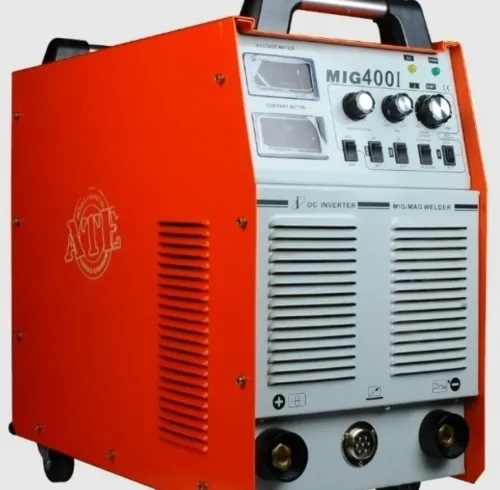
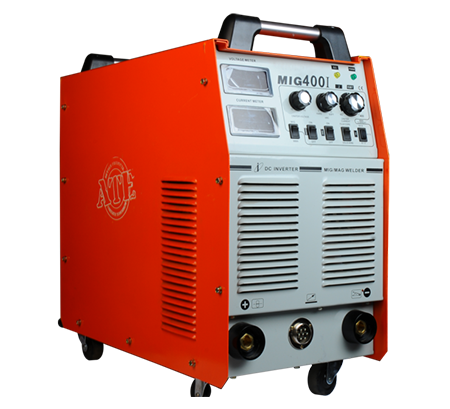 | MIG Welding Machine High-Speed and Versatile Welding Solutions At ATE Welding Engineering & Robotic Automation, we offer advanced MIG (Metal Inert Gas) welding machines... View product → |
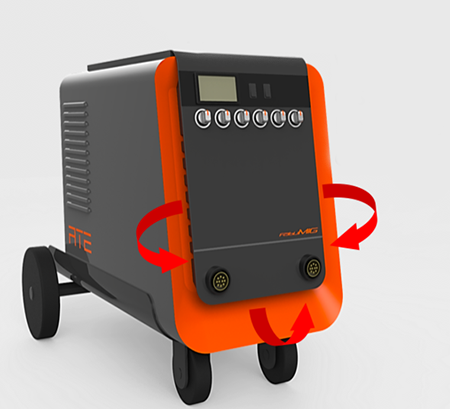 | ARC Welding Machine Precision, Efficiency, and Reliability At ATE Welding Engineering & Robotic Automation, we provide high-performance ARC welding machines designed for... View product → |
Frequently asked questions
When is an inverter welding machine worth using in aerospace manufacturing?
It earns its place when faster electronic response, stable transfer and controlled heat input improve quality, cycle time or operator ergonomics.
How do you choose aerospace welding equipment for a specific joint?
Match the welding process and transfer mode to the alloy, material thickness, joint geometry and required heat input.
What should you specify besides the inverter power source?
Specify the complete welding cell, including the robot or positioner, torch, wire feeder, shielding-gas system, fixturing, cooling and process monitoring.
What qualification and traceability controls belong in the purchase decision?
Build in approved welding procedures, welder or operator qualification, gas-flow verification, parameter control, consumable identification and weld records.
Related product
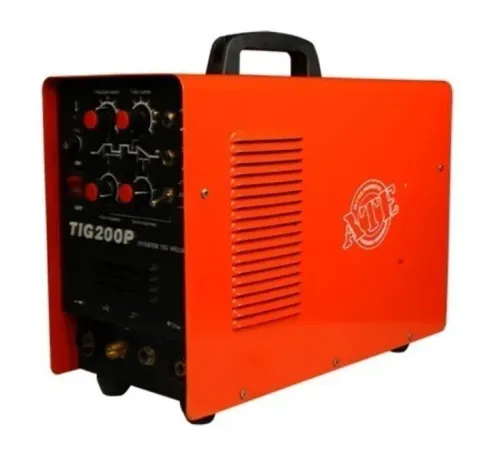
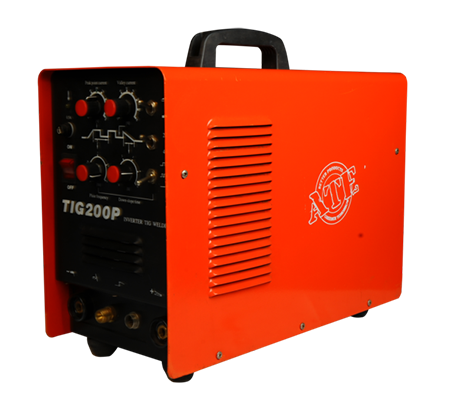 | TIG Welding Machine Precision and High-Quality Welding At ATE Welding Engineering & Robotic Automation, we specialize in TIG (Tungsten Inert Gas) welding machines,... View product → |