A 300 A nameplate does not tell you whether an inverter can weld 0.8 mm galvanised sheet, feed soft aluminium wire, or sustain production output at its stated duty cycle. By the end, you will have a specification checklist for comparing process modes, material fit, electrical requirements, cooling, automation interfaces, and supplier support.
Key takeaways
- Request stable minimum current, not only the inverter’s maximum amperage.
- Match transfer modes and wire sizes to sheet thickness and joint design.
- Check TIG pulse, AC/DC output, and control range for component materials.
- Specify duty cycle, input power, cooling, and interface needs before purchase.
Which core specifications define an automotive MIG-TIG inverter?
A 300 A rating does not prove that a machine suits automotive sheet. Request the minimum stable current, arc stability at low output, supported wire sizes, and control modes before comparing any mig tig welder inverter. A complete “mig tig for welder inverter specifications automotive” brief must separate process capability from accessories and marketing labels.
Ask each supplier to state:
- MIG/MAG current range, voltage range, wire-feed speed, wire diameters, polarity, open-circuit voltage, short-circuit, spray-transfer and pulse-MIG modes
- TIG current range, DC or AC/DC output, lift-arc or high-frequency start, tungsten diameters, pulse controls, pre-flow, post-flow, upslope, downslope, and crater or end-current settings
- Duty cycle at a stated output and ambient temperature, such as 60% at 40°C; reject a rating that omits either figure
- Input voltage, phase, frequency, maximum input current, generator compatibility, cooling method, enclosure rating, and thermal protection
- Shielding-gas types, regulator and flow requirements, wire programs, material coverage, torch and feeder specifications, and consumable identification
- Calibration or verification method, parameter storage, current-and-voltage logging, service response, and available procedure data
| Process capability | What to request | Why it matters |
|---|---|---|
| Manual MIG/MAG | Feeder range, torch rating, arc modes | Determines sheet-metal control and operator reach |
| DC TIG | HF start, pulse, gas timing, foot or remote control | Supports clean stainless-steel and repair welds |
| AC/DC TIG | AC frequency, balance, and amplitude control | Required for controlled aluminium welding |
| Robotic operation | Fieldbus or robot interface, burnback, crater fill, collision protection, traceability | A remote socket alone does not make the machine production-ready |
ISO 3834 can structure welding-quality controls, but customer-specific procedure qualification still decides acceptance.
How do duty cycle, transfer modes, and low-current control affect automotive welds?
A 300 A rating does not prove that a machine will weld automotive sheet successfully. Check the minimum stable MIG current, 0.6–0.8 mm wire support, wire-feed stability, and arc-control settings; an inverter that becomes erratic at low output will burn through thin panels and leave inconsistent starts.
Duty cycle tells you whether production can continue without thermal cut-out. A rating of 60% at 40°C means six minutes of welding within a 10-minute period at the stated output, followed by four minutes of cooling. Reject comparisons that omit test temperature or welding current.
Confirm the rating for the actual torch, wire size, and output you will use.
Transfer mode determines heat, penetration, and spatter:
| Mode | What it does | Best fit |
|---|---|---|
| Short-circuit | Transfers droplets at low voltage and heat input | 0.6–0.8 mm wire, thin panels, joints needing controlled penetration |
| Spray | Produces a continuous droplet stream with higher current and heat | 0.9–1.2 mm wire, thicker chassis and structural parts |
| Pulse-MIG | Controls droplet transfer with lower average heat than conventional spray | Aluminium and thin high-strength steel where spatter and distortion matter |
For a MIG TIG welding machine automotive package, request the pulse programs, wire-and-gas combinations, and qualification records rather than accepting “pulse” as a complete specification. Check low-current TIG stability separately, plus crater-fill and burnback control for repeated welds. A stable feeder, correct drive rolls, liner, and contact tip matter as much as the power source.
What TIG and material specifications match automotive components?
Mild steel and galvanised bodywork suit short-circuit MIG with 0.6–0.8 mm solid wire; aluminium needs AC/DC TIG or pulsed MIG; stainless steel needs controlled DC TIG or MIG with compatible gas and wire. Thin sheet demands stable low-current control, not simply a high maximum amperage.
| Material | Suitable MIG configuration | Suitable TIG configuration |
|---|---|---|
| Mild steel | Short-circuit MIG, 0.6–0.8 mm wire, Ar/CO₂ mix; 0.9–1.2 mm for heavier sections | DC TIG for repairs and visible joints |
| Galvanised steel | Short-circuit or pulsed MIG with steel wire and qualified gas settings; remove coating where required | DC TIG only after coating removal and fume controls |
| Stainless steel | Short-circuit or pulse MIG with stainless wire and an approved shielding-gas mix | DC TIG with HF start, post-flow and pulse control |
| Aluminium | Pulsed MIG with a spool or push-pull feeder, aluminium liner and argon | AC/DC TIG with HF start and appropriate balance control |
| High-strength steel | Pulsed MIG reduces spatter and heat input; qualify wire, gas and procedure | DC TIG for controlled, low-volume precision work |
| Thin sheet | Stable short-circuit MIG, minimum-current data and 0.6–0.8 mm wire; pulse helps control heat | DC TIG with pulse, downslope and crater current |
For tig welder automotive specifications, request DC or AC/DC capability, HF start, current range, pulse frequency or current control, pre- and post-flow, upslope, downslope and crater functions. Do not trust a “one-knob” synergic program until wire type, diameter, gas, polarity and material match your consumables.
Galvanising also requires extraction because zinc fumes contaminate tips, liners and torch parts.
What input power and thermal controls does a supplier shop need?
A 400 A nameplate does not prove that a welding machine inverter for automotive will run in your shop. A 230 V single-phase supply may be inadequate even when the output rating looks suitable; verify the input before approving the purchase.
- Record the available supply: single- or three-phase, nominal voltage, permitted voltage tolerance, frequency, and measured voltage under load.
- Compare that supply with the machine’s maximum effective input current, efficiency, power factor, recommended breaker or fuse size, and input cable requirements.
- Confirm generator compatibility in writing. Check the generator’s continuous kVA, voltage regulation, waveform quality, and whether the manufacturer specifies a minimum generator rating; an undersized set can trip, overheat, or damage inverter electronics.
- Specify cooling type, fan control, coolant flow protection, and thermal shutdown or alarm. Match the rated duty cycle to the required current and stated ambient temperature, not to an unexplained percentage.
- Check protection details: overvoltage, undervoltage, overtemperature, phase loss, surge protection, and automatic restart behaviour after a supply interruption.
- Inspect the enclosure rating and installation limits. Ask for the IP code, operating temperature range, ventilation clearance, dust-filter arrangement, and permitted humidity; conductive metal dust can block airflow and cause tracking.
- For robotic cells, separate the power source from the feeder and control cabinet requirements, then provide clean routing for power, gas, coolant, and signal cables.
Use an air-cooled torch for intermittent low-current work; choose liquid cooling when high current, long arc-on time, or restricted access will overload torch components.
How should you specify an inverter package for manual or robotic production?
A basic dual-process machine becomes production-ready only when the complete package is specified. For a mig tig welding machine automotive installation, define manual or robotic use, material and wire-program coverage, duty-cycle basis, cooling, interface protocol, and service response—not just amperage.
1. Procurement: require MIG/MAG short-circuit, spray and pulse modes, DC-TIG or AC/DC-TIG, minimum stable current, supported wire and tungsten diameters, gas and polarity options, and validated programs for each joint.
2. Data: require repeatable wire-feed speed, arc-start, crater-fill and burnback settings, current and voltage logging, remote parameter access, consumable identification, and calibration or verification records.
3. Torch and feeder: state air- or water-cooling, torch rating at its test temperature and current, neck geometry, cable length, robot mount, collision protection, wire-cut function, liner and contact-tip access, and feeder compatibility. A water-cooled torch handles sustained output but adds coolant maintenance and robot payload.
4. Qualification: prove each program on the customer’s material, coating, thickness and joint, then record weld parameters and inspection results. ISO 3834 supports welding quality control; it does not replace a part-specific qualified procedure.
5. Service: put spare liners, tips, torches, coolant parts and feeder rollers in the supply, with response times, training, software support and preventive-maintenance intervals.
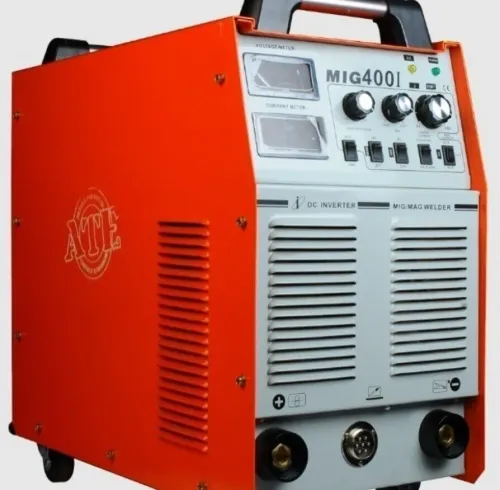
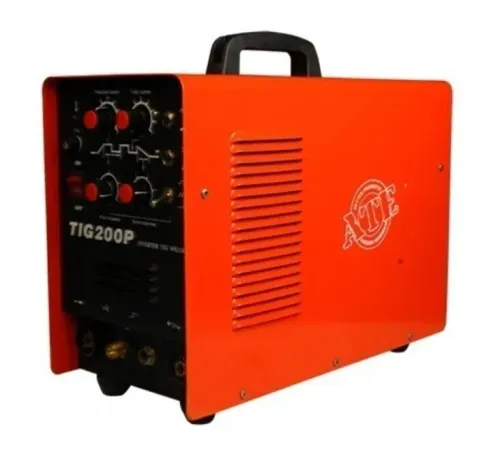
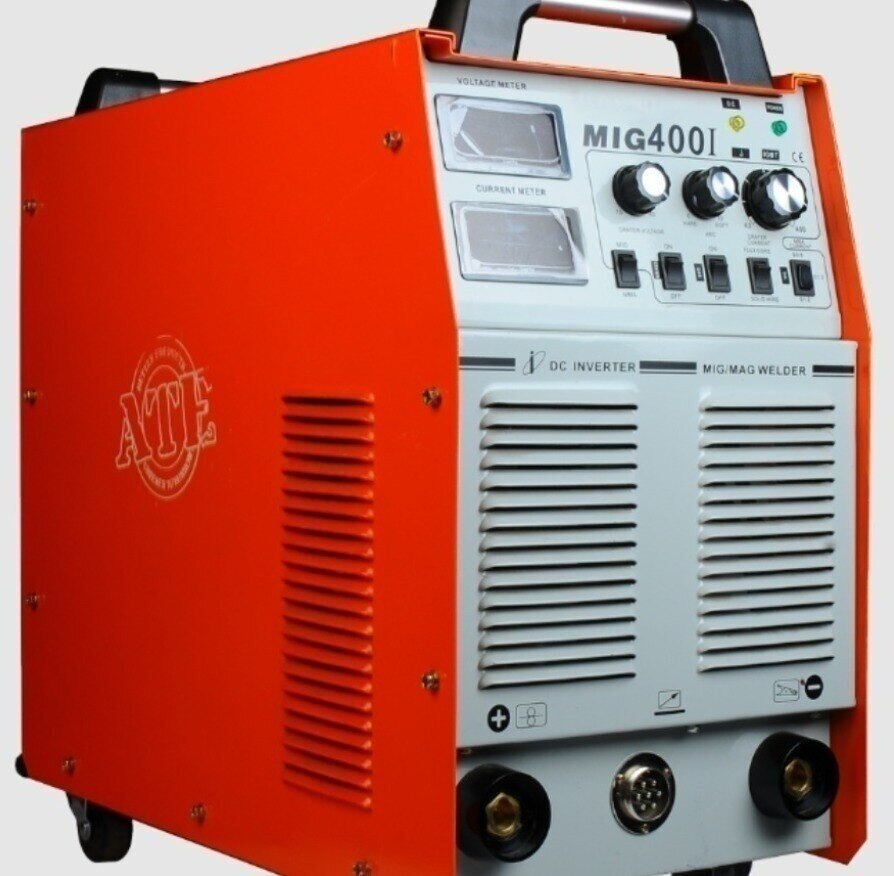
ATE WELDING ENGINEERING ROBOTICS AND AUTOMATION PRIVATE LIMITED can be assessed against this checklist when separating a configured production cell from a standalone manual source. A remote socket alone does not make a machine robot-ready.
Related products
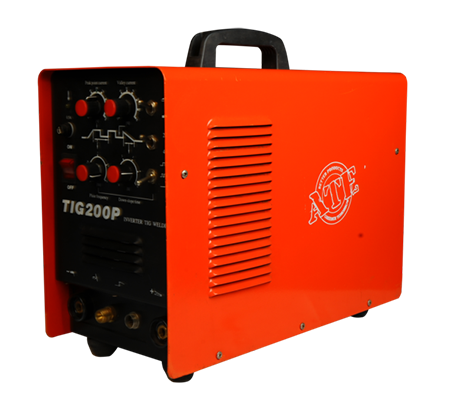 | TIG Welding Machine Precision and High-Quality Welding At ATE Welding Engineering & Robotic Automation, we specialize in TIG (Tungsten Inert Gas) welding machines,... View product → |
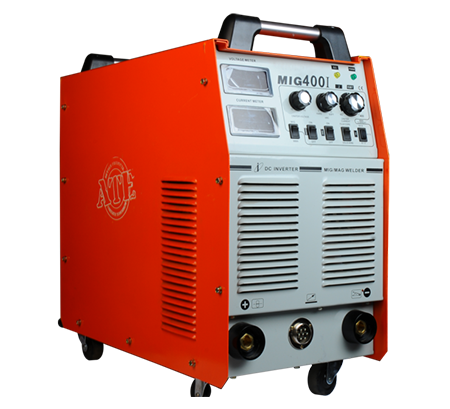 | MIG Welding Machine High-Speed and Versatile Welding Solutions At ATE Welding Engineering & Robotic Automation, we offer advanced MIG (Metal Inert Gas) welding machines... View product → |
Frequently asked questions
Which specifications define an automotive MIG-TIG inverter?
Check maximum and minimum current, duty cycle, supported wire diameters, process modes, arc controls, TIG output type, and control interfaces.
How do duty cycle and transfer modes affect automotive welds?
Duty cycle determines sustained production capacity, while short-circuit, pulse, and spray transfer affect heat input, spatter, penetration, and thin-sheet control.
What TIG specifications suit automotive components?
Match DC or AC/DC output, minimum current, pulse control, gas pre-flow and post-flow, and torch capacity to the component material and thickness.
What should a supplier specify for manual or robotic production?
Define input voltage, thermal protection, cooling, wire-feeding arrangements, remote controls, digital interfaces, repeatable programs, and robot communication requirements.