A combined inverter can cover much of a contractor’s carbon-steel fabrication, repair and stainless-steel work, but its usefulness depends on process capability, site power, weather protection and qualified welding procedures. By checking transfer modes, accessories, duty cycle, gas arrangements and electrical requirements, you can decide whether one machine is practical or whether you need dedicated MIG, TIG or ARC equipment.
Key takeaways
- Use MIG for long carbon-steel joints and repeated fabrication.
- Choose DC lift-TIG for thin stainless steel and visible finish welds.
- Use ARC outdoors when wind or dirty steel compromises shielding gas.
- Check duty cycle, input tolerance, protection rating and portability before buying.
Which construction jobs suit MIG, TIG and ARC on one machine?
A dual-process inverter suits site fabrication, repairs, gates, railings and carbon-steel frames when it combines MIG/MAG with DC lift-TIG and, ideally, stick/ARC output. MIG handles long, repeated joints quickly; TIG gives cleaner control on thin stainless steel and visible finish welds; ARC reaches outdoor joints where wind or dirty steel defeats shielding gas.
| Process | Best construction use | Choose another process when |
|---|---|---|
| MIG/MAG | Long structural runs, frames, gates and production carbon-steel fabrication | Wind disrupts shielding gas, surfaces are dirty, or the duty cycle is too low |
| DC lift-TIG | Thin stainless steel, pipework, root passes and neat visible welds | Aluminium requires AC balance and high-frequency starting |
| Stick/ARC | Outdoor repairs, awkward access, heavy sections and exposed site work | You need high deposition speed, minimal cleanup or a controlled cosmetic finish |
For a mig tig welder inverter for construction contractors in pune, protect MIG work with wind screens, dry materials and stable gas delivery; increasing flow alone can create turbulent porosity. Use ARC when the joint is exposed, contaminated or far from reliable gas protection.
A mig tig welder in pune is not automatically suitable for structural work. Check the contract code—such as IS 800, IS 816 or AWS D1.1/D1.1M—and use a qualified welding procedure and welder; the machine cannot replace either.
A dedicated AC/DC TIG unit, high-duty-cycle MIG system or coded structural setup is the better choice when those requirements apply.
Is it a true dual-process welder or only a marketed MIG-TIG package?
The label proves nothing: a mig tig welding machine inverter is a true dual-process unit only if its controls, torch connections and rated output support the work you need.
Most construction models combine MIG/MAG with DC lift-TIG, which covers carbon steel and stainless steel but does not provide AC balance and high-frequency start for production aluminium TIG.
Use this verification procedure before treating a machine as a dual process welder in pune:
1. Select MIG/MAG and confirm wire-feed control, polarity reversal, inductance, arc-force settings and flux-cored-wire compatibility. A machine that needs a separate spool gun for aluminium must include that support, not merely mention aluminium in advertising.
2. Check the TIG mode. Lift-TIG starts the arc by touching the tungsten; HF-TIG starts without contact and is preferable for clean stainless work. Ask whether the package includes a TIG torch, gas hose, regulator, earth lead and remote control or foot pedal.
3. Match the material coverage. Carbon steel needs suitable solid or flux-cored wire; stainless steel needs stainless wire and argon-based shielding gas; aluminium TIG needs AC/DC output, suitable tungsten and argon. DC-only TIG cannot replace an AC/DC aluminium machine.
4. Compare the maximum electrode diameter, current range and duty cycle with your joint thickness and production rate. Verify the exact accessories and consumables on the quotation, because a bare inverter can turn into an incomplete welding system.
Can the inverter survive Pune site power, weather and movement?
A 230 V outlet is not enough to prove an inverter will survive a Pune site. Confirm whether the point is 230 V single-phase or 415 V three-phase, then match it to the nameplate input current, voltage tolerance and phase requirement. A three-phase machine will not become suitable through an adaptor.
Before welding equipment for construction in pune is moved onto a site, check:
- Generator waveform, frequency, voltage regulation and transient response, not only kVA. Follow the manufacturer’s generator recommendation and allow capacity for grinders, lights and pumps running at the same time.
- Cable cross-section and lead length. Long, undersized extension leads cause voltage drop, nuisance trips and unstable arcs.
- Protective-device rating, earthing continuity, plug and connector condition. Do not defeat a breaker or use damaged couplers.
- A dry, covered position protected from rain, cement dust and direct heat. Keep vents clear; a sealed box can overheat the inverter.
- Handles, wheels, cable strain relief and secure storage for repeated movement between work fronts.
Read the rated output at its duty cycle, not just maximum amperage. Under IEC 60974-1, “60% at 200 A” means about six welding minutes in a 10-minute cycle at the 40 °C reference ambient, followed by cooling. A hot enclosure or clogged fan reduces practical endurance and can trigger thermal shutdown.
If supply quality, shelter or generator capacity cannot be verified, choose a simpler process and power source that the site can support.
Which specifications reveal whether the machine will perform on site?
A high maximum amperage does not prove site performance. Treat a mig tig welding machine inverter as suitable only after checking its rated output at the duty cycle you need, input supply, generator compatibility and cooling at Pune’s ambient conditions.
A 250 A machine rated at 40% duty cycle may deliver less usable production time than a 200 A machine rated at 60%.
| Specification | What to check | Site consequence |
|---|---|---|
| Rated current and duty cycle | Output at 40%, 60% or 100%, at the stated ambient temperature | Overheating and forced stoppages follow if the rating is too low |
| Transfer modes | Short-circuit, spray, pulse and flux-cored modes | Long structural welds need different arc control from thin gates or repairs |
| Wire-feed range | Minimum and maximum feed speed, wire diameters and spool size | The machine may not run thin wire or the required production wire |
| Gas requirements | CO2 or argon-mix specification, flow range, regulator and hose | Wind can strip shielding and create porosity; excessive flow causes turbulence |
| Thermal protection | Temperature sensors, fan control and overload indication | The inverter should shut down safely instead of damaging power components |
| Ingress protection | IP rating and clear limits for rain, dust and condensation | Outdoor exposure can cause faults, unstable arcs and corrosion |
| Service access | Removable panels, replacement-part availability and fault diagnostics | Faster repairs matter when the machine is stranded on a project |
For a mig tig welder in Pune, also confirm lift-TIG or HF-TIG start, open-circuit voltage and remote-control support before comparing prices. A contractor who cannot clean, shield and service the machine on site will lose the advantage of its advertised current.
When is a MIG-TIG inverter the right purchase for a Pune contractor?
Buy a MIG-TIG welder inverter for construction contractors in Pune when one portable machine covers qualified carbon-steel fabrication, repairs and moderate site production without violating the project’s welding code. It is not a substitute for every process: aluminium TIG production needs AC balance and HF start, while high-volume work needs a dedicated MIG system.
Before approving the purchase, check these decision points:
- Match the contract code—IS 800, IS 816 or AWS D1.1/D1.1M—to the machine, consumables, joint details, inspection rules and approved welding procedure.
- Confirm that the welder’s ISO 9606-1 qualification and the welding procedure’s ISO 15614-1 qualification cover the actual joint, material and position.
- Choose MIG/MAG for long carbon-steel welds and repeated fabrication; use DC lift-TIG for controlled stainless-steel or thin-section work; keep ARC welding available for wind, dirty steel and difficult access.
- Reject the machine for production aluminium TIG if it lacks AC output and HF start.
- Budget for wind screens, dry storage and protected work areas. More gas flow can create turbulence and porosity on an exposed slab.
- Compare duty cycle and service access with daily weld volume, not maximum amperage alone.
A dual process welder in Pune earns its place when one crew needs this flexibility and local support can supply torches, regulators, wire-feed parts and repairs quickly.
When assessing welding equipment for construction in Pune, ask ATE WELDING ENGINEERING ROBOTICS AND AUTOMATION PRIVATE LIMITED for a written process configuration and procedure-support boundaries rather than relying on the “dual process” label.
Related products
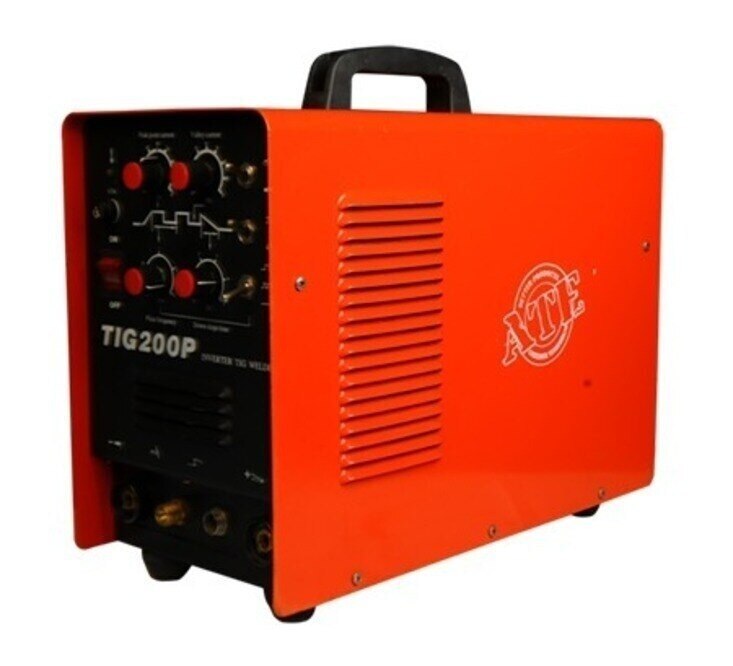
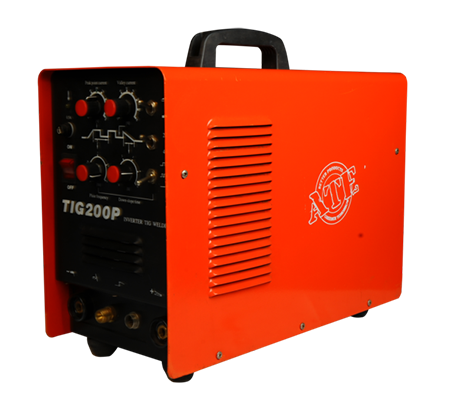 | TIG Welding Machine Precision and High-Quality Welding At ATE Welding Engineering & Robotic Automation, we specialize in TIG (Tungsten Inert Gas) welding machines,... View product → |
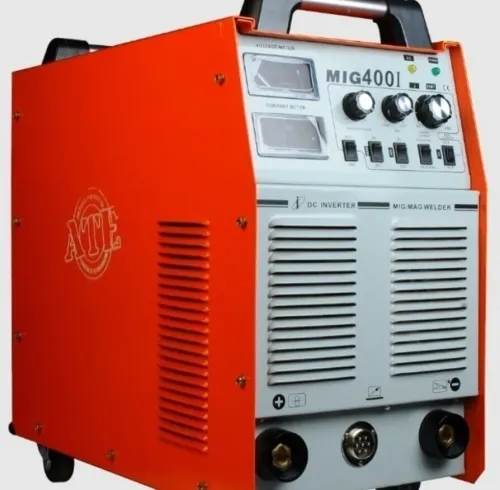
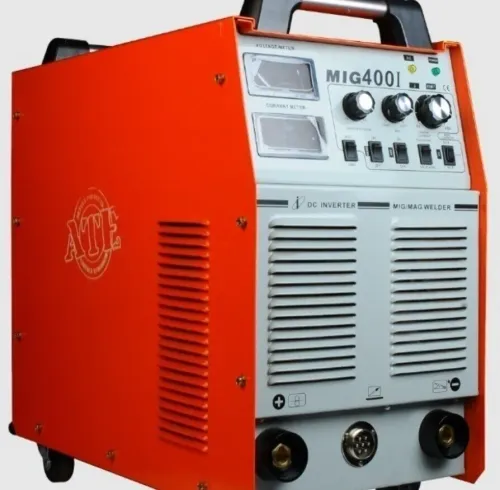
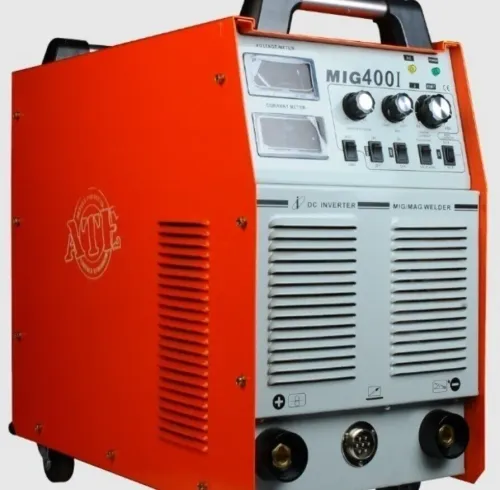
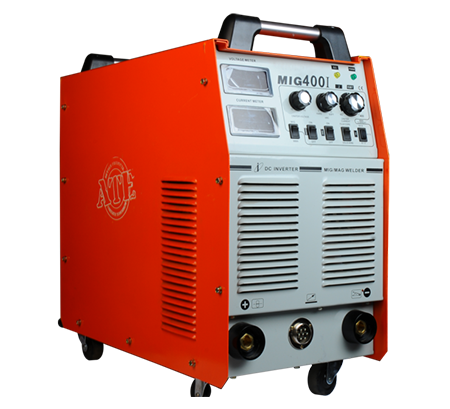 | MIG Welding Machine High-Speed and Versatile Welding Solutions At ATE Welding Engineering & Robotic Automation, we offer advanced MIG (Metal Inert Gas) welding machines... View product → |
Frequently asked questions
Which construction jobs suit MIG, TIG and ARC on one machine?
MIG suits long, repeated joints on carbon-steel frames, gates and railings. DC lift-TIG suits thin stainless steel and visible finish welds. ARC suits outdoor repairs and dirty steel where wind affects shielding gas.
Is a MIG-TIG inverter a true dual-process welder?
Check whether the specification lists independent MIG/MAG and DC lift-TIG functions, torch and cable connections, polarity options, and usable current ranges for both processes. Some packages market accessories together without providing full process capability.
Can a MIG-TIG inverter survive Pune construction sites?
Assess its input-voltage tolerance, duty cycle, enclosure protection, cooling, dust resistance and resistance to movement before taking it onto a site. Protect the machine from rain, standing water and excessive dust.
Which specifications matter for site welding?
Compare rated input voltage, current range, duty cycle at a stated temperature, open-circuit voltage, wire-feed range, electrode diameter, cable length, weight and service access.
When is a MIG-TIG inverter the right purchase for a Pune contractor?
Choose one when your work combines fast carbon-steel fabrication, occasional thin or finish welding, and outdoor repairs. Buy separate specialist machines when production volume, thick-section output or high-end TIG control dominates.