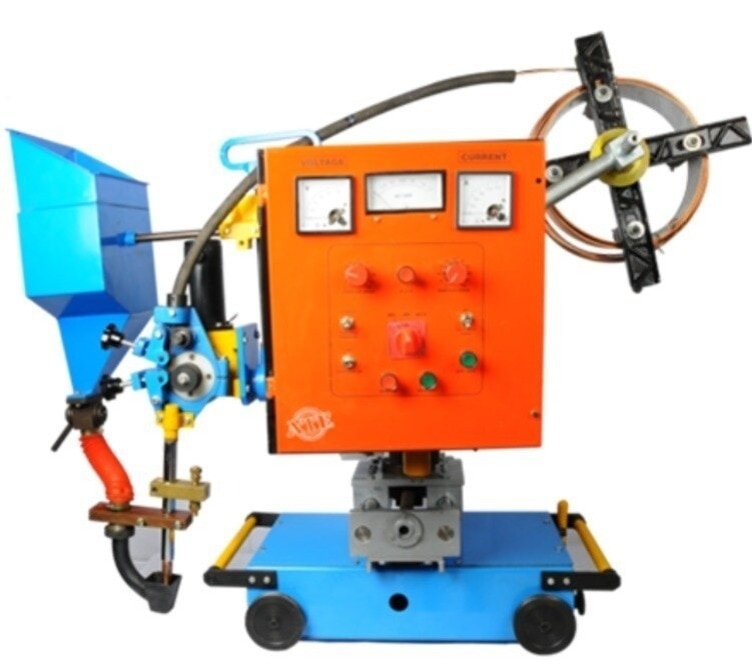
Choosing a submerged arc system starts with the joint, not the machine’s maximum amperage. Match wire arrangement, travel method, power configuration, flux handling and automation to weld length, geometry, plate thickness and production rhythm, then verify the choice through a representative acceptance test.
Key takeaways
- Confirm whether the offer is Ibell-branded equipment or a channel-supplied SAW system.
- Match machine travel, wire configuration and torch access to your weld geometry.
- Compare duty cycle, flux recovery and controls against your production rhythm.
- Validate site power, consumables, trials and service support before ordering.
What “Ibell Welding Machine Submerged Arc” Means in a Buying Decision
The phrase “Ibell Welding Machine Submerged Arc” does not identify one buying category by itself. Confirm whether it means an Ibell-branded SAW machine, equipment sold through an Ibell channel, or a comparison between Ibell equipment and other submerged arc systems.
Treat “ibell welding machine submerged arc for options” as a production-fit question, not a search for one universal machine.
1. In submerged arc welding, a wire electrode feeds through a torch while granular flux covers the arc and molten weld pool. The power source controls welding current and voltage, and a tractor, carriage, boom or rotating fixture moves the torch or workpiece at a controlled speed.
2. SAW fits long straight seams, circumferential welds, pressure vessels, structural beams, pipes and tanks when the joint is accessible and flux can stay over the arc. The covered arc supports high deposition without exposing the operator to arc glare, but it also hides the weld during deposition.
3. Set boundaries before comparing machines. SAW is normally a flat-position process and can handle horizontal fillets with suitable equipment and joint design. It is a poor choice for vertical, overhead, open-root, thin-sheet, short, interrupted or tight-access welds because flux and the molten pool are difficult to retain.
Classify joint geometry, weld length, plate thickness, position and production rhythm before requesting a model. A high-output fixed cell can waste space and handling time on frequently repositioned parts, while a portable travel unit can suit varied long seams.
Submerged Arc Equipment Types and the Work Each One Fits
Single-wire SAW is the adaptable baseline for structural beams and pressure vessels: it simplifies feeding, alignment and procedure control. Twin-wire, tandem-wire and multi-wire systems target higher deposition and travel speed, but require coordinated feeders, compatible power sources, full flux coverage and joints that can absorb greater heat input without distortion.
| Option | What it adds | Work it fits |
|---|---|---|
| Single wire | Flexible, simpler control | Structural and pressure-vessel welds |
| Twin, tandem or multi-wire | Higher deposition and travel speed | Long, repeatable heavy-plate seams |
| Tractor or carriage | Portable, repositionable travel | Long seams on large fabrications |
| Column-and-boom or gantry | Rigid, repeatable alignment | Fixed cells and repeat production |
| Dedicated seam welder | Controlled longitudinal travel | Straight seams on regular components |
| Circumferential welder | Controlled rotational travel | Pipes, tanks and vessel shells |
| Strip electrode | Broad surfacing deposit | Cladding and corrosion-resistant surfacing, not ordinary butt welds |
Polarity changes the result, not just the cable connection. DC electrode positive tends toward deeper penetration; DC electrode negative can raise deposition at the same current with less penetration; AC helps manage arc blow in suitable qualified procedures.
Choose the machine around these demands:
- Leave room for flux hoppers, recovery, slag removal and workpiece handling.
- Use fixed column-and-boom equipment only when alignment, access and component repetition justify its floor space.
- Use a tractor when portability and frequent repositioning matter.
- Confirm that the joint can tolerate higher heat input before selecting multiple wires.
How to Select a Machine for Geometry, Output and Production Rhythm
1. Classify the job before comparing machines: joint geometry, weld position, seam length, plate thickness, component diameter, batch size, and continuous or intermittent operation. Long, repeatable heavy-plate seams suit a tractor, carriage, column-and-boom system, or dedicated seam installation.
Circumferential joints need controlled rotation and torch alignment; frequent part changes favour a flexible travel unit over a fixed cell.
2. Set the output target in completed parts per shift, not wire feed alone. Single-wire SAW suits broad structural and pressure-vessel work. Twin-wire, tandem, or multi-wire systems raise deposition and travel speed, but demand coordinated feeders, compatible power sources, adequate flux coverage, higher duty cycle, and joints that tolerate greater heat input.
3. Check the penalties of higher output: increased distortion, longer cooling, more slag removal, and straightening work can erase the apparent speed gain. Include fit-up, flux handling, repositioning, inspection, and access in the cycle time.
4. Use submerged arc machine selection when repeatability and deposition outweigh mobility and all-position access. Compare alternatives before committing:
| Option | Deposition and penetration | Involvement, access, setup, cost |
|---|---|---|
| SAW | High; deep | Low, limited visibility and position; higher setup, low consumable cost |
| MIG/MAG | Medium; moderate | Medium, portable and visible; quick setup |
| TIG | Low; precise | High, visible and positional; slow, higher labour cost |
| Manual arc | Low to medium | High, portable and positional; low setup |
| FCAW | Medium to high | Medium, good positional range; moderate setup and consumable cost |
Specification Questions, Site Checks and Vendor Validation in Ahilya Nagar
Do not approve an SAW purchase from its headline amperage. Build the specification around the weld you will produce, then test the machine against that specification.
- Request the output-current and voltage ranges, wire-diameter range, number of wires, AC/DC arrangement, travel-speed range, and duty cycle at your intended current and ambient temperature. Ask how voltage is sensed, how wire-feed stability is measured, and whether the feeder includes wire straightening.
- Check the mechanical system: flux-hopper capacity, flux recovery and screening method, seam tracking, torch alignment, boom or carriage stiffness, workpiece-positioning capacity, and control-interface details. Confirm PLC connections, remote I/O, robot integration points, and production-data logging.
- Before purchase, run a production trial using representative base material, joint preparation, wire, flux, weld length, travel speed, and duty cycle. Acceptance must include dimensional checks plus the visual, radiographic, ultrasonic, bend, tensile, impact, or hardness tests required by the governing specification.
For a submerged arc machine in Ahilya Nagar, verify incoming electrical supply, earthing, floor loading, crane access, ventilation, and space for flux and slag handling. Confirm service response and local availability of the specified wire and flux.
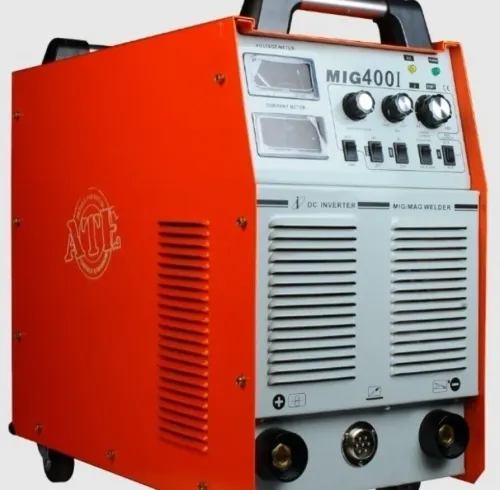
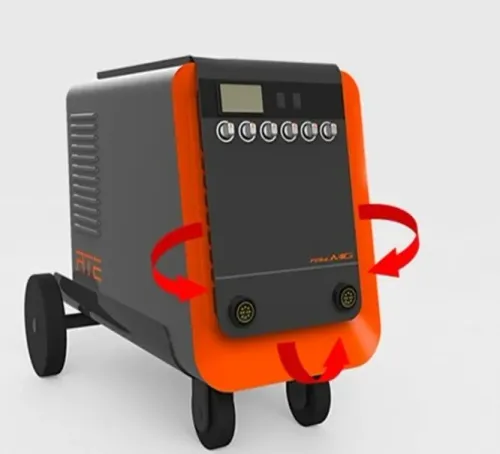
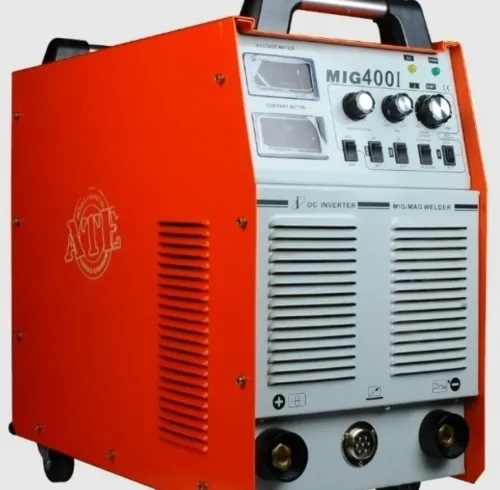
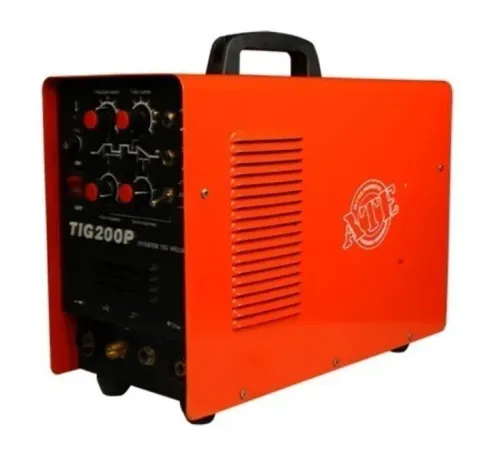
ATE WELDING ENGINEERING ROBOTICS AND AUTOMATION PRIVATE LIMITED can provide model-specific datasheets, integration details, and a production trial; do not accept an unverified Ibell rating.
Related product
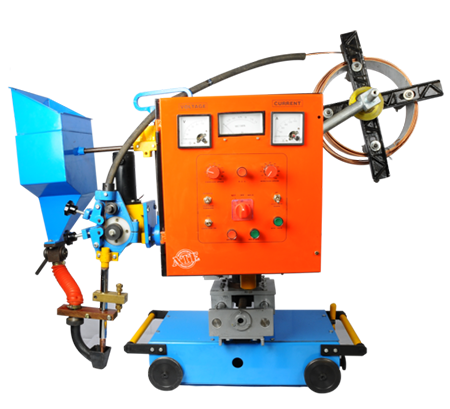 | ARC Welding Machine High-Efficiency Welding Solutions At ATE Welding Engineering & Robotic Automation, we provide advanced Submerged Arc Welding (SAW) machines designed... View product → |
Making SAW Reliable in Production: Flux, Recovery and Qualification
Moisture control starts before welding. Specify sealed flux storage, drying and rebaking temperature and time, maximum exposure after opening, and screening requirements for unused flux. Damp flux can raise diffusible hydrogen, causing cracking, porosity, unstable arc behaviour and slag that will not release cleanly.
Check the hopper, delivery hose, granular blanket, slag formation and recovery unit as one system; a restricted hose or thin blanket can destabilise an otherwise sound electrical setup.
- Separate recovered flux from slag, fines, mill scale and oil before it returns to the hopper. Use a screen or separator, reject contaminated material, and document the replenishment ratio of recovered to new flux. Recovery improves economics; it does not make collected flux equivalent to new flux.
- Verify wire-feeder drive rolls, wire straightener, torch alignment and seam tracking. A bent wire or drifting torch changes bead placement even when current and voltage remain correct.
- Check travel feedback, carriage or boom stiffness, weld-control response and flux-delivery consistency. On a long seam, speed fluctuation or misalignment can create more variation than a modest difference in rated amperage.
- Treat machine acceptance separately from procedure qualification. Qualify the welding procedure to ISO 15614-1, or to AWS D1.1/D1.1M when that structural-welding code applies, using the specified material, joint and tests.
- Calculate completed-part cycle time: fit-up, welding, flux loading and recovery, slag removal, inspection, repositioning, cooling and straightening. Higher deposition can demand more heat input and longer downstream work, so judge submerged arc welding for production by finished output, not wire-feed claims alone.
Frequently asked questions
What does “Ibell Welding Machine Submerged Arc” mean in a buying decision?
Confirm whether it means an Ibell-branded submerged arc welding machine, equipment sold through an Ibell channel, or a comparison with other SAW systems.
Which submerged arc equipment type fits different production work?
Choose among tractor-mounted, column-and-boom, gantry, circumferential and multi-wire systems based on seam length, workpiece geometry, access and required deposition rate.
How do you select a submerged arc machine for production?
Match travel speed, wire diameter, wire count, duty cycle, control range and flux handling to weld size, output targets and the rhythm of your production line.
What should you check before buying a submerged arc machine in Ahilya Nagar?
Check incoming power, floor space, workpiece handling, extraction, compressed air, consumable storage, operator access, trial welds and the vendor’s local service capability.
How do flux recovery and qualification affect SAW reliability?
Control flux storage, drying, recovery and contamination, then qualify the welding procedure and verify weld results against the required code and inspection plan.