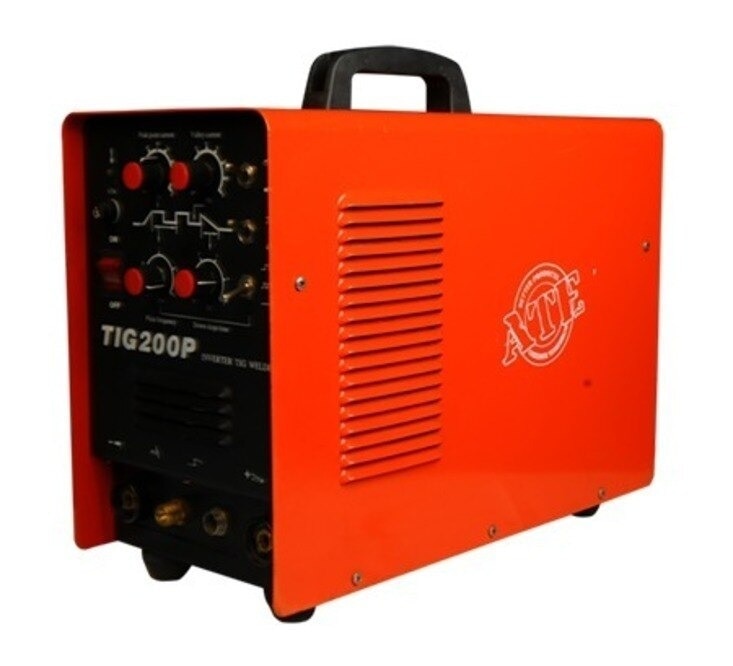
A grey or black tungsten tip, a wandering arc, sudden porosity, or a bright metal particle in the bead points to a specific failure that you can isolate before replacing the welding machine. By checking the electrode, gas path, torch, settings, work preparation, and power source in order, you can identify the cause and restart safely.
Key takeaways
- Stop welding when tungsten touches the workpiece or filler rod.
- Remove contaminated tungsten, then grind it lengthwise on a dedicated wheel.
- Check tungsten type, diameter, polarity, gas flow, and shielding before changing settings.
- Use a process test to separate torch or control faults from electrode contamination.
How do you recognise tungsten contamination and stop safely?
A grey or blackened tungsten usually means contact, oxidation, or poor shielding; a hard, bright tungsten inclusion trapped in the weld is a defect that requires removing the affected weld metal and re-welding. For anyone investigating ibell welding machine tig for welder tungsten contamination problems in ahilya nagar, use this distinction before changing settings.
| Electrode appearance | Likely meaning | Required response |
|---|---|---|
| Grey or black tip | Contact with work, filler, or air oxidation | Stop, grind back to clean tungsten, and check post-flow |
| Hard, bright inclusion in bead | Tungsten transferred into weld metal | Remove all affected metal and re-weld |
| Arc wandering, sudden porosity, discolouration, or loss of the ground point | Contamination or shielding failure | Stop and inspect the electrode, gas delivery, and work return |
Release the torch trigger or foot control and keep the torch over the crater during post-flow. Do not strike the contaminated electrode again. If you will inspect torch, earth, or machine connections, turn off the machine controls, open the supply disconnect, and confirm the equipment is safe before touching connections.
- Record material, thickness, current mode, amperage, tungsten grade and diameter, gas-flow reading, and the weld symptom before changing settings.
- Grind away the contaminated section; wiping cannot remove transferred metal. Remove every visibly affected area and enough additional electrode length to reach clean, solid tungsten.
- Replace the electrode if it is cracked, badly shortened, or has transferred tungsten into the weld. Recheck the first start for a stable, non-wandering arc and clean shielding.
What causes contamination, and how should you regrind the tungsten?
An Ibell welding machine tungsten contamination problem usually comes from technique, joint preparation, or electrode preparation—not a mysterious inverter fault. Touching the workpiece or filler rod, dipping into the molten pool, excessive arc length, excessive amperage, incorrect polarity, or wind that strips argon shielding can contaminate the tip.
Dirty base metal, mill scale, oil, paint, zinc, moisture, abrasive residue, and contaminated filler wire add particles that destabilise the arc.
1. Stop welding and remove the electrode from the torch. Do not restart with the contaminated tip.
2. Grind away all contaminated tungsten on a dedicated tungsten wheel or grinder. Grind longitudinally from the electrode body toward the point; circumferential grinding creates grooves that can make the arc wander.
3. Do not use a wheel loaded with carbon-steel or copper particles. Those particles transfer to the tungsten and create another contamination source.
4. Re-form the point angle to suit the amperage, joint access, and required arc width. Set the arc length roughly equal to the tungsten diameter as a starting point, then adjust only for access and control.
5. Clean the filler-rod end and base metal before restarting. Remove mill scale, oil, paint, zinc, moisture, and abrasive dust with tools suitable for that base metal.
Continuing with a contaminated tip spreads tungsten into the joint and creates porosity, arc instability, and more inclusions. A quick regrind then becomes rejected welds, metal removal, and rework.
How do tungsten size, type, polarity, and gas flow change the diagnosis?
Verify the tungsten grade and diameter, polarity, AC balance, current, and shielding system before blaming the Ibell machine for TIG welder tungsten problems. Select diameter and type from the electrode manufacturer’s current chart for the polarity, AC waveform, cooling method, material, and thickness. An oversized electrode can struggle at low current; an undersized electrode overheats.
Never copy a current range from another grade or machine.
| Condition | Tungsten effect | Diagnosis |
|---|---|---|
| DCEN on steel, stainless steel, nickel alloys, or copper | Usual starting condition | Check current and diameter first |
| Reversed polarity or excessive electrode-positive time | Rapid heating, balling, melting, or transfer | Correct polarity or reduce electrode-positive time |
| AC with excessive cleaning action | Balling and erosion | Check AC balance and waveform |
| AC with too little cleaning action | Aluminium oxide remains | Increase cleaning only as the procedure requires |
Aluminium and magnesium generally require AC. On AC, balance, amperage, and waveform belong in the diagnosis, not gas flow alone.
Check pre-flow, post-flow, cup size, gas lens, nozzle extension, and drafts. Too little argon exposes the weld and cooling tungsten; excessive flow creates turbulence that draws air into the shield. Measure flow at the torch, then inspect:
- Cylinder connection, gas identity, fittings, hoses, O-rings, and blocked passages
- Leaks, contaminated gas, and regulator indications that disagree with torch flow
- Torch movement: keep it still over the weld until post-flow ends
A damaged hose or restricted passage can mimic a machine fault.
How can you tell a torch or Ibell control fault from a contaminated electrode?
A clean electrode and joint come first: fit a correctly prepared tungsten, clean the joint, then isolate whether the fault follows the consumable or the controls. Repeatedly scratching the tungsten to start an arc creates secondary contamination; diagnose the start circuit before regrinding it.
1. Confirm AC or DC selection, high-frequency start, amperage control, and the electrode gap against the model manual. Check torch-switch continuity, torch plug condition, earth-clamp contact, work return, and machine grounding. Use lift-arc only when the machine and procedure specify it.
2. Trigger the torch and observe gas delivery. If no gas flows, inspect the solenoid, regulator, cylinder identification, hose, fittings, O-rings, and torch passages before changing tungsten. Check pre-flow and post-flow; keep the torch still over the crater until post-flow ends.
3. Measure argon flow at the torch, not only at the cylinder regulator. Test for leaks and check cracked hoses, blocked passages, drafts from doors or fans, and excessive flow turbulence.
4. For TIG welder troubleshooting in Ahilya Nagar, inspect dust in torch and cooling-air passages, moisture introduced by compressed-air cleaning, cylinder storage, and supply voltage. Use measurements rather than blaming the location or the product name.
5. Turn off the machine, isolate electrical supply, and wait the manufacturer-specified discharge period before inspection. Do not open the cabinet unless qualified.
A damaged torch lead or failed gas circuit will not be fixed by repeated regrinding. If the arc remains unstable after these checks, record the model, settings, gas reading, and symptom for qualified service.
When should you keep troubleshooting TIG, call for help, or choose another process?
Keep TIG in service only after several starts and stops produce a stable, non-wandering arc, a clean grey or polished tip suited to the selected process, no porosity or tungsten particles, and repeatable shielding. This acceptance check confirms that an Ibell welding machine tungsten contamination problem is corrected rather than hidden by a new electrode.
Record the tungsten grade and diameter, polarity or AC balance, current, gas type and measured torch flow, cup, pre-flow, and post-flow. If contamination returns despite correct technique and measured flow, stop changing settings and ask an Ahilya Nagar welding-equipment or service provider to identify:
- Exact Ibell model and manual-recommended parts
- Material, thickness, tungsten diameter, and current mode
- Flow reading, gas connection, and visible weld symptom
- Torch, hose, O-ring, solenoid, and shielding faults
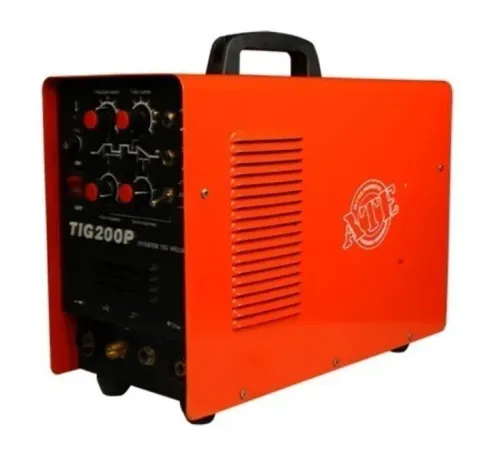
For TIG welder troubleshooting in Ahilya Nagar, ATE WELDING ENGINEERING ROBOTICS AND AUTOMATION PRIVATE LIMITED may be relevant when you need replacement consumables, warranty handling, or qualified service instead of an unverified adjustment.
TIG is a poor production choice when thick sections and high volume demand higher deposition. Compare the joint before switching:
| Option | Best fit | Main trade-off |
|---|---|---|
| TIG | Thin work, difficult access, high appearance or control demand | Slow deposition |
| MIG | Higher-volume fabrication and moderate access | More spatter and consumable control |
| Submerged arc or mechanised welding | Long, accessible seams and thick material | Requires suitable joint access and setup |
Related product
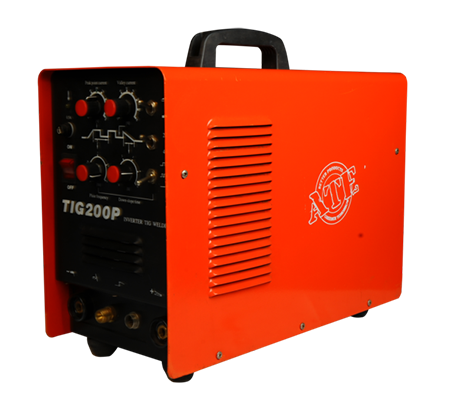 | TIG Welding Machine Precision and High-Quality Welding At ATE Welding Engineering & Robotic Automation, we specialize in TIG (Tungsten Inert Gas) welding machines,... View product → |
Frequently asked questions
How do you recognise tungsten contamination and stop safely?
Stop the arc when the tungsten contacts the workpiece, filler rod, or molten pool. A grey or blackened tip indicates contamination or oxidation; a bright, hard tungsten inclusion inside the weld requires removing the affected metal before rewelding.
What causes TIG tungsten contamination, and how should you regrind it?
Common causes include contact with the workpiece, dipping into filler metal, excessive current, poor shielding, and an incorrect electrode setup. Remove the damaged section and grind lengthwise on a clean wheel reserved for tungsten; do not grind around the electrode.
How do tungsten size, type, polarity, and gas flow change the diagnosis?
Compare electrode diameter and type with the welding current and material. Verify DCEN for most steel and stainless TIG work, AC settings for aluminium, and argon flow at the torch. An undersized electrode, wrong polarity, turbulent gas, or a blocked cup can mimic contamination.
How can you tell a torch or Ibell control fault from a contaminated electrode?
Install a correctly ground electrode, inspect the collet and gas lens, confirm pre-flow and post-flow, and run a short test bead on clean metal. If the new electrode still overheats, oxidises, or loses shielding, inspect the torch, gas supply, connections, and machine controls.