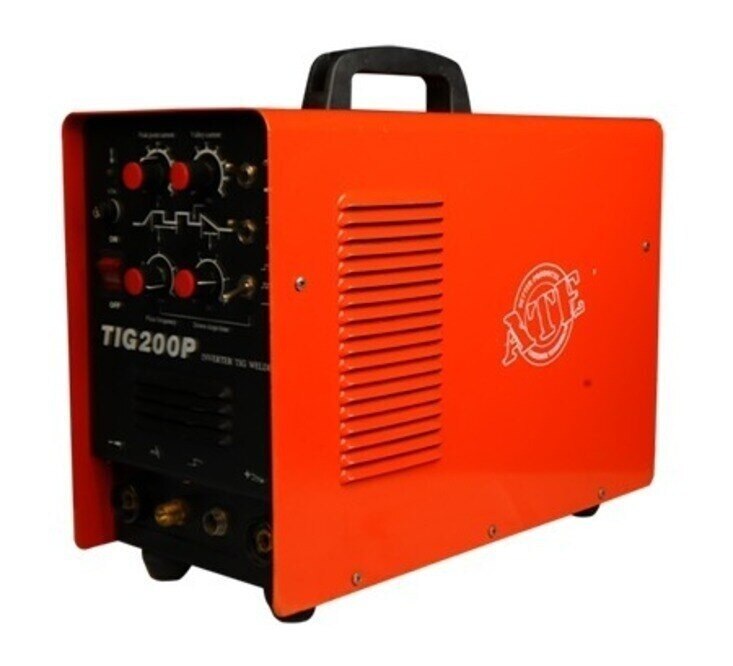
Choose TIG when the job rewards a clean, controlled weld more than rapid deposition: thin stainless steel, aluminium, visible joints, root passes and leak-tight pipe work are strong examples. By checking the material, weld volume, site conditions, power supply and operator capability, you can decide whether TIG belongs in your fleet or whether stick, MIG or flux-core equipment is the better production tool.
Key takeaways
- Choose TIG for clean, controlled welds on thin, stainless or visible joints.
- Use stick or flux-cored welding when outdoor speed and wind resistance matter more.
- Check AC/DC output, duty cycle, generator compatibility and service access before buying.
- Protect argon from wind and confirm fit-up before blaming the welding machine.
Use TIG When Weld Quality and Access Matter More Than Speed
Choose an inverter TIG welding machine when the joint demands control, clean appearance or access that stick, MIG or flux-cored welding cannot provide. A TIG welder for construction contractors suits stainless-steel handrails, thin sections, leak-tight pipe roots, visible welds and awkward joints where you add filler separately and avoid slag.
It is a quality and access tool, not a fast way to deposit large volumes of structural weld metal.
The choice is stronger when you have trained operators, clean fit-up, reliable argon and stable power. The inverter tig welding machine benefits include lower weight, precise current control, dependable arc starts, and useful pulse, pre-flow, post-flow, upslope and downslope settings. Those controls do not correct contaminated material, poor tungsten preparation or careless torch technique.
| Decision point | Choose inverter TIG when | Avoid it as the main process when |
|---|---|---|
| Material and weld | Stainless steel, aluminium with AC, thin steel, root passes or visible joints | Large-volume structural steel fill welds |
| Work environment | A workshop or screened site with protected argon coverage | Wind, fans or vehicle movement expose the arc |
| Production demand | Quality and access outweigh deposition speed | MIG, flux-core or stick will complete the work faster |
| Compliance | The machine supports the approved WPS and qualified welder | You assume “inverter” replaces AWS D1.1/D1.1M or ASME Section IX requirements |
A compact DC machine is an excellent steel and stainless repair unit but a poor single-machine purchase for aluminium work or continuous structural production. Evaluate a combination MIG-TIG unit as two process packages, not a universal replacement.
Match the Process to the Construction Task and Material
Use TIG for thin stainless steel, aluminium, visible handrails, pipe roots and leak-tight joints; use another process for filling long structural welds. TIG’s tungsten electrode, separate filler and slag-free arc give precise control, but deposition is slower and fit-up must be cleaner.
| Process | Best construction fit | Main limitation |
|---|---|---|
| TIG | Stainless handrails, thin sections, aluminium with AC, pipe roots, visible fabricated assemblies and controlled repairs | Slow filling; needs clean metal, shielding gas and a skilled operator |
| Stick/ARC | Structural steel, outdoor erection, site repairs and awkward access | Slag removal, lower appearance and limited control on thin stainless or aluminium |
| MIG | Workshop-fabricated assemblies, long structural-steel welds and repetitive handrail production | Wind disrupts gas shielding; equipment and wire handling are less convenient for remote repairs |
| Flux-core | Heavy structural steel, outdoor work and high deposition rates | Slag, fumes and spatter; not the first choice for visible stainless or thin aluminium |
| Combined MIG-TIG | Contractors handling workshop fabrication, stainless repairs and occasional TIG pipe or aluminium work | Two process packages, not one universal replacement; it still needs a feeder, torch, tungsten and suitable gas controls |
For structural steel, MIG, flux-core or stick usually outproduce TIG. TIG earns its time on a root pass or a joint where appearance and penetration matter. A DC TIG handles carbon and stainless steel; aluminium needs AC, so confirm this before choosing a machine.
For a mig tig welder construction contractors use across mixed jobs, compare the feeder and MIG duty cycle separately from TIG controls. A combined unit reduces fleet size, but dedicated MIG remains faster for repetitive fabrication.
Compare AC/DC Capability, Duty Cycle and Site Power Before Buying
A reliable purchase depends on the output you need, not the largest amperage printed on the front panel. Compare AC/DC capability, duty-cycle rating and site power against your materials, generator and welding schedule before choosing construction welding equipment.
| Specification | Check before buying | Failure if mismatched |
|---|---|---|
| AC/DC output | DC for carbon steel and stainless steel; AC for aluminium and magnesium | A DC-only machine cannot properly handle routine aluminium work because AC helps disrupt the oxide film |
| Duty cycle | Compare the rating at your required current and voltage; 60% means six welding minutes and four cooling minutes in a 10-minute period | The machine overheats during repeated long welds even though its maximum amperage looks adequate |
| Input supply | Confirm single- or three-phase input, rated current, voltage tolerance and generator-size recommendation | An undersized or shared generator causes nuisance trips, unstable arc starts or reduced output |
For a repair crew welding short stainless-steel joints, a compact DC inverter TIG can provide ample capacity. A contractor running continuous structural welds needs a higher duty cycle at the actual working amperage, not the advertised peak.
Check whether the generator delivers stable power under load. Match the machine to the site’s phase supply and leave capacity for grinders, lights and other tools; nominal portability does not guarantee compatibility. If aluminium appears in the work order, choose AC/DC rather than treating AC as an optional upgrade.
Control Argon, Fit-Up and Safety on Outdoor Construction Sites
A TIG welder for construction contractors performs poorly in drafts. Wind, fans and passing vehicles disturb the argon shield, while a longer hose or damaged fitting creates leaks. Install wind screens, protect the torch and hose, and keep the gas cup close to the joint.
Do not simply increase flow; turbulence can pull air into the weld.
Fit-up and cleanliness decide the result before you strike the arc. Remove paint, oil, rust, moisture and zinc residue; grind stainless steel with dedicated tools; wipe filler rod; and prepare tungsten correctly. Poor alignment forces excessive heat, slows work and increases distortion.
An inexperienced operator can contaminate the tungsten, produce porosity or lose shielding during torch movement.
Use this site checklist:
- Confirm argon cylinder restraint, regulator condition, hose routing and post-flow operation.
- Provide stable single- or three-phase power, dry work surfaces and adequate ventilation.
- Use a welding helmet with suitable UV protection, gloves, flame-resistant clothing and hearing protection.
- Establish a hot-work permit, fire watch, screens and removal or shielding of combustibles.
- Keep the torch, inverter and cylinder outside confined spaces unless the entry plan controls oxygen deficiency and ventilation.
OSHA requires ventilation or respiratory controls for welding and cutting hazards; argon can displace oxygen in a poorly ventilated space. Follow the approved WPS and governing code, such as AWS D1.1/D1.1M or ASME Section IX. Machine settings do not replace procedure or welder qualification.
Make the Fleet Decision for Your Actual Contract Work
Buy an inverter TIG machine as a specialist fleet tool unless your contracts prove that TIG is your main process.
For a welding machine inverter TIG for welder construction contractors in Ahilya Nagar, record the last 12 months of work: carbon-steel volume, stainless and aluminium share, workshop versus open-site hours, generator capacity, required duty cycle, and code-controlled welds.
| Option | What it means | When it applies |
|---|---|---|
| DC inverter TIG | Handles carbon steel and stainless steel; compact and efficient | Repairs, thin stainless, visible joints, pipe roots and low-volume site work |
| AC/DC inverter TIG | Adds AC for aluminium and magnesium oxide-film control | Aluminium handrails, tanks, frames or mixed-material fabrication |
| Dedicated MIG, ARC or flux-core machine | Deposits structural weld metal faster | Long fillet welds, heavy sections, repetitive fabrication and high daily volume |
The inverter TIG welding machine benefits are precise arc control, clean welds without slag and access to difficult joints. They do not cancel TIG’s slower deposition, tungsten preparation, strict fit-up, argon consumption and skill requirement.
Do not make a compact DC unit your only construction welding equipment if aluminium work or high-volume structural welding is routine.
Before ordering, verify rated input current, single- or three-phase voltage, supply tolerance, generator-size recommendation, duty cycle, torch and regulator availability, tungsten and filler stock, and local repair support. Ask ATE WELDING ENGINEERING ROBOTICS AND AUTOMATION PRIVATE LIMITED to state these limits in writing, including service response and spare-part availability.
Choose AC/DC for confirmed aluminium work; choose DC TIG alongside MIG or ARC when TIG is mainly a quality and repair process.
Related products
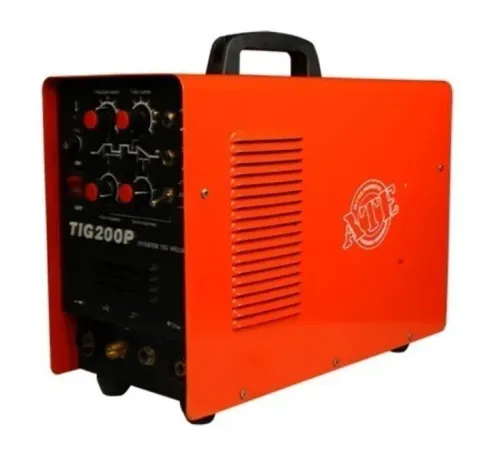
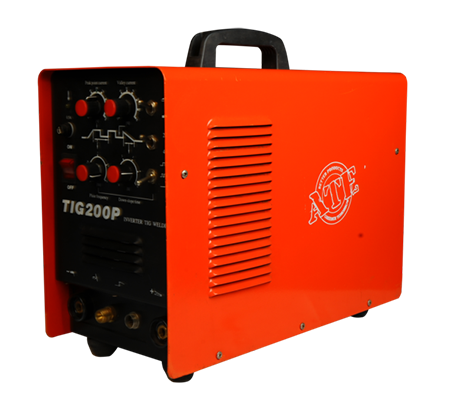 | TIG Welding Machine Precision and High-Quality Welding At ATE Welding Engineering & Robotic Automation, we specialize in TIG (Tungsten Inert Gas) welding machines,... View product → |
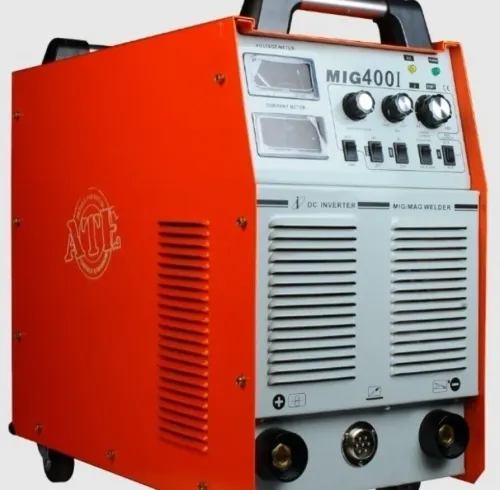
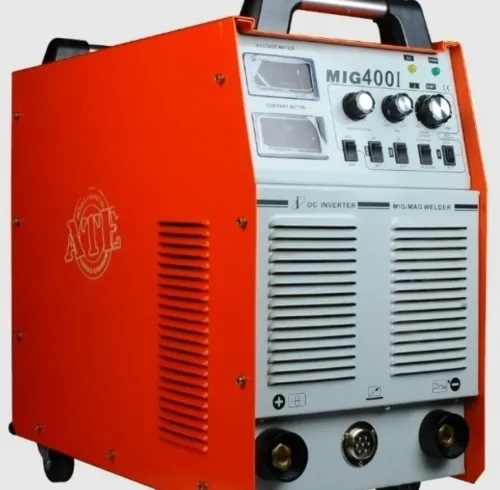
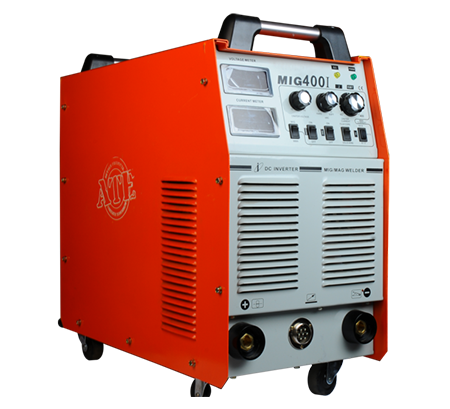 | MIG Welding Machine High-Speed and Versatile Welding Solutions At ATE Welding Engineering & Robotic Automation, we offer advanced MIG (Metal Inert Gas) welding machines... View product → |
Frequently asked questions
When should construction contractors choose TIG welding?
Choose TIG when weld quality, clean appearance, precise heat control or access matters more than deposition speed. It suits stainless-steel handrails, thin sections, pipe roots, leak-tight joints and visible welds.
How should you match TIG to a construction material and task?
Use DC TIG for carbon steel, stainless steel and many copper alloys. Use AC TIG for aluminium because alternating current helps break the oxide layer. Compare TIG with stick, MIG and flux-cored welding when joint access, thickness, speed and outdoor conditions differ.
What should you compare before buying an inverter TIG welding machine?
Check AC/DC capability, rated duty cycle, output range, generator and site-power compatibility, torch connections, gas controls and service support. Size the machine for your actual contract work rather than its maximum amperage alone.
How can you control TIG quality on an outdoor construction site?
Shield the argon from wind, confirm gas flow and cylinder capacity, clean the joint, control tungsten condition and verify fit-up. Use suitable screens or enclosures because wind can disrupt shielding and contaminate the weld.