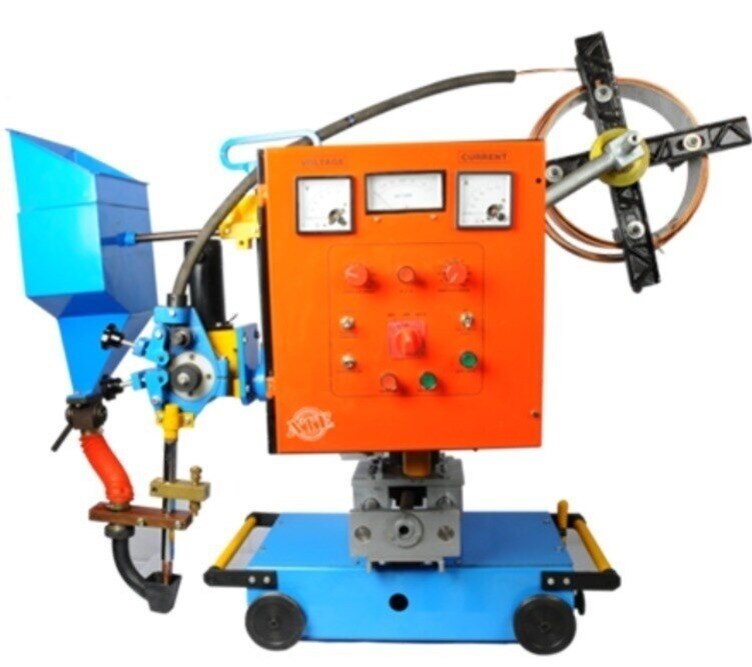
Flux moisture, worn contact tips, poor work-return connections and unverified feed settings can turn a reliable submerged arc system into a source of porosity, unstable arcs and unplanned stoppages. By the end, you will have a practical inspection schedule, cleaning and storage controls, calibration checks and a symptom-based troubleshooting routine for Ibell equipment in Kolhapur.
Key takeaways
- Isolate power and inspect the machine before every production shift.
- Keep flux dry and clear dust from the wire and material paths.
- Check contact tips, wire rollers, return cables and travel components for wear.
- Record welding values and recurring faults to target repairs early.
Set a Safe Inspection Schedule Before Production Starts
Before production or servicing, identify the machine, isolate hazards, and inspect against a written schedule. Submerged arc welding machine maintenance must include the power source, wire path, flux system, cooling circuit and work-return circuit—not just the visible weld head.
1. Daily: Check the incoming cables, plugs, guards, emergency stop, fan operation, air passages and filters. Where fitted, verify coolant level, pump operation, hose condition and leak evidence. Inspect wire feeding, contact tip, flux hopper, gate, hose, recovery line and slag screen.
Clean the work clamp and contact surfaces; look for heated lugs, broken cable strands or loose attachment. Keep flux sealed and dry, especially during Kolhapur’s humid or monsoon conditions.
2. Weekly: Isolate the incoming supply under the site lockout/tagout procedure; never depend on the front-panel stop button. Qualified personnel must follow the manufacturer’s discharge instructions before opening covers. Remove accumulated flux from the wire-drive area, contact-tip region, hopper, hose, recovery unit and tractor wheels.
Check drive-roll wear, cable terminals, enclosure dust, wheel condition, travel mechanism and visible fasteners.
3. Monthly: Inspect internal cooling passages, fan bearings, pump performance, hose joints, electrical connections and insulation. Check tractor or automation alignment, travel controls and work-return resistance. Review calibration status for current, voltage and wire-feed speed, then record machine ID, wire and flux lots, exposure or drying history, duty-cycle events, faults and corrective action.
A thermal trip is a fault signal, not a maintenance interval. Stop production until restricted airflow, overload, high ambient temperature or cooling failure is corrected.
Control Flux Moisture and Clean the Material Path
Keep flux dry from opening to deposition: store unopened bags in the manufacturer’s sealed packaging, above the floor, away from rain and humid air. After opening, transfer flux to a covered, identified hopper or dry container, record the opening time, and follow the flux manufacturer’s drying and rebaking temperature and time limits.
Do not apply a generic oven setting.
- Inspect for clumps, damp surfaces, oil, rust, slag, unmelted wire and foreign metal before loading.
- Remove wet or contaminated flux from service; do not mix it with clean stock.
- During monsoon conditions, close hopper lids and empty exposed flux at the end of the shift unless the manufacturer permits its continued use.
- Screen recovered flux before reuse, separating slag, wire pieces and metallic debris. Reuse it only within the consumable manufacturer’s stated limits and blend it with fresh flux when the procedure allows.
Clean the hopper gate, flux hose, nozzle, recovery line and screens with a dry vacuum or clean brush; compressed air can drive dust into bearings, wire drives and electrical enclosures. Clear bridges instead of forcing damp flux through the gate. Remove flux from the contact tip, wire-feed rolls, tractor wheels and rails before it hardens.
Record flux lot, drying cycle, exposure time, recovery ratio and contamination found. This submerged arc equipment upkeep record links porosity, hydrogen-related cracking or arc instability to flux history rather than guessing at welding settings. Maintain the work-return clamp and contact surfaces too: contamination there causes local heating and an unstable arc.
Replace Wear Parts and Check Wire, Return and Travel Systems
A worn or oversized contact tip can destabilize the arc before it burns through. Inspect the bore for oval wear, confirm the tip matches the wire diameter, tighten its seating, and align it with the guide. Excessive electrical stick-out causes irregular feeding, arc wandering and inconsistent penetration.
| Component | Inspect | Adjust or replace |
|---|---|---|
| Contact tip | Bore wear, ovality, looseness and alignment | Replace when the bore is enlarged or wire movement is rough |
| Wire-feed path | Drive-roll grooves, pressure, guide tubes, liner and wire rust | Set roll pressure for positive feed without crushing wire; replace worn rolls, guides or liner |
| Work return | Clamp jaws, contact surfaces, lugs, cable heating and broken strands | Clean to bright metal and secure a low-resistance connection to the workpiece |
| Tractor | Wheels, rails, drive coupling, backlash, speed and cable or hose drag | Remove flux and slag; replace worn wheels, correct backlash and recalibrate travel |
For ibell welding machine care, do not wait for complete tip failure. A tip that intermittently sticks the wire can create burnback and force the feeder to work against unstable resistance.
- Clean flux from drive rolls, guides, wheels and rails before inspection.
- Check wheel slip after clearing the track; accumulated flux can imitate a travel-speed or welding-parameter fault.
- Record each tip change, wire lot, current, voltage, wire-feed speed, travel speed and corrective action.
This record makes sub arc welder maintenance in Kolhapur traceable to feeding, return, travel or consumable wear instead of blaming every defect on operator settings. Compare indicated values with calibrated instruments during scheduled checks; a display does not prove calibration.
Verify Welding Values, Cooling and Mechanized Alignment
Confirm loaded welding values, not just panel settings. For ibell welding machine care, measure current and voltage during an arc with calibrated external instruments and compare them with the power-source displays.
Check actual wire-feed speed by timing a measured wire length against the commanded setting; a mismatch changes heat input even when the bead looks acceptable.
- Record current, voltage, wire-feed speed and travel speed for the qualified weld procedure.
- Measure travel speed over a marked distance, then compare the result with the tractor or robot command.
- Check duty-cycle loading against the machine rating at the measured current, ambient temperature and production cycle; repeated overloads show up as thermal trips, hot cables or premature power-source failure.
- Inspect the contact tip, drive-roll pressure, wire guides and spool brake if feed speed fluctuates during the test.
- After a collision, torch change, rail adjustment or repair, verify torch TCP, wire angle, seam-tracking sensor response, travel-axis zero, end limits and safety interlocks.
Do not re-teach only the weld path. A shifted TCP can place the electrode beside the joint while the programmed coordinates still appear correct.
Record the machine ID, wire and flux lot, calibration results, duty-cycle events, faults and corrective action; these submerged arc machine details in Kolhapur help separate a power-source error from feeding or alignment drift. ATE WELDING ENGINEERING ROBOTICS AND AUTOMATION PRIVATE LIMITED can use the same records when checking automation-compatible equipment against the actual joint setup.
Related product
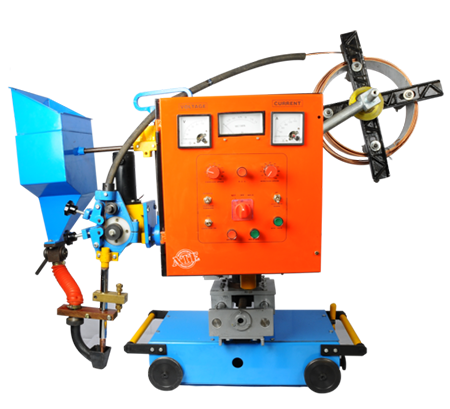 | ARC Welding Machine High-Efficiency Welding Solutions At ATE Welding Engineering & Robotic Automation, we provide advanced Submerged Arc Welding (SAW) machines designed... View product → |
Use Symptoms and Records to Find Recurring Faults
A recurring fault becomes identifiable when every weld is tied to a record, not a memory of the last adjustment. Log machine ID, wire and flux lot, flux drying and exposure history, current, voltage, wire-feed speed, travel speed, duty-cycle events, contact-tip changes, calibration results, fault and corrective action.
This turns submerged arc welding machine maintenance into fault tracing.
- An unstable arc points to a worn, oversized, loose or misaligned contact tip, excessive stick-out, or a poor work-return connection. Replace or seat the tip, clean the clamp and work surface, and inspect hot cable lugs.
- Wire stubbing calls for checks on tip bore, drive-roll pressure, wire alignment and feed resistance. Correct the restriction before changing welding values.
- Uneven beads indicate travel inconsistency, tractor alignment error or fluctuating wire feed. Check wheels, rails, encoder feedback and actual travel speed.
- Flux bridging in the hopper points to damp flux, a blocked gate or restricted hose. Isolate the hopper, remove the bridge and verify sealed storage and manufacturer-specified drying limits.
- Porosity requires checking flux exposure, screening, slag contamination and recovery handling. Do not return unscreened recovered flux.
- Poor penetration demands a recorded comparison of current, voltage, wire-feed speed and travel speed against the qualified procedure.
- Overheating requires stopping production and checking duty-cycle loading, cooling airflow, cable joints and return resistance.
- Tractor drift requires cleaning wheels and rails, correcting alignment and checking drive or encoder response.
For sub arc welder maintenance in Kolhapur, humid exposure deserves a dated record. Good submerged arc equipment upkeep means changing one cause at a time, then recording the result.
Frequently asked questions
What should you inspect before using a submerged arc welding machine?
Identify the machine, isolate hazards, then inspect the power source, wire path, flux system, cooling circuit and work-return circuit against a written schedule.
How do you control flux moisture in submerged arc welding?
Store flux in sealed, dry conditions, follow the flux manufacturer’s drying instructions and prevent dust or moisture from entering the delivery path.
Which wear parts need regular checks on an Ibell welding machine?
Inspect the contact tip, wire rollers, guide liners, flux hoses, return cables and travel-system components for wear, damage or restricted movement.
How can welding records help diagnose recurring faults?
Record current, voltage, wire-feed speed, travel speed, flux flow, cooling condition and fault symptoms, then compare repeated defects with those entries.