A machine’s advertised amperage does not tell you whether it will run your electrodes, suit your workshop supply, or maintain output through a production shift. By the end, you will have a technical, site, and commercial checklist for comparing quotations and placing an order with fewer costly gaps.
Key takeaways
- State the welding process, material, thickness, electrode, and deposition requirement.
- Match electrode diameter, amperage, and duty cycle to actual production intervals.
- Compare the nameplate with your Pune site’s voltage, phase, frequency, and protection.
- List included cables, holders, regulators, warranties, tests, delivery, and commissioning in writing.
Start with the Weld: Process, Material, Thickness and Electrode
Give the Pune supplier the weld application, not just “stick welding” or a preferred amperage. State the process: MMA/SMAW, TIG/GTAW, MIG/MAG/GMAW, FCAW, submerged arc, or a robotic combination. A 250 A rating means little without the wire or electrode, material, thickness and deposition requirement.
Use this numbered arc welding machine order details checklist in your enquiry:
1. Name the material grade, such as mild steel IS 2062, stainless steel 304, aluminium 6061, or a specified cast iron grade.
2. State the minimum and maximum thickness, joint type, groove preparation, root gap and weld position: flat, horizontal, vertical or overhead.
3. Specify the electrode or wire classification, diameter and coating or core type. For MMA, identify whether you need cellulosic, low-hydrogen, stainless-steel or aluminium electrodes, including 2.5 mm, 3.15 mm or 4.0 mm sizes.
4. Give the required weld length, deposition rate, weld size, daily arc-on time and target output. Include any qualified welding procedure specification or preheat requirement.
5. Identify site constraints: single-phase or three-phase supply, voltage, frequency, generator use and available connected load.
For arc welding machine for details before ordering in Pune, also request the proposed power source, holder or feeder, torch, work lead, earth clamp, gas equipment, cooling unit and trolley. Put installation, training, manuals, consumables, warranty exclusions, response time and critical spares into the quotation; omitted accessories become installation delays.
Match Electrode Diameter and Duty Cycle to Real Production
Electrode diameter sets the current range, while material thickness and joint design determine whether that range is enough. A 2.5 mm rod suits lighter fabrication; a 4.0 mm rod needs substantially more current and thermal capacity. Confirm MMA/SMAW, TIG/GTAW, MIG/MAG, FCAW, submerged arc, or robotic welding before comparing amperage.
| Electrode | Typical MMA current | Common thickness use |
|---|---|---|
| 2.5 mm | 60–90 A | About 2–4 mm material |
| 3.15 mm | 90–130 A | About 4–8 mm material |
| 4.0 mm | 130–180 A | About 6–12 mm material |
Treat these as starting ranges, not a welding procedure. Your WPS, weld position, joint gap and pass sequence can change the setting. State whether the machine must run cellulosic, low-hydrogen, stainless-steel or aluminium electrodes; hot start, arc force and anti-stick do not prove sustained performance.
Compare rated current, output voltage and duty cycle together. IEC 60974-1 commonly expresses industrial ratings as a percentage of a 10-minute cycle at 40 °C: 60% at 250 A means six minutes welding and four minutes cooling at that load. Do not compare that figure with a short-term maximum.
For arc welding machine specifications in Pune, submit:
- Required minimum and maximum current, including stable operation at 20–60 A for thin sheet.
- Electrode sizes, weld position, material thickness and daily arc-on time.
- Rated output and duty cycle at the intended current, plus thermal protection details.
- Maximum input current, protective-device rating, cable size and generator operation requirements.
Two hours of arc-on time spread across a shift demands less thermal capacity than two hours of near-continuous welding. Size for the second case if production cannot tolerate cooling pauses.
Check the Nameplate Against Your Pune Electrical Supply
A 415 V nameplate does not prove that a machine suits your Pune workshop. Confirm the stated voltage tolerance, 50 Hz frequency, phase sequence, maximum input current, power factor, efficiency and recommended protective-device rating before ordering. A single-phase welder at high output can draw enough current to trip a small feeder.
Record this arc welder purchase information for the supplier and electrician:
- Supply: single-phase or three-phase, nominal voltage, available connected load, measured phase imbalance and earthing arrangement.
- Machine: welding process, rated input current, output rating, duty-cycle test temperature and required output at your electrode or wire size.
- Installation: cable conductor size, cable length and route, voltage-drop limit, plug or lockable isolator, breaker or fuse rating and protection against mechanical damage.
- Backup power: generator or DG kVA, AVR type, allowable voltage and frequency variation, neutral-earthing arrangement and other loads running simultaneously.
- Site: ambient temperature, dust, moisture, ventilation, enclosure location and clearance for cooling-air intake and exhaust.
| Supply arrangement | Verify | Risk if mismatched |
|---|---|---|
| Single-phase | Phase, voltage, feeder capacity and input current | Nuisance tripping or overheated wiring |
| Three-phase | Phase sequence, balance, earthing and isolator rating | Motor or fan faults and unstable welding |
| Generator/DG | Continuous kVA, AVR response and permissible load step | Voltage collapse or generator shutdown |
Have an electrician measure the feeder under load, not only at an empty socket. For a robotic cell, verify the machine’s electrical installation against IEC 60204-1 and confirm interlocks, emergency stops and unexpected-restart prevention before commissioning.
Choose the Right Machine Type and Confirm What Is Included
Compare transformer, inverter and engine-driven welders at the same rated current, output voltage and duty cycle—not by the largest number on the brochure.
| Type | Main advantage | Best fit and limitation |
|---|---|---|
| Transformer | Simple, rugged and easier to service | Fixed indoor MMA/SMAW work with stable three-phase supply; heavier and less efficient |
| Inverter | Compact, efficient and precise arc control | Workshop, site and TIG/MMA work; protect it from dust, moisture and poor generator power |
| Engine-driven | Independent welding power | Outdoor repair, construction and remote sites; adds fuel, noise, exhaust and engine maintenance |
A 250 A machine is the better fit when your electrode, material, weld position and production schedule require 250 A at the specified duty cycle. Request the IEC 60974-1 rating with output voltage, duty-cycle percentage and 40 °C reference temperature. A “250 A maximum” rating can fail during continuous welding.
Choose a different process when the job demands it: GTAW/TIG for clean, controlled work on thin stainless steel or aluminium; GMAW/MIG/MAG or FCAW for higher production with wire; submerged arc for long, repetitive welds; or a robotic combination for repeatable high-volume joints.
Your arc welding machine order details should state the selected process, material, thickness range and daily arc-on time. Confirm this supply list:
- Power source, torch or electrode holder, feeder, work lead, earth clamp and trolley
- Gas equipment, cooling unit, manuals, consumables and software licences where applicable
- Installation, commissioning, operator training, warranty exclusions and critical spares
Use these arc welding machine specifications in Pune to check voltage, phase, generator compatibility, input current and protective-device rating before approval.
Put the Technical and Commercial Requirements in Writing
The quotation must become your acceptance test, not a price sheet. Treat the arc welding machine for details before ordering in Pune as a written specification, including process, material grade, thickness range, joint type, weld position, electrode or wire size, required output, duty cycle, daily arc-on time, and deposition rate.
State the intended quality system, such as ISO 3834, where applicable.
1. Name the machine configuration: MMA/SMAW, TIG/GTAW, MIG/MAG/GMAW, FCAW, submerged arc, or robotic cell. For MMA, identify 2.5, 3.15, or 4.0 mm electrodes and whether cellulosic, low-hydrogen, stainless-steel, or aluminium electrodes must run. Record output current, duty-cycle percentage, test temperature, input voltage tolerance, and phase sequence.
2. Attach a complete bill of materials. List the power source, torch, electrode holder or feeder, work lead, earth clamp, gas regulator and hose, cooling unit, trolley, fixtures, software licences, consumables, and locally available critical spares. A missing cable or feeder can stop production after delivery.
3. Define commissioning: installation, electrical tests, meter calibration or verification, trial welds, operator training, manuals, fault-code guidance, service intervals, preventive-maintenance schedule, and acceptance inspection. For robotic equipment, include guarding, access-door interlocks, emergency stops, teach mode, unexpected-restart prevention, and checks against IEC 60204-1 and the applicable ISO 10218 edition.
4. Record warranty exclusions, response time, escalation contact, spare-part lead time, and required service location. ATE WELDING ENGINEERING ROBOTICS AND AUTOMATION PRIVATE LIMITED can be compared fairly with other suppliers only when every bidder prices this same scope.
Your arc welder purchase information should also state the Pune site supply: single- or three-phase, nominal voltage, frequency, connected load, phase imbalance, earthing, and DG or generator operation. Do not approve delivery until serial numbers and all promised documents appear on the handover record.
Related product
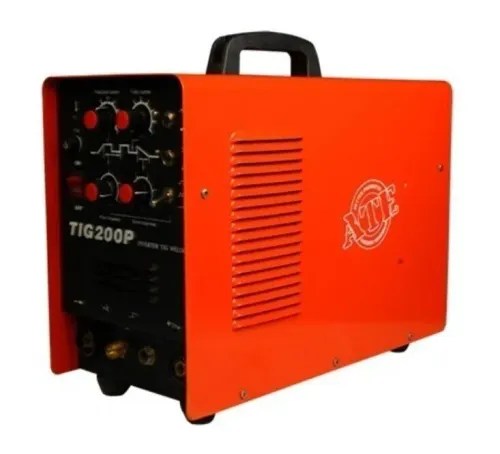
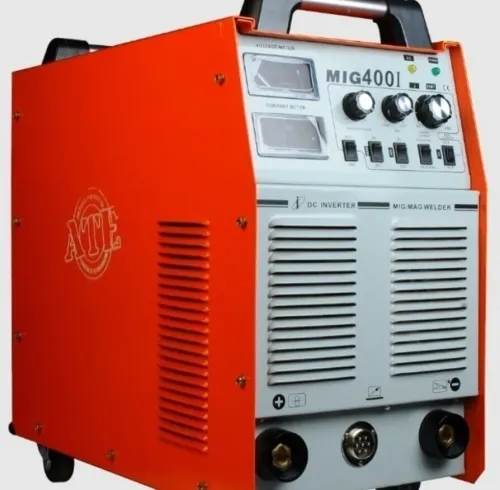
 | ARC Welding Machine Precision, Efficiency, and Reliability At ATE Welding Engineering & Robotic Automation, we provide high-performance ARC welding machines designed for... View product → |
Frequently asked questions
What details should you give a Pune supplier before ordering an arc welding machine?
Provide the process, base material, thickness, joint type, electrode or wire specification, diameter, required amperage, duty cycle, and production target.
How do electrode diameter and duty cycle affect machine selection?
Electrode diameter determines the usable current range, while duty cycle indicates how long the machine can weld before its rated rest period. Match both to your actual weld sequence.
Which electrical supply details must you check on an arc welder nameplate?
Check input voltage, phase, frequency, maximum input current, recommended protection, earthing requirements, and output ratings against your Pune installation.
What should be included in an arc welding machine order?
Write down the machine type, output range, cables, electrode holder, earth clamp, connectors, accessories, manuals, warranty, inspection tests, delivery terms, installation, and commissioning responsibilities.