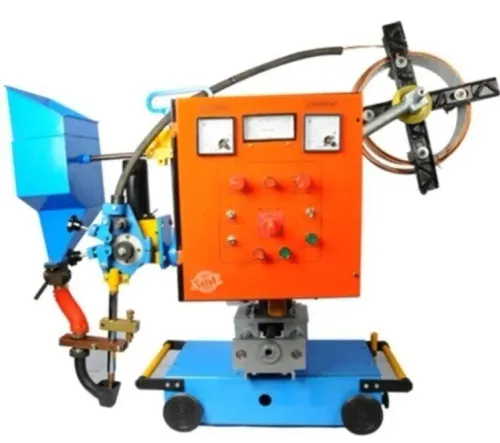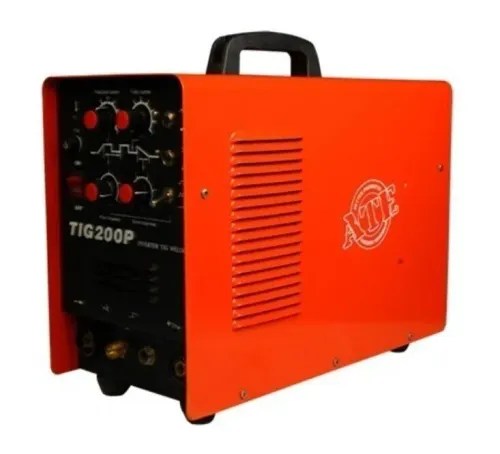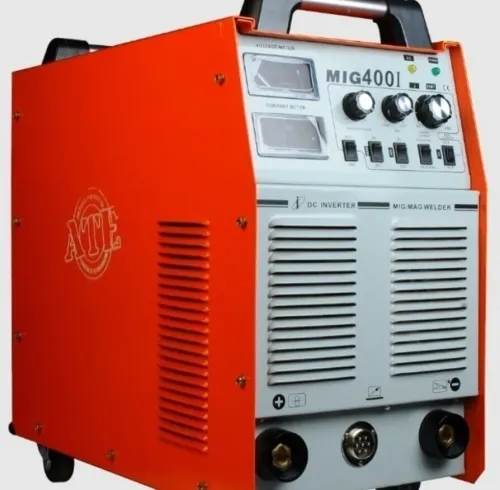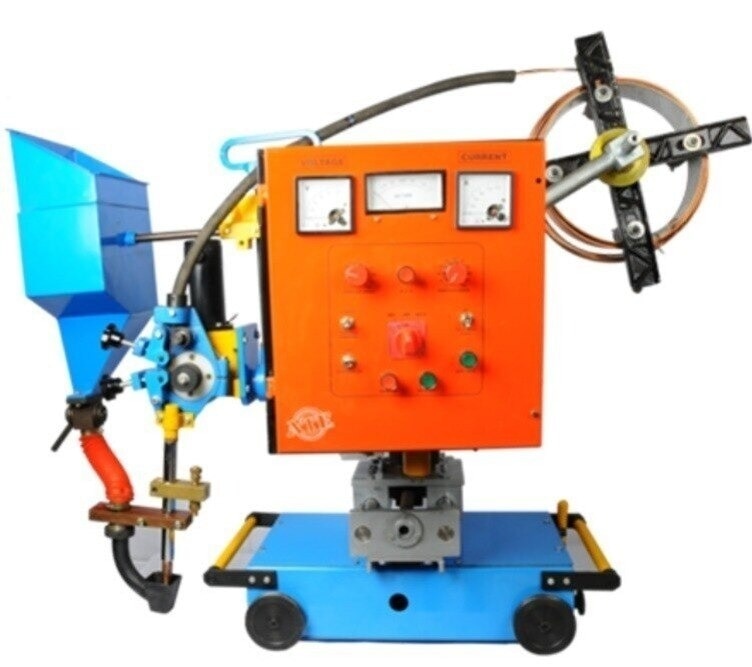
The right choice depends on joint volume, material, electrode, power supply, repeatability, and floor space—not the highest ampere figure on a brochure. You will be able to size an inverter arc welder, compare it with MIG, TIG, or a robotic cell, and build a purchase checklist for a Pune workshop.
Key takeaways
- Choose an inverter for portable, varied-position work and frequent electrode changes.
- Match amperage, electrode diameter, duty cycle, and supply capacity before buying.
- Use MIG, TIG, SMAW, or automation according to joint design and production volume.
- Demand local commissioning, spare parts, preventive service, and operator training in Pune.
When an Inverter Arc Welder Is the Better Fabrication Choice
Choose an inverter arc welder for fabrication when you need portable equipment, fine current control, frequent electrode changes, or welding at different positions. Compared with a transformer or conventional rectifier, an inverter usually delivers a smaller, lighter package with more responsive arc control.
Do not select it by open-circuit voltage alone: check minimum stable current, arc-start behaviour, anti-stick response, arc-force control, and dynamic-arc or inductance adjustment.
| Option | Strength | Better choice when |
|---|---|---|
| Inverter arc welder | Lightweight, efficient, responsive arc control | You move equipment, weld varied thicknesses, or use 2.5–4 mm electrodes |
| Transformer machine | Simple, rugged, easily repairable power source | The shop has fixed work, steady electrical supply, and long welding runs |
| Conventional rectifier | Stable DC output and durable construction | High-current work justifies its size, heat, and permanent installation |
Compare each nameplate at the same current, duty cycle, and 40 °C ambient reference under IEC 60974-1. A 60% rating is not equivalent to 35% at the same amperage; overheating turns the cheaper machine into downtime.
For an inverter arc welder for fabrication, verify performance on your actual steel, stainless steel, aluminium electrode, and electrode diameter before purchase. An inverter is still only a power source, not an automated cell with fixtures, guarding, extraction, and controls.
Arc welding machine inverter fabricators in Pune should also identify stocked IGBT or power modules, control boards, fans, calibrated meters, and repair capability. A warranty does not prevent a proprietary board shortage from stopping production.
Match Current, Electrode, Duty Cycle, and Electrical Supply
A 3.2 mm electrode does not need the same current as a 4.0 mm electrode.
Start with the electrode manufacturer’s range and your welding procedure specification: an E6013 3.2 mm rod often runs around 90–130 A, while a 4.0 mm rod may require roughly 140–190 A. Confirm the machine delivers stable current at that setting, not merely a high maximum output.
Read the nameplate at the same duty-cycle basis. IEC 60974-1 uses a 10-minute cycle at a 40°C ambient temperature; 200 A at 60% means six minutes of welding followed by four minutes of cooling. A 200 A machine rated at 35% supports only 3.5 minutes in that cycle.
Hot Pune workshops, blocked air inlets, and long extension cables reduce usable duty cycle further.
For fabrication equipment selection in Pune, record these checks before ordering:
- Electrode diameter, polarity, material thickness, and required current from the procedure.
- Rated current, duty cycle, ambient temperature, and thermal protection from the nameplate.
- Input phase, voltage range, maximum input current, power factor, efficiency, breaker rating, cable size, and generator compatibility.
- Arc-start, anti-stick, and low-current stability for difficult starts and positional work.
A nuisance trip usually points to low supply voltage, an undersized circuit, poor connections, or a generator that cannot supply the machine’s surge demand.
Buyers comparing Arc Welding Machine Inverter or Automated Equipment Fabricators in Pune should also separate the inverter source from an automated cell: the cell adds feeders, torches, fixtures, controls, guarding, and extraction, each with its own electrical load.
Compare SMAW, MIG, TIG, and Automated Welding by the Joint
The best combination depends on the joint family: use an inverter arc welder for fabrication when parts change frequently, MIG for fast repeatable fillet welds, TIG for clean precision work, and automation when the same joint returns often enough to justify setup.
| Option | Quality and speed | Flexibility and setup |
|---|---|---|
| SMAW | Good structural quality with the correct electrode; slower because you stop for electrode changes and slag removal. | Handles outdoor work, dirty steel, positions, and varied thicknesses. Setup is low. |
| MIG | High deposition and fast continuous welding on clean carbon steel, stainless steel, or aluminium. | Excellent for repeated fillets and accessible joints. It needs shielding gas, wire-feeder control, and better fit-up. |
| TIG | Highest control and appearance, but the slowest production rate. | Suits thin sections, stainless steel, aluminium, root passes, and visible joints. Cleaning and operator skill increase effort. |
| Automated welding | Consistent acceptable welds at high volume when joint presentation is stable. | Requires fixtures, positioner, torch, wire feeder, guarding, controls, fume extraction, and a validated program. Changes become expensive. |
For an automated welding equipment comparison, measure acceptable joints per shift or cost per acceptable joint—not robot travel speed. Include arc-on time, loading, unloading, fixture changes, torch cleaning, wire-tip maintenance, gas changes, programming, rework, and operator intervention.
A complete cell also needs qualified welding operators or setters under ISO 14732; a power source alone does not provide automation.
Use Production Volume and Part Repeatability to Justify Automation
Automation earns more value when the same joint family runs repeatedly and the parts arrive in the same position. A manual inverter remains the better choice for prototypes, repair work, short batches, frequent geometry changes, and welds that require constant operator judgment.
| Option | Best fit | Main cost or limitation |
|---|---|---|
| Manual inverter | Low-volume, varied fabrication and site work | Labour variation, electrode changes, restarts, and slag removal |
| Mechanised welding | Repeated straight or circumferential joints | Fixture and positioner setup still require attention |
| Robotic cell | High-volume parts with stable joint locations and fixtures | Programming, guarding, extraction, maintenance, and loading time |
Do not compare a robot’s travel speed with an inverter’s rated current. Use completed acceptable welds per shift or cost per acceptable joint. Count loading, unloading, fixture changes, torch cleaning, wire-tip maintenance, gas changes, programming, operator intervention, and rework; a fast arc does not repay a cell that waits between parts.
A complete automated system is more than a power source. It needs wire delivery, a torch package, fixture or positioner, controls, guarding, and fume extraction. Local exhaust becomes more important as arc-on time rises, because general room ventilation may not capture fumes at the weld.
This distinction matters in any automated welding equipment comparison. A search for arc welding machine inverter or automated equipment fabricators in Pune covers separate buying decisions: a flexible inverter for changing work, or a complete cell justified by repeatable production.
Build a Pune-Specific Purchase and Service Checklist
Before you sign, require a written specification, service plan, and site-survey record from the Pune supplier. Separate a welding power source from a complete cell: the latter also needs a feeder, torch, fixture, positioner, guarding, extraction, controls, and a validated program.
1. Confirm input voltage, phase, earthing, rated current, duty cycle, and ambient-temperature basis. Test the intended electrode diameter and material; compare arc start, minimum stable current, anti-stick, arc-force, and inductance control instead of open-circuit voltage alone.
2. Ask for local stock and replacement lead times for IGBT or power modules, control boards, cooling fans, wire-feed motors, torches, contact tips, and calibrated meters. A warranty without parts availability can still stop production.
3. Specify local exhaust ventilation at the arc, filter capacity, duct routing, and maintenance access. Treat extraction as part of fabrication equipment selection in Pune, not an upgrade after installation.
4. For an automated cell, demand an ISO 12100 risk assessment covering fixed or interlocked guarding, gate monitoring, arc shielding, pinch points, safe robot stop, restart prevention, emergency stops, and lockout procedures.
5. Confirm fixture repeatability, part-change time, programming support, operator training, and acceptance tests for weld size, penetration, travel speed, and defect limits. This exposes whether automation suits your actual work.
6. For arc welding machine inverter fabricators in Pune, request references for installations using comparable plate thickness, production hours, and welding processes.
Ask ATE WELDING ENGINEERING ROBOTICS AND AUTOMATION PRIVATE LIMITED to document these points in its quotation so you can compare equipment, service, and cell responsibility on the same basis.
Related product
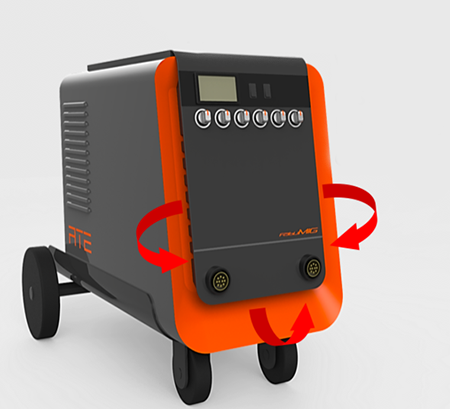 | ARC Welding Machine Precision, Efficiency, and Reliability At ATE Welding Engineering & Robotic Automation, we provide high-performance ARC welding machines designed for... View product → |
Frequently asked questions
When is an inverter arc welder better for fabrication?
Choose an inverter arc welder when you need portable equipment, precise current control, frequent electrode changes, or welding across different positions and sites.
How should you match an inverter welder to the job?
Check the required amperage range, electrode diameter, duty cycle, input voltage, phase supply, and available electrical capacity before selecting the machine.
When should Pune fabricators choose automated welding equipment?
Automation becomes suitable when parts repeat frequently, production volume justifies fixtures and programming, and consistent weld speed and placement matter more than portability.
How do SMAW, MIG, TIG, and automated welding differ by joint?
SMAW suits repair and outdoor work, MIG suits productive work on compatible metals, TIG suits controlled high-quality welds, and automation suits repeatable joints with stable part presentation.