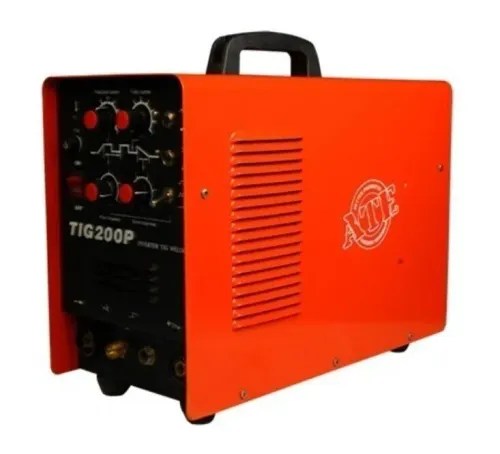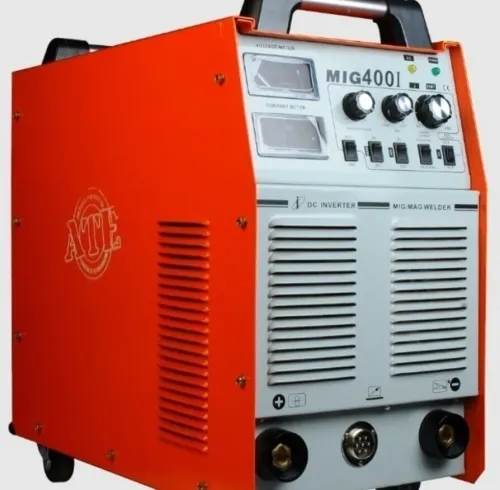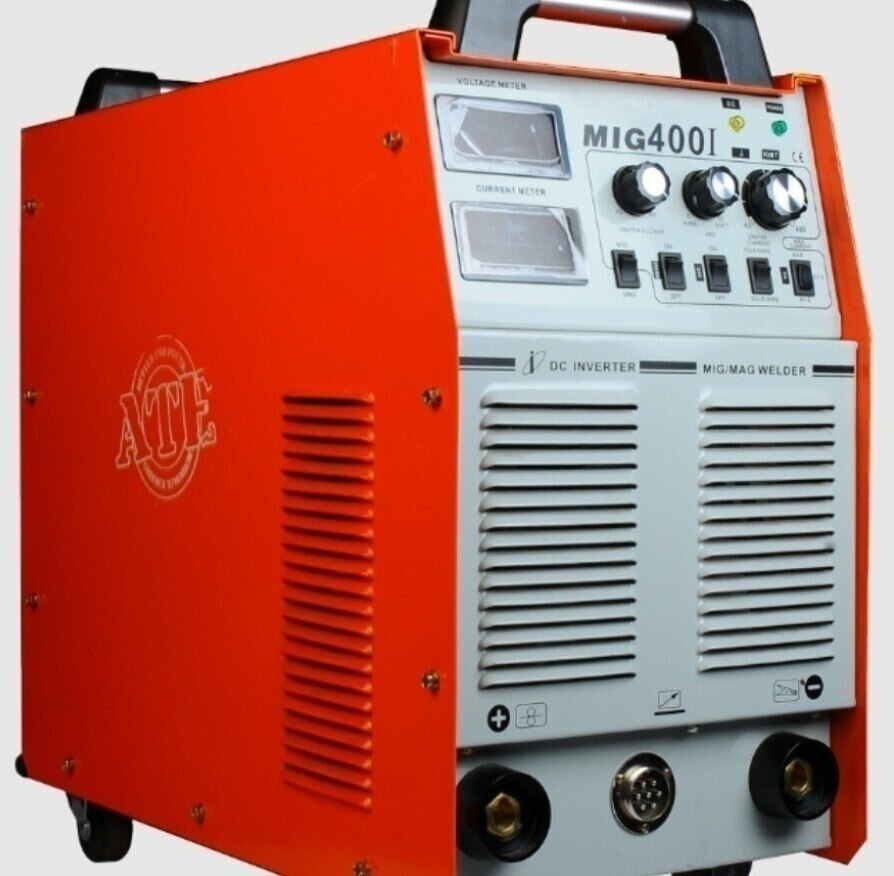
A welding inverter can handle much of the work found on Pune construction sites, but its suitability depends on process, electrode size, duty cycle, power supply, cable layout and weather protection. By the end, you will be able to match a machine to site tasks, identify electrical and environmental limits, and test the equipment before purchase or hire.
Key takeaways
- Match output current and duty cycle to your electrode and joint thickness.
- Check voltage drop across long leads before approving site welding.
- Test arc stability with the site generator, leads and actual electrodes.
- Verify earthing, protection devices and operator controls before work begins.
Which construction welding jobs can an inverter handle on site?
An inverter can handle construction work when its process and specifications match the joint; “inverter” only describes the power-source topology. Arc welding machine construction applications in Pune include structural-steel joints, gates, railings, pipe supports, equipment repair, erection work and field maintenance.
| Process | Suitable site work | Key limitation |
|---|---|---|
| SMAW/MMA | Structural joints, gates, railings, supports and repairs | Requires correct electrodes and qualified procedures |
| Gas-shielded GMAW or FCAW | Productive fabrication in controlled areas | Wind screens and stable shielding-gas coverage are essential |
| Self-shielded FCAW | Outdoor structural work where approved | Use only with a qualified procedure, specified consumables and fume controls |
SMAW is often more practical than solid-wire GMAW outdoors because wind can disperse shielding gas and create porosity. Gas-shielded MIG and FCAW need effective wind screens and controlled gas coverage; changing from a transformer to an inverter does not remove that requirement.
Rebar-related fabrication belongs on the list only when the design and engineer-approved detail permit welding. Do not weld reinforcement or primary structural members because an inverter produces a neat bead.
Load-bearing work requires the project’s nominated code, qualified welders, a qualified welding procedure, approved consumables and inspection. AWS D1.1 may apply to structural steel, but the contract can require an Indian standard or another specified code. An inverter cannot make an unqualified weld acceptable.
How should you size the inverter for electrodes, metal and site power?
Start with the electrodes and welding procedures you will actually use, then match current to metal thickness. E6013 suits general fabrication; E7018 suits higher-strength structural work. A welding machine inverter for construction welding in Pune must support those requirements, not merely display a large maximum-amperage figure.
A 200 A nameplate does not prove sustained performance with 3.2 mm or 4.0 mm electrodes. Check the output-current range, recommended electrode sizes, open-circuit voltage, duty cycle, input phase, breaker capacity, earthing and generator compatibility.
| Option | What it means | When it applies |
|---|---|---|
| IGBT inverter ARC | Compact, efficient, and portable | SMAW/MMA site work with limited access |
| Transformer-rectifier | Heavier, simpler, and robust | Fixed sites that value straightforward service |
| MIG inverter | Productive wire welding requiring shielding gas | Controlled areas with wind screens and gas supply |
| Multi-process MIG/TIG/ARC | Flexible but more complex to specify and maintain | Crews handling several approved processes |
For an inverter welding machine construction contractors in Pune should confirm the actual site supply: 230 V single-phase, 50 Hz for suitable lower-output units, or 400/415 V three-phase for higher-output equipment. Do not assume a nominal 200 A machine runs from any 230 V outlet.
- Match current, electrode diameter, metal thickness and qualified procedure.
- Check breaker rating, protective devices, earthing and generator input kVA.
- Compare duty-cycle figures at the same current and ambient basis.
- Confirm cable capacity and service access before purchase.
Will the inverter keep its arc during long leads, generator use and repeated welding?
A 200 A inverter can keep working at the construction work face only when its duty cycle, cable arrangement and power source match the job.
IEC 60974-1 uses a ten-minute reference period. A machine rated 200 A at 60% can weld at 200 A for six minutes, then needs four minutes at idle or reduced load. Compare duty-cycle ratings at the same welding current and ambient-temperature basis; a higher maximum amperage does not prove better endurance.
| Rating | Welding time in 10 minutes | Meaning |
|---|---|---|
| 200 A at 60% | 6 minutes | Four minutes at idle or reduced load |
| 200 A at 40% | 4 minutes | Six minutes at idle or reduced load |
| 160 A at 60% | 6 minutes | Compare only with another 160 A rating at the same temperature basis |
Long leads increase voltage drop, particularly at high current. Undersized or coiled extension leads can overheat and weaken the arc.
Before deployment, check:
- Conductor size and total welding-lead length
- Return-cable capacity and clamp condition
- Extension-lead size, routing and heat buildup
- Machine input kVA from its manual or nameplate
- Generator continuous apparent-power capacity, voltage regulation and waveform
- Starting or inrush behaviour, earthing and protection
- Auxiliary site loads, including lights, grinders and chargers
Welding output amperes are not a generator-size rating. Add every auxiliary load to the generator calculation, then place the machine close to the work when practical. Specify industrial welding equipment for contractors in Pune with the complete cable and power arrangement, not the inverter cabinet alone.
What site controls protect weld quality and electrical safety in Pune?
Treat the inverter as site equipment, not workshop equipment: Pune heat, dust, monsoon rain and temporary wiring can damage it or spoil welds. For arc welding machine construction applications in Pune, use this procedure:
1. Place the machine under a covered, dry shelter on an elevated platform, away from rain, standing water and wet mud. IP23 under IEC 60529 protects against fingers or objects and water sprayed up to 60 degrees from vertical; it is not waterproof. Keep ventilation clearance and leave access for cleaning dust-clogged cooling paths.
2. Use sound, fully insulated cables and a rated return clamp. Connect the clamp directly to clean work metal, not a distant structural member, scaffold, lifting chain or temporary building steel. Unintended current paths can arc at joints or damage bearings and electrical equipment. Protect the supply with correct breakers, earthing and a residual-current device.
3. Keep work surfaces dry and control welding fumes with local extraction or suitable ventilation. After storage or transport, inspect the machine, leads and electrode holder for condensation before energising equipment.
4. Keep E7018 packets sealed in controlled storage. Issue or re-dry electrodes only according to the consumable specification and qualified welding procedure; moisture control reduces hydrogen-related cracking risk.
5. Stop work when rain, wet mud, damaged insulation or condensation compromises safety. Clean dust before it blocks cooling, and record enclosure condition, cable condition and consumable storage in the site inspection.
How can a contractor prove the machine is ready before buying or hiring it?
A practical acceptance test matters more than a showroom promise for inverter welding machine construction contractors in pune. Demand a witnessed site trial using the actual work method, not a no-load demonstration at maximum amperage, which proves little about arc stability, heating or sustained output.
1. Weld at the intended current and duty cycle using the specified 3.2 mm and 4.0 mm electrodes, or the approved wire. Record arc starting, restart behaviour and weld continuity.
2. Run the machine from the actual 230 V or 400/415 V site supply and intended generator. Check voltage stability, breaker behaviour and nuisance trips under load.
3. Inspect the complete circuit after repeated welds. Check electrode and return cables, connectors and the return clamp for excessive heating, loose joints or damaged insulation.
4. Trigger the thermal protection through legitimate sustained welding, then record how the machine recovers. Confirm that the fan, controls and output return without an unexplained delay.
5. Inspect service access on site: cooling-path cleaning, fuse or protection access, replacement parts, fault diagnosis and the route for repairs.
Require the supplier or rental provider to state the process, output range, IEC 60974-1 duty-cycle basis, input protection, enclosure limits, recommended cable arrangement and spare or service path in writing. Include these results in the acceptance record.
For industrial welding equipment for contractors in pune, ask ATE WELDING ENGINEERING ROBOTICS AND AUTOMATION PRIVATE LIMITED to match the proposed machine and accessories to your electrodes, site power, cable distances, environmental controls and acceptance test rather than accepting a generic inverter recommendation.
Related products
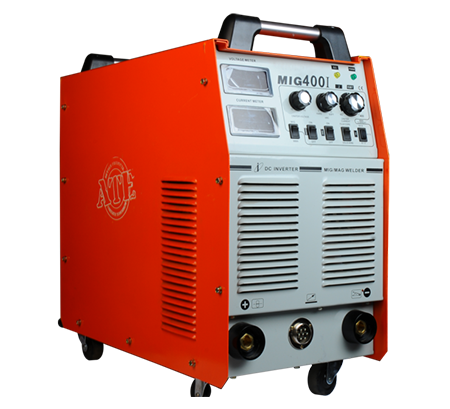 | MIG Welding Machine High-Speed and Versatile Welding Solutions At ATE Welding Engineering & Robotic Automation, we offer advanced MIG (Metal Inert Gas) welding machines... View product → |
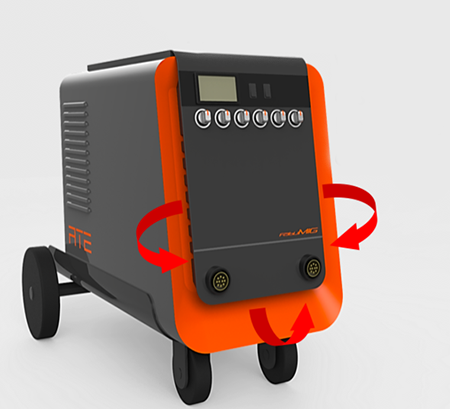 | ARC Welding Machine Precision, Efficiency, and Reliability At ATE Welding Engineering & Robotic Automation, we provide high-performance ARC welding machines designed for... View product → |
Frequently asked questions
Which construction welding jobs can an inverter handle on site?
A correctly sized inverter can support structural-steel joints, gates, railings, pipe supports, erection work, equipment repair and field maintenance when its process, electrode and output match the joint.
How should you size an inverter for electrodes, metal and site power?
Start with the electrode diameter and required current, then check the machine’s duty cycle, input voltage, generator compatibility and the thickness and position of the joint.
Will an inverter keep its arc during long leads, generator use and repeated welding?
Confirm the machine’s input tolerance and arc response, use correctly sized welding leads, and run a practical test with the intended generator, lead length, electrode and repeated weld sequence.
What site controls protect weld quality and electrical safety in Pune?
Control moisture, contamination, joint fit-up and electrode storage; inspect leads and holders; provide reliable earthing, suitable overcurrent protection, dry work areas and correct PPE.
How can a contractor prove the machine is ready before buying or hiring it?
Request the nameplate and test records, then perform a witnessed trial using the actual electrode, joint material, lead length, generator and welding cycle planned for site work.