The right choice depends on whether you need a complete arc-welding system or a controlled way to add separate filler wire to an existing heat source. By comparing the process, shielding, controls, consumables and production demands, you can decide between a cold wire feeder, a flux core welder or a combined welding cell.
Key takeaways
- Choose a cold wire feeder when another process supplies the arc and molten pool.
- Choose a flux core welder for a complete FCAW power source and wire system.
- Compare heat source, wire type, shielding, deposition rate and automation needs.
- Specify duty cycle, wire diameter, feed speed and control integration before buying.
Cold Wire Feeder or Flux Core Welder: What Is the Actual Difference?
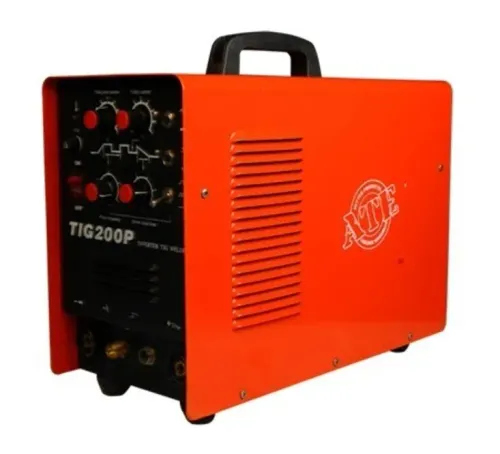
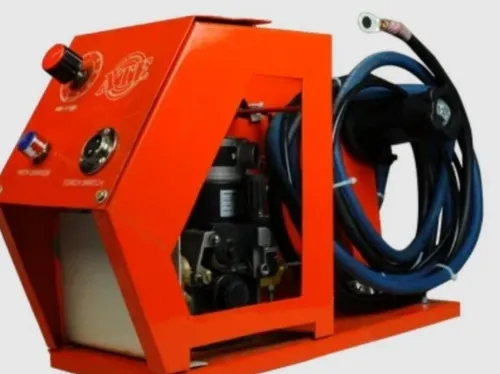
The first decision is whether you need a filler-delivery accessory or a complete arc-welding system. A cold wire feeder machine pushes unenergized solid or other filler wire into a molten pool created by TIG, plasma, laser, submerged arc or another heat source. It is not an arc-welding power source by itself.
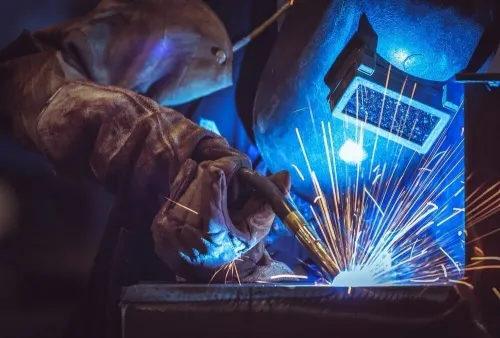
A flux core welder combines the welding power source with a continuous tubular, flux-filled consumable electrode. The electrode carries the welding current and supports the FCAW process, making this equipment suited to conventional fabrication and structural welding.
| Option | What it means | When it applies |
|---|---|---|
| Cold wire feeder | Separate motor-driven delivery of unenergized filler wire | You already have a controlled heat source and need precise filler placement, bead shaping or higher deposition |
| Hot-wire feeder | Electrically preheats the filler before it reaches the pool | You need independent filler heating; confirm that the quotation is for hot-wire equipment |
| Flux core welder | Complete power source and tubular flux-cored electrode system | You need a conventional continuous-electrode process for fabrication or structural work |
Choose a cold wire feeder or flux core welder based on the heat source you already own. Select the cold wire feeder when you want more filler without changing primary arc or laser settings; excessive feed can chill the pool and cause stubbing or lack of fusion.
Select the flux core welder when the machine must create and sustain the welding arc itself. Use both in one cell only when the qualified process requires separate heat and filler control. The feeder does not replace the FCAW arc system.
How Cold Wire Feeder Welding Works in a Production Cell
The heat source creates and sustains the molten pool; cold wire feeder welding adds separate filler without energising the wire. A cold wire feeder machine therefore works as an auxiliary to TIG, plasma, laser or submerged arc equipment, not as a standalone welding power source.
- Mount the feeder, liner and torch or nozzle, then load the specified filler-metal wire.
- Start the heat source and establish the arc, beam or plasma so the pool reaches the qualified size.
- Drive the wire into the pool at the specified angle, distance and wire-feed speed while the torch or head travels.
- Coordinate heat-source output, travel speed, feeder motion, arc start and stop, wire retract and, on robots, motion timing.
- Test burnback, collision clearance and restart behaviour before approving production.
Feed too fast and the wire can chill the pool, stub against the work, melt intermittently or cause lack of fusion. Feed too slowly and the bead becomes unstable or underfilled.
Before buying wire welding equipment, verify power-source compatibility, wire diameter and liner range, feeder motor torque, torch or nozzle mounting, analog or digital control, duty cycle, filler-metal type and wire placement. Confirm that the quote specifies cold wire rather than hot wire; hot-wire systems preheat filler with electrical current before deposition.
Qualify feed speed, travel speed, heat input and pool size together.
What Changes When You Use a Flux Core Welder?
A flux core welder performs flux-cored arc welding (FCAW) with a tubular consumable electrode filled with flux. The flux helps protect the molten weld pool and forms slag, so this is not the same process as solid-wire MIG/GMAW.
FCAW has two shielding arrangements:
| Arrangement | Shielding source | Practical choice |
|---|---|---|
| FCAW-S | Flux generates the shielding | Best for exposed outdoor work because it avoids a gas cylinder and tolerates drafts |
| FCAW-G | Flux plus external shielding gas | Best when controlled shop conditions, gas coverage and a cleaner process justify the extra equipment |
FCAW-G needs a regulator, hose, correct gas and protection from wind. A draft can disturb its external gas envelope and cause porosity. Self-shielded FCAW is more portable than solid-wire MIG, but it produces more fumes and spatter, plus slag that you must chip or brush away between passes.
Prepare the joint properly. Remove mill scale, oil, paint and loose rust before welding; surface contamination increases defects even when the machine settings are correct.
- Store flux-cored wire exactly as its manufacturer specifies. Moisture, damaged flux filling and contamination can cause porosity, feeding faults and hydrogen-related cracking.
- Confirm the wire data sheet before connecting the machine. Many FCAW-S wires use DCEN, while many FCAW-G wires use DCEP; exceptions exist.
- Do not select polarity by diameter alone. Wire welding equipment may support solid-wire GMAW, FCAW-S or FCAW-G, but their consumable, gas and polarity requirements differ.
How Do Cold Wire, FCAW, MIG, TIG and Submerged Arc Compare?
FCAW usually deposits faster than hand-fed TIG because its consumable electrode feeds continuously. The trade-off is slag and a bead that needs cleaning before its final appearance is judged.
| Process | Deposition and penetration | Appearance, skill and shielding | Automation fit |
|---|---|---|---|
| Cold-wire TIG, plasma or laser | Precise, low-slag filler placement; deposition is limited by the heat source’s ability to melt wire without chilling the pool | Clean bead and controlled dilution; high setup and programming skill; shielding gas may be required | Strong fit when bead geometry, filler location or controlled dilution matters |
| FCAW | High deposition; useful penetration for fabrication and structural joints | Slag, fumes and spatter; less immediately clean; FCAW-S uses flux-generated shielding, while FCAW-G needs external gas | Straightforward continuous arc process; FCAW-S suits exposed work better than gas-dependent processes |
| MIG/GMAW | Productive solid-wire deposition with controlled penetration | Clean bead when gas coverage and surface preparation are sound; moderate operator skill; wind can disrupt shielding gas | Simple continuous wire welding equipment for production cells |
| TIG/GTAW | Low deposition but precise heat and penetration control | Highest appearance and heat control; greatest manual skill demand; shielding gas required | Excellent for controlled robotic work when speed is secondary |
| Submerged arc | Very high deposition and deep penetration in long joints | Granular flux covers the arc and restricts visibility; lower access and position flexibility | Suits large, mechanised systems on accessible seams |
Cold wire feeder welding is not a replacement arc process: it meters unenergized filler into a pool made by a separate heat source. Choose a flux core welder for conventional continuous-electrode welding; choose cold wire when that controlled heat source and precise filler placement justify the added coordination.
Which Specification Should You Buy for Your Application?
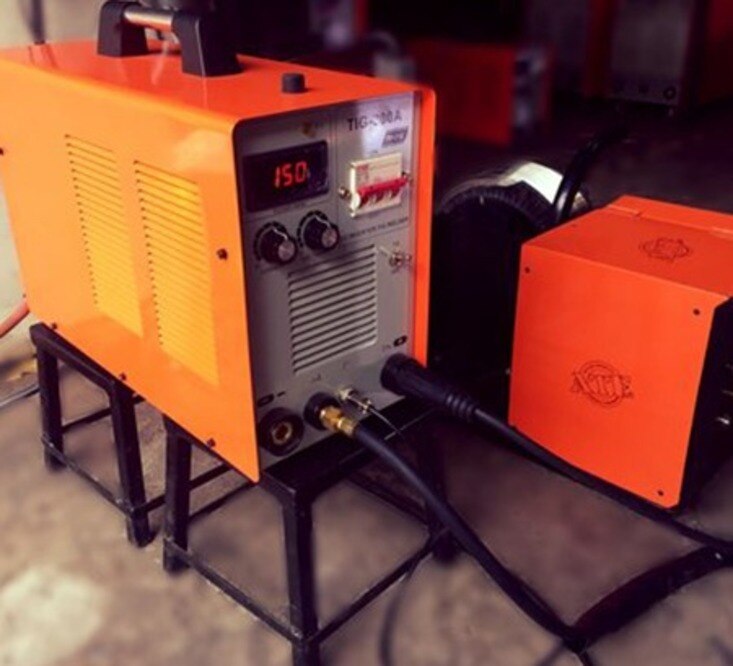
Start with the asset you already own. Choose a cold wire feeder machine when your TIG, plasma or laser source is valuable; choose a flux core welder when you need a self-contained continuous-electrode arc process. Treat wire welding equipment as a matched system, not a feeder bought alone.
- For a cold wire feeder, confirm the existing power source, wire diameter and feed-speed ranges, motor torque, liner and spool compatibility, torch or nozzle arrangement, control protocol, duty cycle and filler-metal type.
- Require a production trial that records wire position, travel speed, heat input, bead dimensions, fusion and restart performance. Excessive feed can chill the pool; poor synchronisation can cause stubbing, lack of fusion or unstable deposition.
- For a flux core welder, check output current and duty cycle at the intended ambient conditions, supported wire diameters, FCAW-S and FCAW-G modes, polarity, voltage and wire-feed adjustment, spool or bulk-pack capacity, generator compatibility, and a shielding-gas connection for FCAW-G.
| Option | Best fit | Procurement focus |
|---|---|---|
| Cold wire feeder | Existing controlled heat source | Separate filler control and robotic sequencing |
| Flux core welder | Conventional fabrication or structural welding | Complete arc source, tubular electrode and shielding mode |
| Both in one cell | Qualified process needing separate heat and filler control | Synchronised travel, feed, output and restart |
ATE WELDING ENGINEERING ROBOTICS AND AUTOMATION PRIVATE LIMITED is useful in the supplier discussion when feeder controls must match an automation-compatible source and robotic travel sequence.
Frequently asked questions
What is the difference between a cold wire feeder and a flux core welder?
A cold wire feeder pushes unenergized filler wire into a molten pool created by TIG, plasma, laser, submerged arc or another heat source. A flux core welder is a complete arc-welding system that melts flux-cored wire with its own welding power source.
How does cold wire feeder welding work in a production cell?
The primary heat source creates the arc and molten pool while the feeder delivers solid or other filler wire at a controlled speed. The cell controller coordinates wire feed with torch travel, heat input and the selected welding process.
What changes when you use a flux core welder?
FCAW uses a continuously fed tubular wire whose flux produces shielding and slag. You must select the correct wire classification, polarity, shielding-gas arrangement, voltage, amperage and slag-removal procedure.
How do cold wire, FCAW, MIG, TIG and submerged arc compare?
Cold wire is a filler-delivery method that depends on another heat source. FCAW and MIG use continuous wire with an arc power source, TIG uses a separate non-consumable tungsten electrode, and submerged arc uses a continuous wire beneath granular flux.