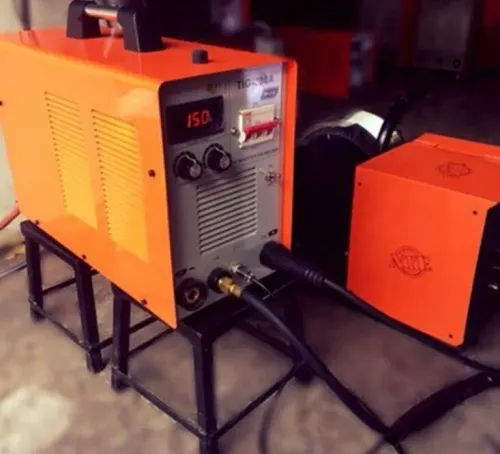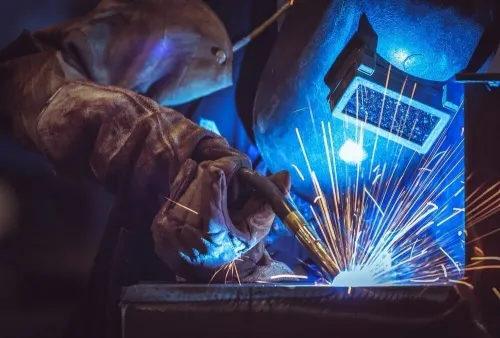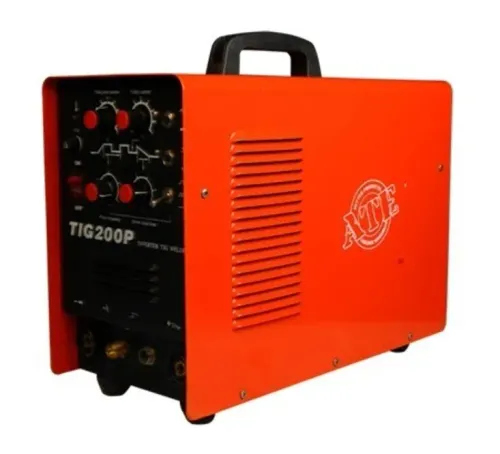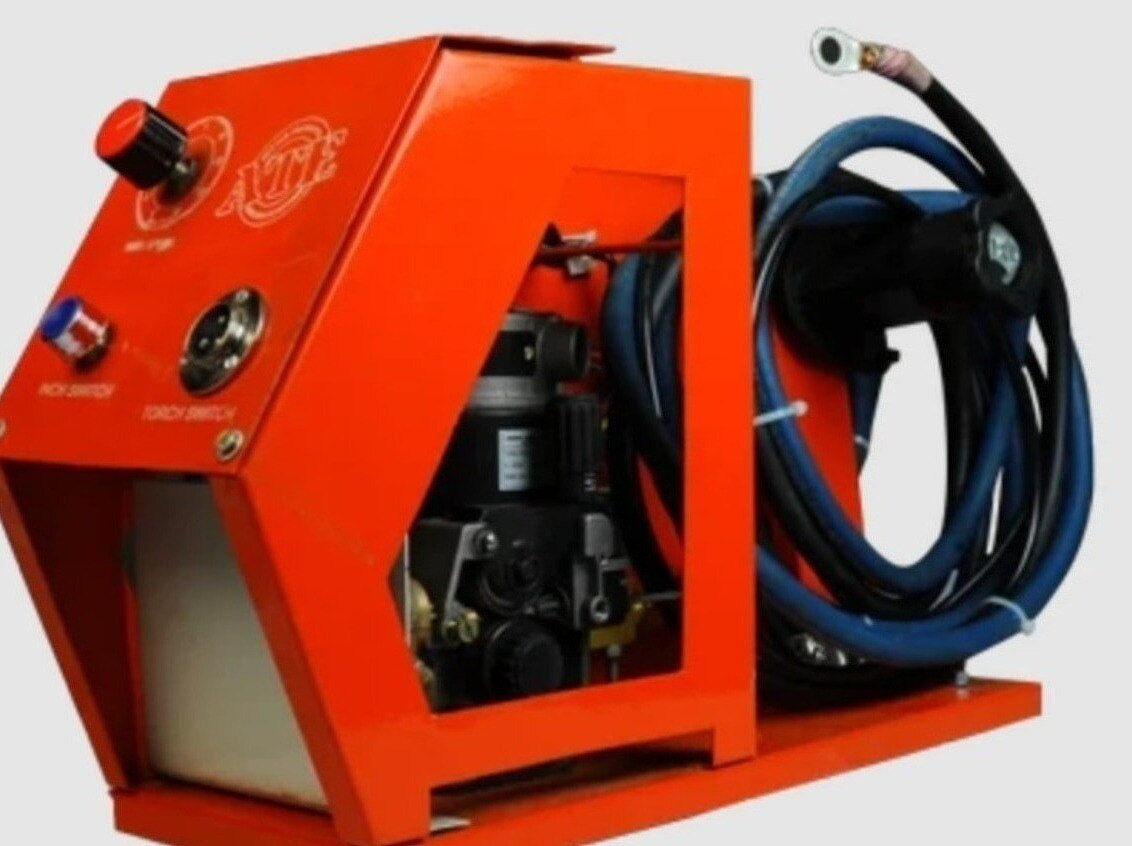
Finding a suitable machine starts with identifying the FCAW process, consumable, and production cell you actually need—not with a search for the lowest-priced power source. By the end, you will know how to screen suppliers, compare specifications, assess automotive applications, and separate a practical FCAW system from equipment that only passes a sample weld.
Key takeaways
- Confirm FCAW suits the part before comparing welders.
- Match wire, material, duty cycle and cell integration requirements.
- Compare FCAW with MIG and SAW for access, speed and cleanup.
- Demand production trials, qualified procedures and documented cell safety.
Start with the FCAW process and the supplier’s automotive experience
Start by asking whether FCAW fits the automotive part, then assess the supplier’s production experience. Resistance spot welding remains the usual choice for many stamped body-in-white structures.
A flux core welder for automotive production is more relevant for thicker brackets, frames, chassis components, exhaust-related work, repair, and low-volume assemblies where deposition rate and gap tolerance outweigh slag removal.
1. Ask the flux core welder supplier to identify the process: self-shielded FCAW, which avoids external gas but produces more fumes and spatter, or gas-shielded FCAW, which can give cleaner welds but needs cylinders, regulators, hoses, and protection from drafts.
2. Request automotive references for parts similar to yours. Look for evidence of repeatable robotic wire feeding, stable arc starts, positional welding, fixture integration, and controlled heat input on mild steel, galvanized steel, high-strength steel, or stainless steel.
3. Specify the electrode classification before comparing machines. AWS A5.20 covers carbon-steel FCAW electrodes; AWS A5.29 covers low-alloy-steel electrodes. The classification states the strength class, welding positions, shielding requirement, and impact-toughness category.
4. Require a quotation for the complete cell, not a power source alone. It should name the feeder, torch and liner, contact tips, gas equipment, grounding, robot or positioner interface, torch cleaner, spare parts, commissioning, and operator training.
Ask whether the supplier documents welding coordination, inspection, traceability, and corrective action under ISO 3834. A generic “industrial grade” claim proves far less than a recorded automotive production trial.
Match the machine specification to your wire, material and cell
The decisive specification is the match between wire classification, material thickness and cell duty—not the machine’s maximum amperage. Treat an automotive welding machine as a complete system with a stable arc at the current, voltage and wire-feed speed your joint requires.
| Option | What it means | When it applies |
|---|---|---|
| FCAW-G | Uses an external shielding-gas cylinder, regulator and hose | Enclosed robotic cells needing consistent arc control and lower process variation |
| FCAW-S | Wire generates its own shielding; no external gas system | Outdoor repair, field work and locations where wind makes gas shielding unreliable |
Specify these items in the quotation:
- Wire diameter and classification for mild steel, galvanized steel, high-strength steel or stainless steel
- Usable amperage and voltage ranges at your required wire-feed speed
- Duty cycle at the production current, input power, phase and voltage
- Spool capacity, feeder torque, torch liner length and contact-tip sizes
- Torch reach, robot interface, grounding and positioner compatibility
- Torch-cleaning, anti-spatter and slag-removal provisions
A narrow wire range can force excessive heat into thin sheet, causing burn-through and distortion; an undersized duty cycle creates thermal trips during repetitive welds. Require production-relevant limits for weld size, welding position, cycle time, wire consumption, spatter, rework, slag removal, fume extraction and inspection.
Ask for sample weld records, not only photographs of a clean test bead.
Choose automotive parts carefully and compare FCAW with MIG and SAW
Flux-cored arc welding suits thicker brackets, chassis members, frames, exhaust-related parts, and low-volume assemblies where high deposition and tolerance for small gaps matter. It is usually a poor choice for thin body-in-white panels, where resistance spot welding controls distortion more effectively.
Process | Strength | Better automotive use FCAW-G | High deposition, good gap tolerance, robotic control with shielding gas | Brackets, frames, chassis parts, and thicker fabricated assemblies MIG/GMAW | Clean, precise arc with less slag handling | Thin sheet, visible welds, short production welds, and applications needing minimal cleanup SAW | Very high deposition under a granular flux blanket | Long, accessible flat or horizontal welds on thick sections A submerged arc welding machine is not a general replacement for a flux core welder.
SAW struggles with exposed, short, positional, and thin-sheet joints because the arc must remain beneath the granular flux.
Specify whether the system uses gas-shielded FCAW (FCAW-G) or self-shielded FCAW (FCAW-S). FCAW-G needs a gas cylinder, regulator, hoses, and stable airflow control, making it the more controllable option inside a robotic cell; FCAW-S suits outdoor repair and field work.
Do not buy on the phrase “flux core welder” alone. Ask for the electrode classification under AWS A5.20 for carbon steel or AWS A5.29 for low-alloy steel, including its position, shielding, strength, and impact-toughness designations.
Include slag removal and fume extraction in the cell evaluation; a faster weld becomes a production bottleneck if cleanup remains manual.
Check complete-system availability, not just power-source stock
Treat flux core welder availability as a complete-cell question, not a warehouse question. A power source can be ready to ship while the correct feeder, torch geometry, wire, robot interface or contact tips remain months away. Ask the flux core welder supplier for a dated, itemised delivery commitment.
- Request a bill of materials naming the power source, wire feeder, torch, liner, contact tips, grounding equipment, robot or positioner interface, torch-cleaning unit, shielding-gas equipment and spare-parts package.
- Specify whether the cell uses FCAW-G or FCAW-S. FCAW-G requires a regulator, flowmeter, hoses and gas supply; FCAW-S does not, but it is a poor default for an enclosed robotic cell where stable arc conditions matter.
- Name the qualified consumable, not merely “flux-cored wire.” Require its AWS A5.20 or AWS A5.29 classification, diameter, tensile-strength class, welding positions, shielding requirement and impact-toughness grade.
- Confirm separate ship dates for the feeder, torch, wire, gas equipment, replacement liners, contact tips and robot interface. A supplier that cannot identify these dates has not demonstrated complete-system availability.
- Put slag handling into the scope. Automated multilayer FCAW may need pass sequencing, torch cleaning, slag-removal provisions and inspection access between passes.
ATE WELDING ENGINEERING ROBOTICS AND AUTOMATION PRIVATE LIMITED should be asked to identify who owns integration, commissioning and production handover, rather than quoting only the welding machine. Require a signed responsibility matrix showing who supplies programming, installation, parameter setup and replacement parts.
Require production trials, procedure qualification and cell safety evidence
Do not approve a flux core welder for automotive production from a demonstration coupon alone. Require evidence from the actual joint, material, wire classification, position and intended production speed.
1. Run a production trial using the proposed automotive welding machine, fixture, robot program and consumables. Record weld size, positional range, cycle time, wire consumption, spatter, rework, slag-removal method, fume extraction performance and the inspection method. Keep sample weld records with settings, operator, date and batch numbers.
2. Specify the electrode classification in the purchase documents. AWS A5.20 covers carbon-steel FCAW electrodes; AWS A5.29 covers low-alloy-steel electrodes. Record diameter, shielding requirement, tensile-strength class, welding position and impact-toughness requirement.
Confirm whether the trial uses FCAW-G with external gas or FCAW-S with self-generated shielding; FCAW-G suits enclosed robotic cells, while FCAW-S usually suits outdoor or repair work.
3. Require a qualified welding procedure for the actual joint, thickness range, material, gas, wire, position and parameters. Use ISO 15614-1 where it governs your qualification route. A supplier’s successful coupon weld does not qualify your production procedure.
4. Request the cell safety file before approval: guarding drawings, access-door interlock tests, emergency-stop validation, torch-collision protection, grounding checks, gas-shutoff arrangements and fume-extraction measurements. The quotation must also identify the feeder, torch, liner, tips, gas equipment, interfaces, cleaning unit, spares and commissioning responsibility. Missing evidence is a hold point, not a paperwork detail.
Frequently asked questions
Does FCAW suit every automotive production part?
No. Evaluate the part, joint access, material, weld position and finish requirements first. Resistance spot welding remains common for many stamped body-in-white structures.
What specifications should you compare when choosing a flux core welder?
Match the power source to the flux-cored wire diameter, wire type, base material, output range, duty cycle, welding position and robotic cell requirements.
How does FCAW compare with MIG and submerged arc welding?
FCAW uses a flux-cored wire and can offer useful deposition and tolerance for selected joints. MIG uses solid wire and shielding gas, while SAW operates beneath granular flux and suits accessible, longer welds. Compare access, cleanup, deposition, distortion and automation needs.
What should a flux core welder supplier provide beyond the power source?
Check availability of the feeder, torch, wire delivery system, shielding or auxiliary gas equipment, fixtures, controls, spare parts, commissioning and integration support.
What evidence should you request before buying an automotive welding machine?
Request production trials on representative parts, documented welding procedures, procedure qualification records where required, risk assessments, guarding details, interlocks and evidence that the complete cell meets your safety requirements.