The right process depends on more than amperage: tungsten and filler control, flux and slag, material, joint position, production rate, gas access and code requirements all change the decision. By the end, you will be able to compare the two processes, specify the equipment, identify their failure risks and choose TIG, flux core or another industrial welding machine for a defined production cycle.
Key takeaways
- Choose TIG for clean, precise welds and thin sections.
- Choose flux-cored welding for higher deposition and production speed.
- Specify duty cycle, wire feeder, shielding, controls and torch access together.
- Match the process to material, joint design, position and required finish.
How the Two Processes Create the Weld
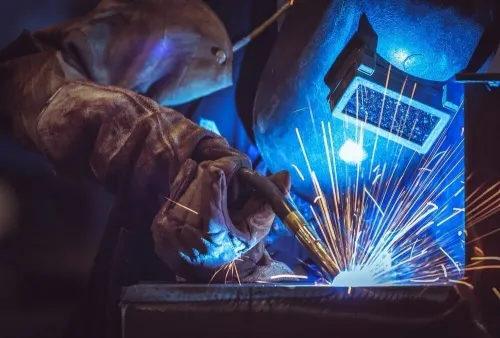
TIG and flux-cored arc welding create the weld in fundamentally different ways, so a TIG welding machine and a flux core welder are not interchangeable power sources. TIG uses a nonconsumable tungsten electrode, separate argon shielding and optional hand-fed filler rod. You control arc length, amperage and filler addition independently.
| Process | What physically happens | Result |
|---|---|---|
| TIG | Tungsten maintains the arc while optional filler is added separately | Clear pool, precise control and no slag |
| FCAW-S | Tubular wire feeds through a contact tip; its core forms shielding compounds and slag | No gas cylinder, but more fume, spatter and cleanup |
| FCAW-G | Tubular wire feeds continuously while specified shielding gas protects the arc | Higher deposition with strict gas-flow and draft control |
TIG on steel and stainless steel normally uses DC electrode negative; aluminium commonly uses AC. FCAW polarity depends on the electrode classification, so follow the wire manufacturer’s instruction rather than copying a TIG setting.
TIG demands prepared tungsten, clean filler and stable gas coverage. Flux core deposits metal faster, but remove slag between passes or trapped slag can become an inclusion.
A high-amperage rating does not erase these differences. It cannot give TIG the wire-feed deposition rate, and it cannot give FCAW independent control of arc length and filler addition. Compare process capability, consumables and cleanup—not amperage alone.
Which Materials, Joints and Positions Favour Each Process
TIG fits thin sheet, stainless steel, aluminium, nickel alloys, visible welds, root passes and joints requiring precise heat and filler control. Conventional flux-cored wire suits carbon and low-alloy steel, thick sections, fillet and groove welds, and long production seams.
| Process | Favoured work | Main limitation |
|---|---|---|
| TIG | Thin sections, stainless, aluminium, nickel alloys, root passes, cosmetic welds | Slow deposition makes long heavy welds uneconomic |
| Flux core | Carbon or low-alloy steel, thick plate, fillets, grooves, long seams | Poor choice for very thin sheet and strict cosmetic finishes |
Do not treat flux core as a replacement for AC TIG on aluminium. Confirm both a qualified aluminium flux-cored consumable and a supporting welding procedure before considering it.
For butt, lap, T and corner joints, fit-up decides the practical choice. TIG exposes excessive gaps because its low deposition rate cannot bridge them quickly. Flux core tolerates production-scale work better, but the torch needs access, contact-tip-to-work distance must remain correct, and slag must be removed between passes.
TIG suits controlled indoor work and difficult starts, where arc placement and filler addition matter more than deposition rate. Self-shielded FCAW is better than gas-shielded FCAW for outdoor or draft-prone work because it avoids external shielding gas, but wind can still create porosity.
A useful TIG welder comparison therefore starts with material, thickness, joint access and position—not amperage alone. The wrong process turns either a clean weld into rework or a productive seam into an uneconomic operation.
How Productivity, Heat and Weld Quality Change the Economics
The lowest total production effort depends on deposited metal plus handling, not arc speed alone. A flux core welder usually delivers higher deposition through faster wire-feed speed and travel, increasing arc-on productivity. Count contact-tip changes, liner wear, wire-pack handling, spatter control and slag removal between passes before declaring victory.
| Process | Productivity burden | Heat and quality checks |
|---|---|---|
| TIG | Slow travel, filler-rod handling, tungsten grinding and argon-cylinder use | Calculate heat input from current, voltage, travel speed and process efficiency; inspect for porosity, burn-through, distortion and contamination |
| FCAW | Higher deposition, but add slag removal, contact tips, liners, wire packs and fume extraction | Check stickout, polarity, shielding, damp wire, slag inclusion, lack of fusion and porosity |
TIG produces no slag and can reduce rework on clean, sensitive joints, but it is not automatically a lower-heat process. A touched tungsten, contaminated filler or lost shielding can create tungsten or oxide contamination; FCAW defects include trapped slag and unacceptable appearance.
Price the complete cycle: flux-cored wire, filler rods, argon, slag disposal, extraction and repair time. FCAW commonly produces more fume; TIG still needs controls for stainless steel, coatings, ozone and nitrogen oxides.
For high-strength or restrained steel, include consumable storage, preheat, interpass temperature and diffusible-hydrogen controls. This tig welder comparison changes again in automation: TIG needs tighter fit-up and arc-length control, while FCAW needs stable feed, torch angle, contact-tip-to-work distance and interpass cleaning. Choose the process whose total handling and repair burden fits the cell.
What to Specify in the Machine, Feeder and Automation Package
Maximum amperage does not tell you whether an industrial welding machine will sustain the required job. Specify current and voltage at the duty cycle you need.
A 60% rating means six minutes at rated output during a ten-minute test, not six minutes of uninterrupted production; arc-on time, repositioning, consumable changes, gas logistics, cleaning and inspection determine throughput.
| Option | Specify | Why it matters |
|---|---|---|
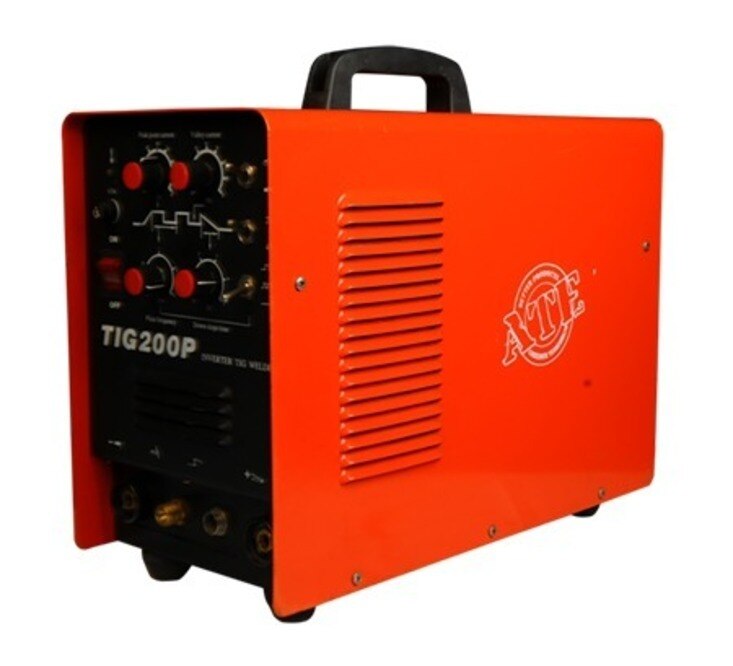
| TIG welding machine | Input supply, mains or generator compatibility, polarity, torch rating, tungsten and collet sizes, gas regulation, high-frequency or lift start, work lead and service parts | Prevents unstable starts, poor shielding and an inadequate work return |
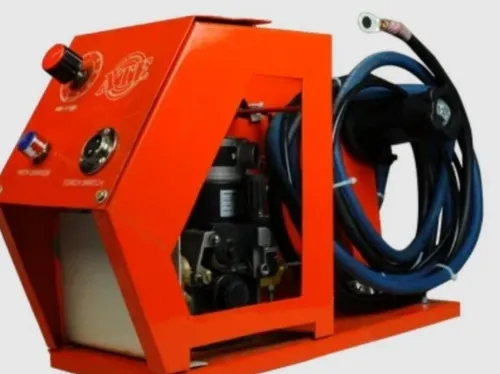
| Flux core package | FCAW-S or FCAW-G wire, polarity, wire-feed speed range, feeder type, spool or wire-pack capacity, liner, drive rolls, contact tips and torch rating | Matches the package to the selected wire instead of assuming every flux-cored setup is interchangeable |
| Either package | Rated output at the required duty cycle, voltage range, consumable availability and replacement-part lead time | Exposes a low-capacity system hidden behind a high-amp figure |
For robotic FCAW, verify stable wire feeding, torch angle, contact-tip-to-work distance and interpass slag removal. Robotic TIG needs tighter fit-up, arc-length and shielding control; specify cold-wire or hot-wire feeding when the procedure requires it.
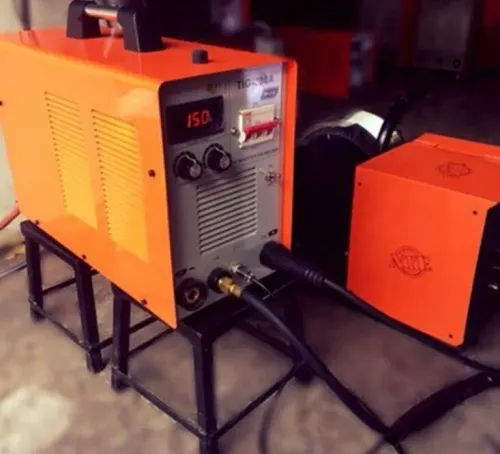
ATE WELDING ENGINEERING ROBOTICS AND AUTOMATION PRIVATE LIMITED is relevant when your comparison includes automation interfaces, feeder integration and serviceable welding equipment rather than a standalone power source.
Related product
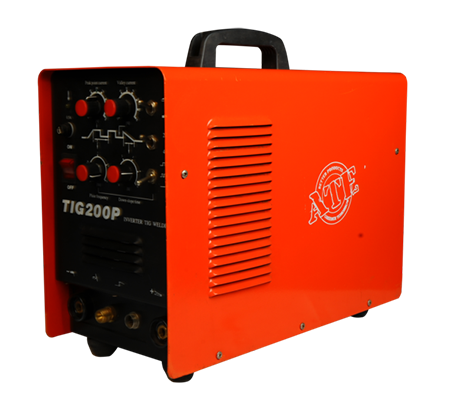 | TIG Welding Machine Precision and High-Quality Welding At ATE Welding Engineering & Robotic Automation, we specialize in TIG (Tungsten Inert Gas) welding machines,... View product → |
Which Process Should You Choose for the Production Cell?
Choose the process that matches the weld, not the highest amperage on the nameplate. This matrix resolves the TIG welding machine versus flux core welder decision for an industrial cell.
| Process | Choose it for | Main limits |
|---|---|---|
| TIG | Thin stainless or aluminium, short seams, root-quality demands, contamination-sensitive work, low-volume precision and highly visible welds | Slow deposition and demanding fit-up |
| Flux core | Carbon or low-alloy steel, thick sections, long seams, structural fillets, high deposition and outdoor work when qualified self-shielded wire is used | Slag, higher fume and cleanup |
| Gas-shielded FCAW | Required deposition rate or weld-metal properties when the cell has curtains, screens and stable gas coverage | Draft can cause porosity |
| MIG | Suitable materials where clean, lower-fume production matters more than FCAW’s flux system | Less suitable when FCAW properties are specified |
| Submerged arc | Long, accessible, mostly flat heavy welds | Poor access and positional flexibility |
| Stick | Portable site work, simple equipment or repair access | Lower deposition and frequent electrode changes |
Before buying an industrial welding machine, record material grade, thickness, joint, position, weld length, finish, volume, operator skill, location, power, gas and extraction. Confirm the specification, consumable classification, WPS, PQR, welder qualification and inspection plan: visual inspection, dye penetrant testing or radiography.
Changing from TIG to FCAW is normally a procedure change, not a machine swap. Reject three shortcuts: flux core is not always gas-free, amperage without duty cycle is incomplete, and TIG precision cannot rescue an under-capacity production cycle. A TIG welding machine and flux core welder solve different production problems.
Frequently asked questions
How do TIG and flux-cored welding create the weld differently?
TIG uses a nonconsumable tungsten electrode, separate argon shielding and optional hand-fed filler. Flux-cored welding feeds tubular wire continuously, while its flux forms shielding and slag during welding.
Which materials and welding positions favour TIG?
TIG favours stainless steel, aluminium and thin sections when precise heat control, low spatter and a clean finish matter. It suits detailed work across multiple positions.
When is a flux core welder the better industrial choice?
Choose flux-cored welding when deposition rate, joint filling and production throughput outweigh the need for a slag-free surface. It suits heavier sections and many structural applications.
What should you specify for an automated welding cell?
Specify the power source, duty cycle, wire feeder, wire diameter, shielding arrangement, torch access, travel control, part fixturing, seam tracking and process monitoring as one package.