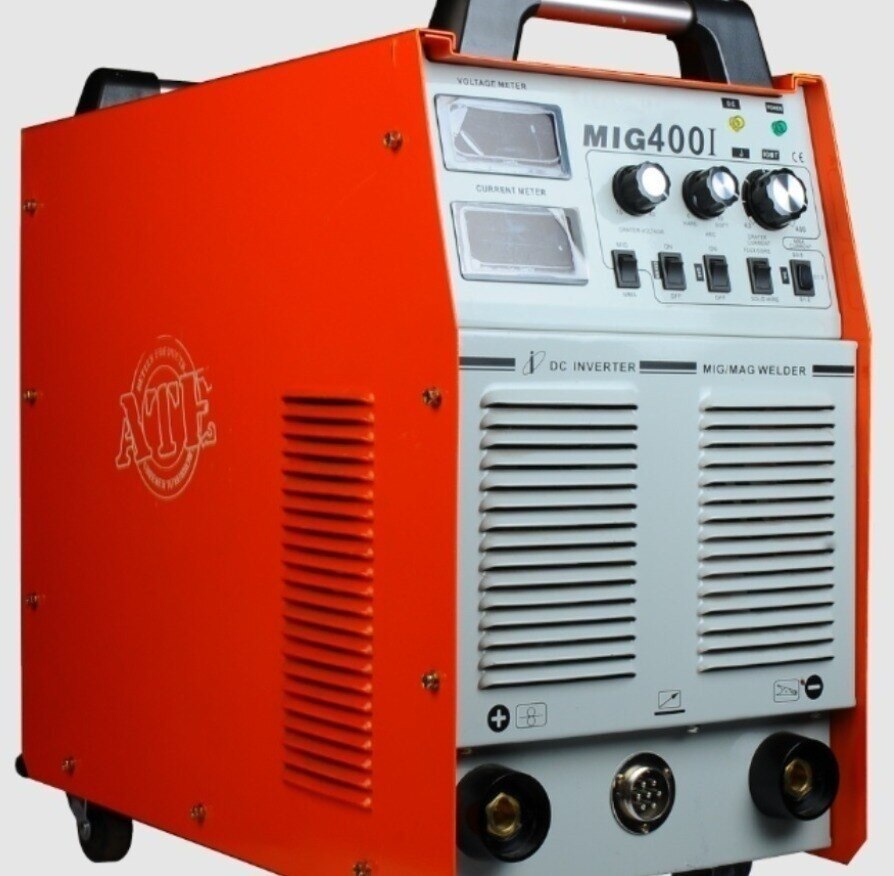
Construction welding demands more than a high maximum-amp figure. You need to match the welding process, wire, gas, electrical supply, duty cycle, mobility, and service package to the steelwork your crews actually produce, then compare suppliers using a witnessed trial and verified specifications.
Key takeaways
- Use MIG for accessible, clean joints with controlled shielding.
- Match amperage and duty cycle to steel thickness and production volume.
- Specify torch length, wire feeder, gas setup, cables, and site protection.
- Choose an industrial MIG welder when uptime and high-volume output matter.
Where MIG Welding Fits on a Construction Site
Structural steel connections, gates, railings, frames, brackets, equipment supports, and site-fabricated assemblies suit MIG processes when joints are accessible and welders can control fit-up, cleanliness, and shielding. MIG is less suitable for heavily wind-exposed work without screens or for thick, deeply restrained joints requiring procedures beyond the machine’s range.
| Option | Shielding | Best construction use | Main risk |
|---|---|---|---|
| Solid-wire GMAW | External argon/CO2 or mixed gas | Indoor fabrication bays, frames, railings, gates, and clean sheet or medium-section steel | Wind disperses gas; porosity follows |
| Gas-shielded FCAW | External gas plus flux-cored wire | Structural steel and heavier sections where higher deposition and penetration are needed under controlled shielding | Wind and poor gas flow cause porosity; slag needs removal |
| Self-shielded FCAW | Flux generates its own shielding | Outdoor erection, repairs, brackets, supports, and site assemblies where wind screens are impractical | More smoke and slag; bead quality and hydrogen control depend on wire and technique |
Choose solid-wire GMAW for a sheltered bay with reliable gas handling. Choose gas-shielded FCAW for heavier structural production inside wind screens. Choose self-shielded FCAW when outdoor mobility matters more than a clean, slag-free bead; follow the wire manufacturer’s polarity and storage instructions.
When comparing a MIG welding machine for contractors, specify the process, wire diameter, torch length, gas equipment, and generator supply—not just “MIG.” Ask a MIG welding machine supplier for construction in Pune to demonstrate the selected wire on your actual joint and site conditions.
Match Welding Capacity to Steel, Joint Design, and Site Power
A 300-amp rating does not tell you whether a machine suits a 6 mm bracket, a 20 mm column connection, or a long fillet weld. Set the target from steel thickness, joint design, weld position, required penetration, wire type, and the site’s available power.
Choose wire diameter against the work:
- 0.8 mm suits lighter sections and lower-current positional welding, but feeds less metal per minute.
- 1.0 mm covers many general fabrication joints with moderate deposition.
- 1.2 mm supports higher deposition on thicker steel, but demands more current and a steadier power supply.
Match duty cycle to production, not the brochure’s largest amperage. A machine rated at 60% duty cycle under IEC 60974-1 conditions means six welding minutes in a ten-minute cycle at a stated current and 40 °C ambient; compare both current and test conditions. Otherwise, thermal cut-outs can interrupt a shift.
For a MIG welding machine in Pune, record these values before comparing quotations:
- Required output current at your actual wire diameter and joint.
- Single- or three-phase input, maximum input current, and permissible input-voltage range.
- Generator capacity for continuous welding load, not only generator nameplate peak.
- Recommended cross-section and maximum length for torch, work-return, and extension cables.
Long, undersized cables create voltage drop, unstable wire feeding, and nuisance trips. A MIG welding machine for contractors must also match the generator, connectors, and cable layout used at the worksite. Verify the choice with a witnessed weld on your steel, joint, wire, gas, and power arrangement.
Build a Site-Ready MIG Package, Not Just a Power Source
Build a site-ready package around more than an inverter power source. Choose a MIG welding machine for contractors with a protected power source, compact feeder, lifting points or wheels, and short interconnecting leads when relocation is frequent. Include the torch, gas regulator, cylinder restraint, earth-return lead, and cable protection.
Ask a MIG machine supplier in Pune to state:
- Permissible input-voltage range, phase requirement, maximum input current, generator size and compatibility, and recommended extension-cable conductor size. An undersized generator or long cable can cause nuisance trips, voltage drop, and an unstable arc.
- Enclosure or ingress-protection rating, operating-temperature range, fan or filter cleaning method, and rain-use restrictions. Do not treat an indoor-rated machine as weatherproof.
- Process configuration for solid-wire GMAW, gas-shielded FCAW, or self-shielded FCAW. Solid wire needs effective gas shielding; self-shielded flux-cored wire is better suited to moving air, but it does not remove the need for correct wire selection and technique.
- Spare availability for contact tips, liners, drive rolls, gas diffusers, earth clamps, relays, fans, and control boards, plus a documented preventive-maintenance schedule.
Keep shielding gas protected from wind with screens and stable regulator settings. Increasing flow alone can create turbulence and pull air into the weld. A separate feeder suits a large fabrication bay, but extra connectors and cable length create more failure and voltage-drop points.
What to Demand from a MIG Machine Supplier in Pune
Your quotation comparison should expose the cost of a failed shift, not just the inverter’s maximum amperage. Ask each mig machine supplier in Pune to quote the same process: solid-wire GMAW, gas-shielded FCAW, or self-shielded FCAW.
| Compare this | Demand in writing | Reject or question |
|---|---|---|
| Electrical fit | Input-voltage range, phase, maximum input current, generator rating, and recommended cable size | “Generator compatible” without figures |
| Welding performance | Output current, wire diameters, duty cycle, and test conditions; compare IEC 60974-1 ratings at the same current and 40 °C ambient | Equal percentages with different test bases |
| Included package | Torch, liner, contact tips, gas diffuser, drive rolls, earth clamp, regulator, cables, and trolley | Accessories listed as “standard” without quantities |
| Spares and service | Torch, liners, tips, rolls, relays, fans, control boards, response time, preventive-maintenance schedule, and local stock | No parts lead time or escalation contact |
| Warranty | Duration, start date, labour and travel coverage, exclusions, and repair or replacement terms | Warranty limited to the inverter without service terms |
| Production trial | Witnessed weld on your steel thickness, joint, wire, gas, polarity, power source, and generator arrangement | Brochure-only approval |
Record low-current arc stability, wire-feed consistency, spatter, crater-fill, consumable-change time, and fault recovery during the trial. Check parameter lockout, password protection, stored programs, weld-data logging, and calibration or verification records when crews share machines.
Use this identical checklist with ATE WELDING ENGINEERING ROBOTICS AND AUTOMATION PRIVATE LIMITED and every mig welding machine supplier for construction in Pune. A cheaper quotation is not cheaper if one missing contact tip stops production.
Related product
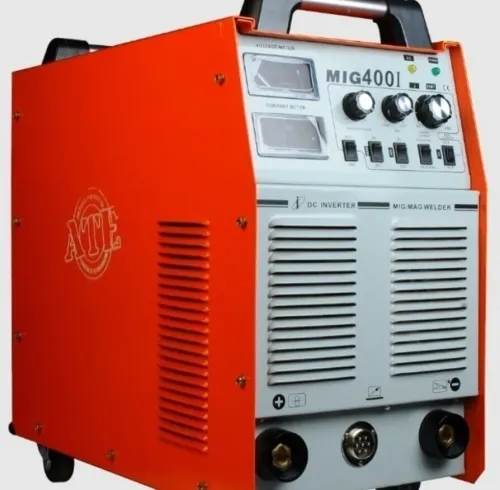
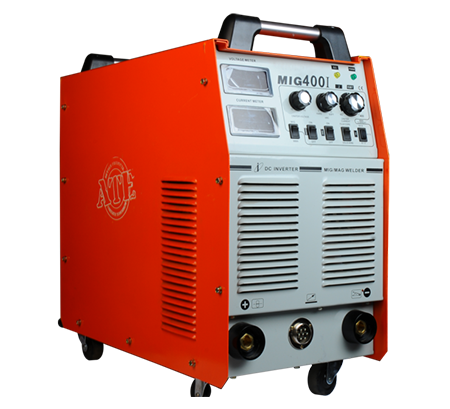 | MIG Welding Machine High-Speed and Versatile Welding Solutions At ATE Welding Engineering & Robotic Automation, we offer advanced MIG (Metal Inert Gas) welding machines... View product → |
Know When You Need an Industrial MIG Welder
A light-fabrication machine stops being suitable when repeated structural welds push it beyond its thermal capacity, arc stability, or control features. Long runs then cause thermal cut-outs, inconsistent penetration, excessive spatter, and lost production time—not merely a slower weld.
Treat these as upgrade triggers:
- You weld beams, columns, equipment supports, brackets, or frames repeatedly under a qualified procedure rather than occasional repair work.
- Multiple crews share the machine and need parameter lockout, password protection, and stored programs so voltage, wire-feed speed, gas, and polarity cannot be changed casually.
- The project requires weld-data logging, calibration or verification records, or evidence that production welds stayed within the approved parameter range.
- The machine’s duty-cycle figure cannot be compared fairly because the supplier does not state welding current, ambient temperature, or test standard. IEC 60974-1 uses a defined cycle at a 40 °C ambient reference.
- The unit nuisance-trips on a site generator or produces an unstable arc through long extension leads. Require permissible input-voltage range, phase, maximum input current, generator compatibility, and recommended cable size.
- Structural work follows AWS D1.1 or an Indian, ISO, or client-specific code. The welder supports the qualified procedure; it does not replace control of consumable classification, preheat, interpass temperature, joint preparation, welder qualification, and inspection.
For an industrial MIG welder in Pune, ask for these controls before buying a MIG welding machine in Pune. They separate production equipment from a light-fabrication tool.
Frequently asked questions
Where does MIG welding fit on a construction site?
MIG suits structural steel connections, gates, railings, frames, brackets, equipment supports, and accessible site-fabricated assemblies when fit-up, cleanliness, and shielding are controlled.
How should contractors match MIG capacity to the job?
Match the machine’s output and duty cycle to the steel thickness, joint design, weld volume, and available site power. Thick, deeply restrained joints may require a procedure beyond the machine’s range.
What should a site-ready MIG welding package include?
Specify the power source together with the torch, wire feeder, shielding-gas equipment, cables, work clamp, consumables, and protection from wind and site contamination.
When do you need an industrial MIG welder?
Choose an industrial MIG welder when the work demands repeated welding, higher duty cycles, stable arc performance, longer operating periods, and dependable output across production shifts.