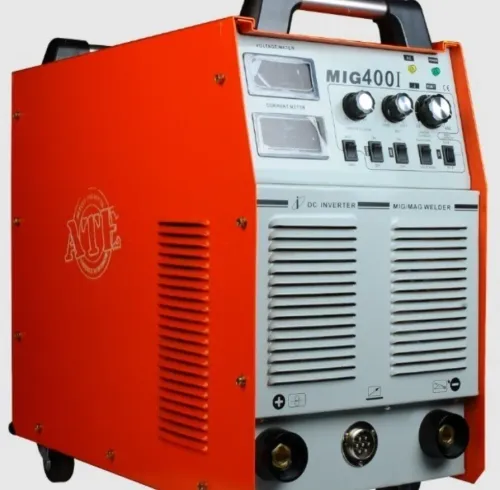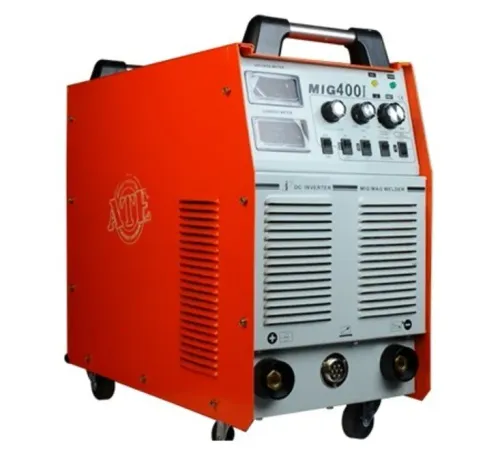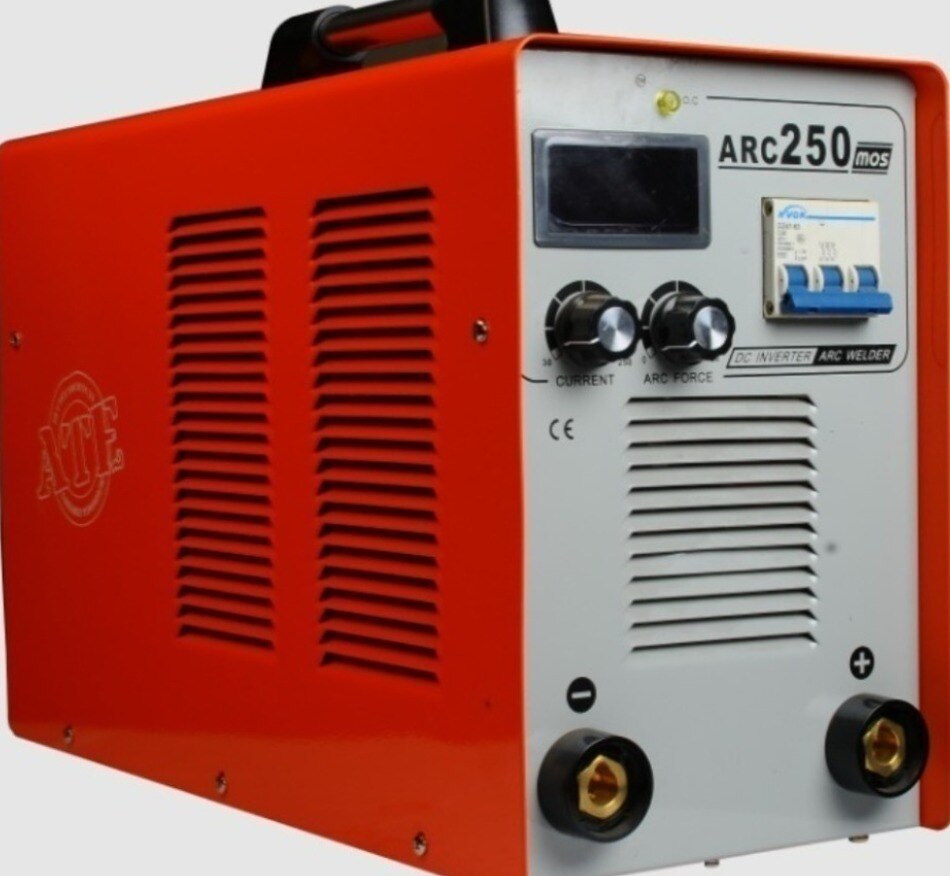
A machine marketed as an argon welder can mean a TIG power source, a multiprocess unit, or even equipment intended for MIG with argon-based shielding gas. By checking the process designation, output at a stated duty cycle, electrical supply, arc controls, gas system, cooling, and automation interfaces, you can determine whether the machine fits your material, production rate, and facility.
Key takeaways
- Ask for ISO 4063 process designation 141 to confirm TIG capability.
- Match DC or AC output to the metals and thicknesses you weld.
- Check duty cycle, input power, torch cooling, and gas-flow controls.
- Confirm communication and safety interfaces before adding a TIG machine to a production cell.
How do you confirm that an argon welder is a TIG machine?
“Argon welder” is a marketing term, not a formal process classification. Ask for ISO 4063 process designation 141, which identifies TIG or GTAW, then confirm constant-current output with stable control at low amperage.
A generic arc welder normally uses a manual stick electrode; a TIG welding machine requires a tungsten torch, shielding-gas connection, and remote current control.
| Process | Electrical output | Identifying equipment |
|---|---|---|
| TIG/GTAW 141 | Constant current (CC) | Tungsten torch and shielding gas |
| MIG/MAG | Constant voltage (CV) | Wire feeder and continuously fed wire |
| FCAW | Constant voltage (CV) | Flux-cored wire feeder |
| Stick/MMA | Constant current (CC) | Manual coated electrode holder |
A flux core welder and a TIG machine remain electrically different even when one package lists MIG, flux core, and TIG. Require separate CC and CV modes; a process-name list alone proves nothing. These distinctions belong in your argon welder specifications.
Check the package for:
- TIG torch, gas solenoid, and regulator suitable for argon
- High-frequency or lift-arc start, with HF availability stated for AC and DC
- Foot pedal or remote current control
- Stable low-current performance and a remote-control connection
A lift-arc start uses controlled tungsten contact, while HF starts without touching the work and reduces contamination. These details separate a usable tig welding machine from a multiprocess unit with a superficial TIG setting.
Which output, duty cycle, and electrical ratings match your work?
Choose current from the material, thickness, joint design, tungsten size, and travel speed, then compare a paired output rating rather than a peak number.
| Rating | What it tells you | Buying implication |
|---|---|---|
| 200 A maximum | Only the highest available current | It does not show usable welding time |
| 200 A at 25 V, 60% duty cycle | Output at a stated voltage and duty cycle | Compare it with your actual working current |
| 60% at 200 A under IEC 60974-1 | Six minutes welding and four minutes cooling in a 10-minute period | Check the stated ambient temperature and input voltage |
Compare duty cycle at your real amperage. Ratings at lower current can be substantially higher, so a machine rated 60% at 200 A may suit intermittent work while failing a long production weld at that setting.
Record these argon welder specifications before comparing prices:
- Single-phase or three-phase supply
- Input voltage, frequency, and maximum input current
- Recommended circuit breaker and plug arrangement
- Output derating on long leads or generator power
For a generator, check continuous—not peak—output and voltage stability. An inverter TIG welding machine weighs less and offers efficient, controllable output, but its electronics demand cleaner power and component-level repairs can be difficult. A transformer machine is heavier and less portable, yet simpler to service and more tolerant of rough shop conditions.
Compare purchase cost with transport, maintenance, and the electrical capacity already available.
Do you need DC TIG, AC TIG, or both?
Buy DC TIG for carbon steel, stainless steel, nickel alloys, titanium, and copper. Buy AC TIG for aluminium and magnesium because its alternating waveform provides electrode-positive cleaning as well as electrode-negative penetration.
For AC, require adjustable frequency and balance. Frequency changes arc width and focus; balance changes the proportion of cleaning versus penetration.
| Start method | How it works | Best fit |
|---|---|---|
| HF start | Initiates the arc without touching tungsten to the work | Precise starts and low contamination |
| Lift-arc start | Uses controlled tungsten contact before arc initiation | Areas where HF emissions could affect sensitive electronics |
AC capability alone does not prove that an argon welder can weld aluminium reliably. Verify controllable waveforms, repeatable starts, suitable torch cooling, programmable crater fill, and a demonstration on your alloy and joint geometry. For robotic work, ask whether HF operates in both AC and DC modes and remains active during remote or automated operation.
Review the adjustment range and timer resolution for:
- Pre-flow, which shields the joint before ignition
- Post-flow, which protects hot tungsten and the crater while they cool
- Upslope, downslope, start current, and end current
- Gas-saver functions that reduce shielding-gas waste
These controls matter most on thin or heat-sensitive parts. A TIG welding machine with a suitable peak current but crude timing can still produce contaminated starts, crater cracks, or overheated edges, so include these controls in your argon welder specifications.
What gas, torch, and cooling specifications protect the weld?
Protect the weld by specifying the gas path and torch as a matched system, not by accepting “argon compatible.” Require a stated composition and purity grade, regulator inlet rating, flowmeter range, hose material, cylinder connection, cylinder pressure, and leak-test provision.
Pure argon is normal for AC TIG and most DC TIG; argon-helium raises arc voltage and heat input, while argon-CO₂ blends for GMAW are not TIG gas.
- State flow in plant units: L/min or cubic feet per hour (CFH), and confirm calibration for argon. Manual TIG often starts at 7–14 L/min (15–30 CFH), but validate the setting against cup size, gas lens, drafts, joint access, and travel speed. Excessive flow creates turbulence and can draw air into the shielding zone.
- Separate pressure from flow: the regulator controls pressure; the flowmeter indicates flow under calibrated conditions. Specify adjustable pre-flow and post-flow ranges and timer resolution, not fixed timers. Pre-flow protects the joint before ignition; post-flow protects the hot tungsten and crater.
- Choose an air-cooled torch for intermittent work. Choose water cooling and a chiller for sustained high current, high ambient temperature, large electrodes, or robotic argon welding equipment. Require chiller cooling capacity, coolant type, reservoir volume, flow alarm, and low- or blocked-flow protection. Record these argon welder specifications before comparing argon welding equipment.
Which specifications matter when the machine joins a production cell?
A production-cell power source needs fast, repeatable control, not merely a high amperage. Review current-control response and arc-length control alongside the output rating: slow correction creates uneven penetration when torch speed or joint position changes.
| Specification | Require | Why it matters |
|---|---|---|
| Communication | Protocol, command and update rate, robot-controller compatibility | A remote socket does not make a manual TIG welding machine robot-ready |
| Process control | Remote current and gas control, arc-on and fault feedback, crater-current sequencing | Missing feedback can leave the robot moving after an extinguished arc |
| Filler integration | Wire-feed synchronisation for hot- or cold-wire systems | Unsynchronised filler interrupts the weld and adds rework |
Check the complete cell, not just the source:
- Verify torch TCP repeatability, collision protection, cable and gas-hose routing, and seam tracking.
- Confirm tungsten loading and access for cup, electrode, and gas-lens changes without dismantling the torch.
- Specify air cooling or a water-cooled torch and chiller according to current, ambient temperature, electrode size, and duty.
- Measure pre-flow, post-flow, arc starts, crater fills, wire interruptions, and between-part cleaning in the cycle-time study.
TIG’s lower deposition rate makes these pauses expensive. Ask for a production trial using your alloy, joint geometry, and target cycle time. Give ATE WELDING ENGINEERING ROBOTICS AND AUTOMATION PRIVATE LIMITED the same written specification: ISO 4063 process 141, current and duty-cycle target, AC or DC, gas flow, cooling, interfaces, and acceptance test.
Compare results, not catalogue labels.
Related product
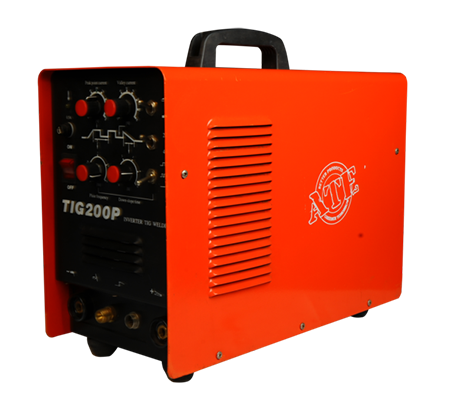 | TIG Welding Machine Precision and High-Quality Welding At ATE Welding Engineering & Robotic Automation, we specialize in TIG (Tungsten Inert Gas) welding machines,... View product → |
Frequently asked questions
How do you confirm that an argon welder is a TIG machine?
Ask for ISO 4063 process designation 141, which identifies TIG or GTAW, and confirm constant-current output with stable low-amperage control.
Which output, duty cycle, and electrical ratings match your work?
Compare the required welding current with the machine’s output range, duty cycle at its stated test current, input voltage, phase, frequency, and maximum input current.
Do you need DC TIG, AC TIG, or both?
Choose DC TIG for steels, stainless steel, copper, and titanium. Choose AC TIG for aluminium and magnesium; select AC/DC when you weld both groups.
What gas, torch, and cooling specifications protect the weld?
Check argon purity, flow adjustment, pre-flow and post-flow, torch current rating, hose connections, and whether air or water cooling suits your amperage and duty cycle.
Which specifications matter when the machine joins a production cell?
Review remote-control options, start and stop signals, alarm outputs, fieldbus or digital communication, repeatable weld programs, safety interlocks, and robot-compatible torch mounting.