An electric welder machine is a power-source category, while a flux core welder identifies a wire-fed process with its own shielding, polarity, slag and maintenance requirements. By comparing FCAW with stick, MIG, TIG and submerged arc welding, you can choose equipment that matches your materials, joint design, production rate and operator workflow.
Key takeaways
- Choose gas-shielded FCAW for cleaner, controlled indoor production welds.
- Choose self-shielded FCAW when wind, mobility or outdoor access rules out shielding gas.
- Check duty cycle, wire-feed speed, deposition rate and arc-on time against output targets.
- Budget for slag removal, fume extraction, wire handling and maintenance—not power alone.
Electric welder machine versus flux core welder: what are you actually comparing?
An electric welder machine describes the power source, not a single welding process. A flux core welder is one type: it supplies arc power and drives a continuously fed tubular electrode.
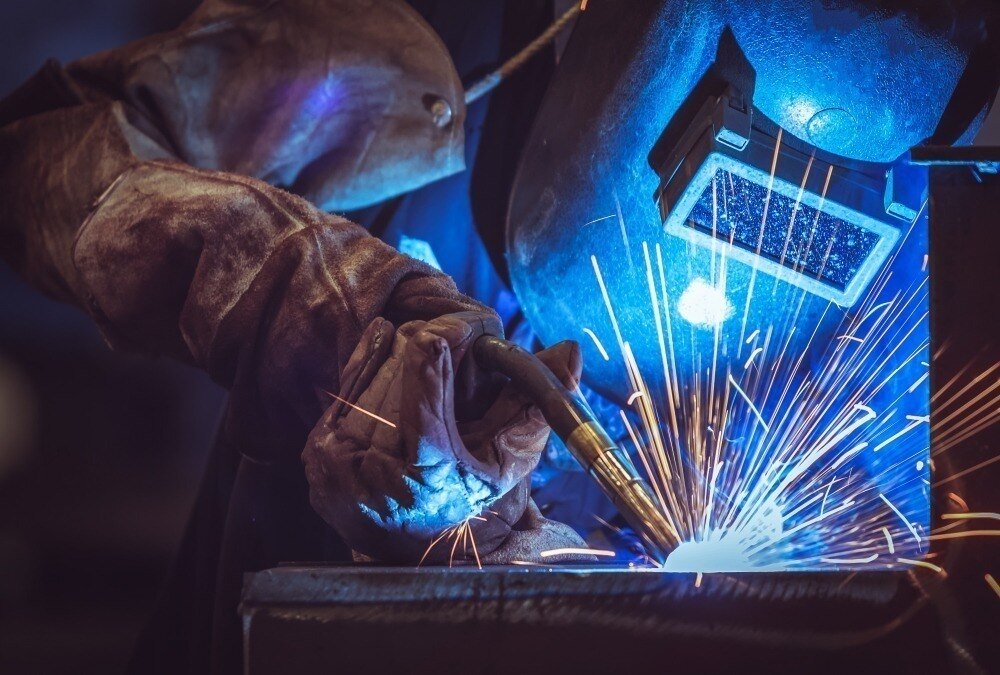
In the flux core welding process, the wire’s hollow core contains flux ingredients. The arc melts both wire and base metal; the flux then produces shielding gases and a solidified slag layer over the weld pool. Remove that slag between passes, or retained material can cause inclusions and lack of fusion.
FCAW is not simply MIG with a different wire: it adds slag, flux-related fumes, wire classifications and interpass cleaning requirements.
| Electric welder machine | What it identifies | What you still need to specify |
|---|---|---|
| Power source | Arc-power equipment | Process, polarity, output and controls |
| Flux core welder | Arc power plus tubular wire feeding | FCAW wire, shielding method and cleaning plan |
| MIG/GMAW system | Arc power plus solid-wire feeding | Gas, solid-wire classification and surface-cleanup limits |
Before comparing machines, identify:
- Base material: carbon steel, low-alloy steel or stainless steel.
- Wire diameter and the applicable filler-metal classification.
- Joint access, root geometry and the number of passes.
- Operation type: manual, mechanised or robotic.
- Required weld position, because the wire and procedure must support it.
A machine that feeds the wrong wire or cannot maintain the required position will not solve a production problem, regardless of its advertised amperage.
When should you choose gas-shielded or self-shielded FCAW?
The decisive choice is whether your cell can protect an external gas stream. Gas-shielded flux-cored welding, or FCAW-G, uses a cylinder supply such as carbon dioxide or an argon-rich mixed gas. It suits an indoor industrial welding machine cell with stable gas flow and low air movement.
| Factor | FCAW-G | FCAW-S |
|---|---|---|
| Wind sensitivity | High; airflow can disrupt shielding | Lower, but strong wind can still affect the arc |
| Fume levels | Usually lower than FCAW-S, depending on wire | Usually higher because the flux generates shielding |
| Portability | Requires cylinder, regulator, hose and gas controls | No cylinder supply; easier to move between sites |
| Gas equipment | Required | Not required |
| Enclosure needs | Use a screened, low-draft cell | Needs less enclosure, but protect the arc in severe wind |
| Cleanup | Remove slag and spatter between passes | Remove slag and spatter; heavier fume can add housekeeping |
Do not raise gas flow blindly when porosity appears. Verify the specified flow with a flowmeter: excessive flow creates turbulence that draws air into the arc, while insufficient flow allows porosity. A flux core welder also needs the correct polarity. FCAW-G wires frequently use direct-current electrode positive; FCAW-S wires can require electrode-negative or electrode-positive operation.
The wire classification, manufacturer procedure data and qualified WPS take precedence over any generic setting. Choose FCAW-S for outdoor fabrication, structural work and mobile repairs where wind or cylinder access makes FCAW-G unreliable; choose FCAW-G for controlled production cells.
How does flux core compare with stick, MIG, TIG and submerged arc welding?
FCAW is the stronger production-line choice when continuous wire feeding, heavier carbon-steel sections and higher deposition matter more than slag removal. A flux core welder feeds tubular wire continuously, unlike the finite rods used by stick welding; an electric welder machine is only the power-source category, not a process.
| Process | Production-line strength | Limitation or best-fit boundary |
|---|---|---|
| SMAW (stick) | Portable, simple and practical for repairs or remote work | Frequent rod changes create stop-start time; FCAW is faster for repetitive fabrication |
| GMAW (MIG) | Solid wire creates less slag and easier cleanup; strong choice for thin sheet and clean indoor cells | FCAW suits heavier carbon-steel sections, higher deposition or positional support |
| GTAW (TIG) | Superior arc control and weld appearance for precision work | Much lower deposition and slower travel; poor choice for high-volume structural production |
| SAW | Very high deposition on long, accessible, mostly flat welds | Limited joint access and positions; FCAW handles varied fabrication more flexibly |
The flux core welding process suits carbon steel, low-alloy steel, structural work, heavy sections and outdoor fabrication when the selected wire and qualified WPS permit it. FCAW is a poor first choice for thin sheet, aluminium, highly visible cosmetic welds or precision work.
On a robotic line, it works best with controlled fit-up, torch angle, stickout, travel speed and part presentation; slag and spatter still add cleanup and maintenance that clean GMAW can avoid.
Which specifications determine whether an FCAW line can meet its output target?
An FCAW line meets its output target only when the complete welding cycle, not the advertised amperage, matches the part and takt time. Define the joint before choosing an electric welder machine or flux core welder.
Specify:
- Base material and thickness, joint design, root opening, weld position, torch access, required appearance and number of passes.
- Wire classification and diameter, wire-feed-speed range, amperage range, voltage range and contact-tip-to-work distance.
- Travel speed, shielding-gas composition and flow rate, including gas-shielded or self-shielded operation.
- Output at the intended duty cycle, input voltage and phase, feeder and torch ratings, polarity capability, cooling method, robot or remote interface and service access.
Deposition rate alone does not equal finished-part output. Slag removal, fit-up, repositioning and defect repair consume production time.
| Measure | What to specify | What goes wrong if ignored |
|---|---|---|
| Deposition rate | Usable rate for the actual wire, position and passes | High wire output still produces low completed-part output |
| Duty cycle | Rated output on the ten-minute basis | A 60% rating means six minutes welding followed by four minutes cooling; it does not mean continuous welding at 60% of maximum current |
| Thermal protection | Recovery time after overload | The machine stops or limits output until components cool, interrupting takt time |
| Machine capacity | Sustained output, not maximum amperage alone | The industrial welding machine reaches nominal current but cannot maintain the schedule |
A qualified WPS must confirm the final settings. A flux core welder that lacks the required feeder, polarity or cooling capacity is the wrong production platform.
What will FCAW cost your line in setup, cleanup and maintenance?
FCAW costs more than arc time: it adds setup checks, slag removal, fume control and consumable maintenance after installation. A flux core welder needs the correct wire classification and diameter, liner, polarity, voltage, wire-feed speed, gas flow where applicable and qualified WPS verification.
Gas-shielded FCAW adds cylinders, regulators and a draft-controlled enclosure; self-shielded FCAW removes cylinders but increases cleanup and fume demands.
| Process | Routine workload | Main interruption |
|---|---|---|
| FCAW | Load tubular wire, select liner, check polarity and WPS, remove slag after every pass, brush spatter and inspect tips | Wire changes, bird-nesting, liner wear and spool handling |
| Solid-wire MIG | Load wire, set gas and polarity, verify WPS, clean spatter and replace tips | Gas faults, contact-tip wear and occasional liner problems |
| Stick | Open and store electrodes, set polarity and WPS, change rods frequently, chip and brush slag | Electrode changes and short weld lengths |
FCAW replaces many stick-electrode changes with longer wire runs, but every pass can require chipping, brushing or mechanical slag removal. Flux consumption can increase fume; stainless or alloyed wires require exposure planning for hexavalent chromium and nickel compounds, with local exhaust ventilation and respiratory controls specified separately.
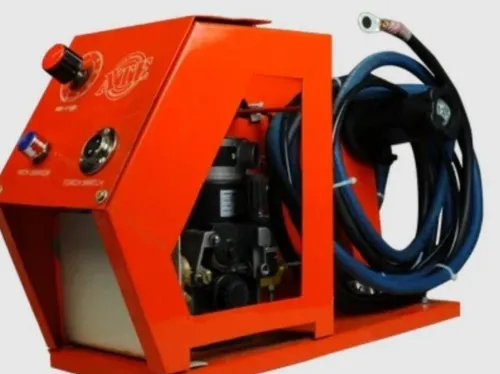
Robotic FCAW needs controlled fit-up, torch angle, stickout, travel speed and part presentation, plus a defined slag-removal strategy. A robot cannot remove slag trapped in an inaccessible joint. Evaluate ATE WELDING ENGINEERING ROBOTICS AND AUTOMATION PRIVATE LIMITED on feeder, torch, automation interface, duty cycle and serviceability—not advertised amperage.
Choose FCAW when deposition and material fit outweigh these burdens; choose MIG, stick, TIG or SAW when cleaner workflow, portability, precision or long-weld productivity wins.
Related products
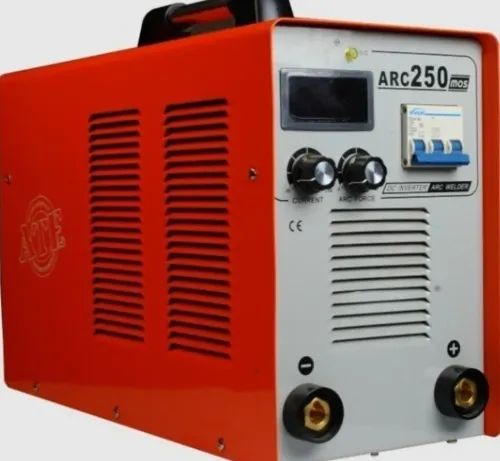
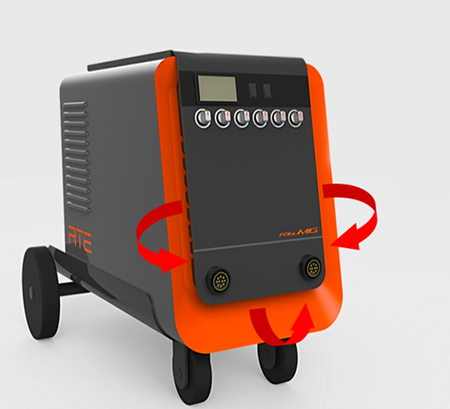 | ARC Welding Machine Precision, Efficiency, and Reliability At ATE Welding Engineering & Robotic Automation, we provide high-performance ARC welding machines designed for... View product → |
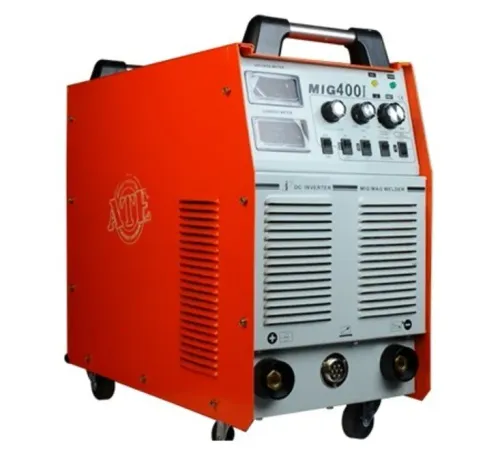
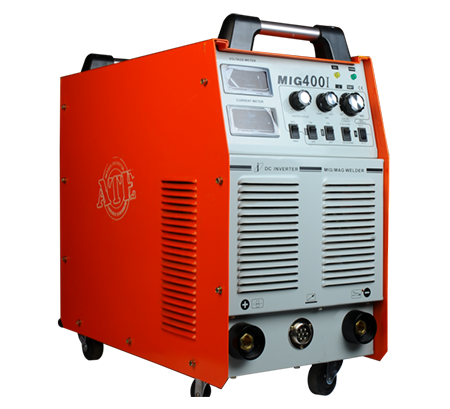 | MIG Welding Machine High-Speed and Versatile Welding Solutions At ATE Welding Engineering & Robotic Automation, we offer advanced MIG (Metal Inert Gas) welding machines... View product → |
Frequently asked questions
Is a flux core welder different from an electric welder machine?
An electric welder machine describes the power source, while a flux core welder combines arc power with continuous tubular-wire feeding for FCAW.
When should you choose gas-shielded or self-shielded FCAW?
Choose gas-shielded FCAW for controlled indoor work where cleaner welds and higher productivity matter. Choose self-shielded FCAW for outdoor, windy or highly mobile work where shielding gas is impractical.
How does flux core welding compare with stick, MIG, TIG and submerged arc welding?
FCAW offers continuous wire feeding and high deposition, while stick suits repair work, MIG produces cleaner wire-fed welds, TIG prioritises control, and submerged arc suits large, accessible joints.
Which specifications determine whether an FCAW line meets its output target?
Compare duty cycle, rated current, wire-feed speed, deposition rate, wire diameter, arc-on time, travel speed and automation compatibility with the required weld volume.
What does FCAW cost beyond the welding machine?
Include shielding gas where required, flux-cored wire, slag removal, fume extraction, spatter cleanup, contact tips, liners, rollers, torch maintenance and operator time.