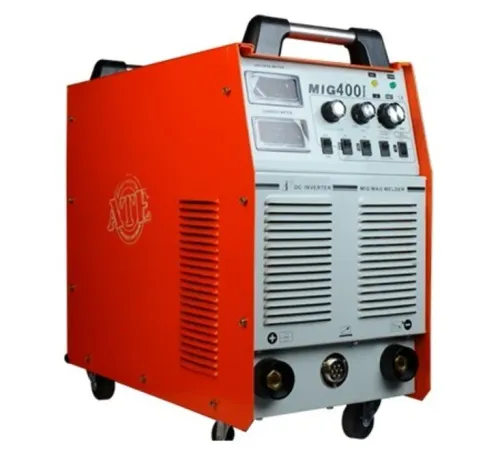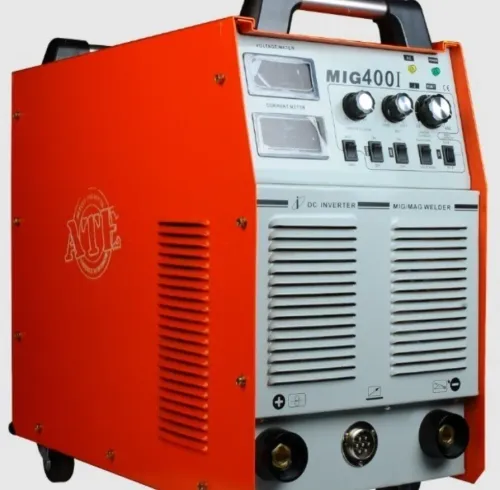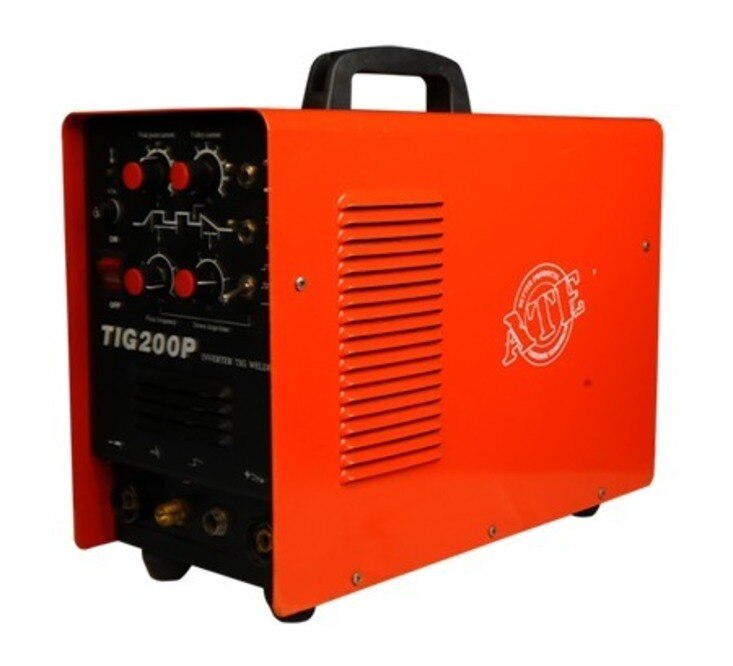
Condensation, airborne contamination and unstable shielding can turn a suitable TIG joint into a porous or distorted automotive part during Pune’s monsoon. You will be able to match TIG with the right component and production volume, compare it with faster alternatives, and set up a dry, repeatable welding process for wet-season shifts.
Key takeaways
- Use TIG for thin, leak-tight stainless-steel and aluminium automotive parts.
- Choose MIG, flux-cored or resistance welding when speed and deposition outweigh finish.
- Keep joints, tungsten and shielding-gas equipment dry during Pune’s monsoon.
- Specify automated TIG checks for current, gas flow, penetration and weld continuity.
Which automotive parts justify TIG during Pune production
TIG earns its place on automotive parts that demand a clean, controlled weld rather than maximum deposition: stainless-steel exhaust components, thin-wall tubes, aluminium tanks, sensor housings, fuel-system parts, brackets and short chassis subassemblies. These are practical tig welding applications when appearance, leak tightness and low spatter matter.
Choose TIG when the joint has these conditions:
- Thin stainless steel or aluminium that could burn through or distort under higher heat input.
- Short seams, tube-to-flange joints, tight corners or visible welds where spatter cleanup would add labour.
- Prototypes, repair work and low-volume variants where programming a faster process would not repay its setup time.
- Aluminium assemblies requiring oxide removal and controlled alternating-current heat input.
- Joints with limited access where a small torch and precise filler placement can reach the weld without disturbing nearby surfaces.
For tig for welder applications automotive monsoon in pune, do not start with process choice alone. Dry the workpiece, fixture, torch hardware and filler wire, then confirm the joint is above the local dew point; condensation can cause porosity, unstable arc starts and hydrogen-related cracking or corrosion.
| Part or joint | Why TIG fits | When another process wins |
|---|---|---|
| Thin aluminium tank seam | Controlled heat and clean, leak-tight bead | MIG or laser for long, repetitive seams |
| Stainless exhaust tube | Low spatter and strong cosmetic control | MIG for higher-volume production |
| Galvanized body panel | Usually a poor TIG target | Resistance spot or laser welding |
| Short chassis repair | Precise access and minimal cleanup | MIG for long, structural welds |
TIG versus MIG, flux-cored and resistance welding on the line
TIG outperforms when thin stainless steel or aluminium demands precise heat input, clean appearance, low spatter and controlled distortion; faster processes win on long seams, high volumes and repetitive body-in-white joints.
| Process | Strength | Production trade-off | Best automotive fit |
|---|---|---|---|
| TIG | Precise penetration, minimal spatter and excellent appearance | Low deposition rate; high operator skill and shielding-gas control | Exhausts, thin-wall tubes, brackets, tanks and prototypes |
| MIG | Higher deposition and faster travel than TIG | More spatter and less control on very thin material | Medium-length steel or aluminium production seams |
| FCAW | High deposition, strong penetration and better tolerance of some outdoor conditions | Slag removal, smoke, spatter, porosity risk and a larger heat-affected zone | Thick structural parts and less cosmetic assemblies |
| Resistance | Extremely fast, repeatable spot joining without filler wire | Requires access from both sides and dedicated tooling | Galvanized body panels and high-volume body-in-white lines |
A flux core welder automotive cell suits thick brackets or structural components when output matters more than a bright, clean surface. Gas-shielded wire still needs protection from monsoon drafts; self-shielded wire avoids the external gas envelope but creates more smoke, slag and spatter.
Choose MIG or FCAW when joint length and deposition rate dominate the decision. Choose resistance welding for overlapping sheet joints with two-sided electrode access. Use TIG when a visible seam, thin section or heat-sensitive assembly makes rework more expensive than slower deposition.
Do not treat low visible TIG fume as permission to skip controls. Clean galvanized, painted or solvent-contaminated parts, provide local exhaust, and select fume protection for the coating and alloy.
Monsoon controls for dry joints and stable shielding gas
Measure the workpiece and surrounding air before striking the arc. Start only when the joint is visibly dry and the metal is above the measured dew point; welding over condensation invites porosity, hydrogen-related defects, unstable arc starts and later corrosion.
- Store filler wire in a covered, heated cabinet and keep opened packs off the floor. A dry booth cannot remove moisture already absorbed by consumables.
- Keep cold parts, fixtures, torch hardware and gas fittings in a dry staging area until condensation has disappeared.
- Seal the booth against doors, fans and extraction currents. A draft can pull air into the shielding envelope, while extraction placed too close to the arc can strip gas coverage.
- Check the regulator, hose, torch and fittings for leaks with an approved leak-detection method before raising flow. Excessive flow creates turbulence and entrains air, so eliminate the leak or draft first.
- Keep the TIG welder in Pune on a dry, level floor; route leads away from standing water, inspect insulation and connectors, verify protective earthing and use site-approved residual-current protection.
- Record gas pre-flow, post-flow, torch-to-work distance, arc length and travel speed in the weld program. Repeatability fails when operators compensate for wet hardware or changing joint fit-up by altering gas flow.
Use pulsed current, tight fit-up and controlled travel speed on thin sheet. Reducing shielding flow to prevent burn-through is the wrong fix: excessive current or slow travel causes distortion, while poor coverage causes contamination. Stop production if water reaches the work area.
Tungsten, aluminium and automated TIG quality checks
A contaminated tungsten destabilises the arc, causes erratic starts and can leave inclusions in the weld. Stop the cell, remove the electrode, grind it to the specified tip geometry, and reinstall it with clean gloves; never let tungsten touch the molten pool or filler wire.
Aluminium needs oxide control because its oxide film melts far above the base metal. Degrease the joint, use a stainless-steel brush reserved only for aluminium, and set AC cleaning action carefully. Excessive cleaning reduces penetration and overheats the tungsten. Control interpass timing so moisture and heat do not accumulate between passes.
Lock these variables into the robot recipe rather than relying on path coordinates alone:
- Torch-to-work distance and torch angle
- Electrode diameter, extension and tip geometry
- Arc-start current, pre-flow and post-flow times
- Wire-feed timing and filler-wire position
- Joint gap, fixture location and workpiece presentation
- Electrical contact, arc voltage and travel speed
Use automated TIG welding applications with parameter logging and a weld monitor that flags gas-flow loss, arc-voltage drift, wire-feed interruption and torch-position error. A camera can check bead continuity and profile, but it cannot prove internal fusion.
Inspection should combine methods:
| Method | Detects | Use |
|---|---|---|
| Visual or camera check | Undercut, porosity, profile defects | Every weld |
| Parameter trace | Arc, gas and travel deviations | Every cycle |
| Macro sample or section | Fusion and penetration | Scheduled validation |
| Leak or pressure test | Through-wall defects | Tanks and sealed assemblies |
Keep local exhaust running for stainless, nickel, galvanized or solvent-contaminated parts; low visible fume does not mean clean air.
How to specify an automotive TIG system for Pune conditions
Specify the system against Pune’s monsoon conditions, not only its amperage. An automotive welding machine in Pune must have a documented operating humidity range, enclosure protection rating, and cooling design for the duty cycle; otherwise condensation or overheating can turn a sound process into arc-start failures and downtime.
| Requirement | What to verify before purchase | Failure if missed |
|---|---|---|
| Machine | TIG output range, AC balance and frequency for aluminium, pulse control, remote or robot interface, and duty cycle at the required current | Poor oxide control, overheating, or insufficient penetration |
| Enclosure | Stated IP protection, sealed controls, protected connectors, and a cabinet location away from floor splash | Moisture reaches boards, switches, and cable connections |
| Cooling | Air- or water-cooled torch capacity, chiller alarm, coolant specification, and heat-rejection capacity | Torch damage, unstable operation, or unplanned stops |
| Electrical | Input-voltage tolerance, phase requirements, earthing, surge protection, and generator compatibility if backup power is used | Arc instability or electronic failure during voltage variation |
| Ancillary air | Dry compressed air for pneumatic fixtures, wire equipment, or cabinet purging; confirm filtration and drainage | Water enters valves and contaminates the work area |
| Consumables | Local supply of torches, ceramic cups, collets, tungsten, filler wire, regulators, hoses, and fittings | A low-cost stoppage becomes a multi-day wait |
Ask ATE WELDING ENGINEERING ROBOTICS AND AUTOMATION PRIVATE LIMITED to document these interfaces when comparing a TIG welder in Pune. Require local circuit-board service, preventive-maintenance response times, and a spares list.
Verify that operators can keep filler wire and torch hardware dry, and that the supplier supports the exact robot or fixture configuration you will run.
Related product
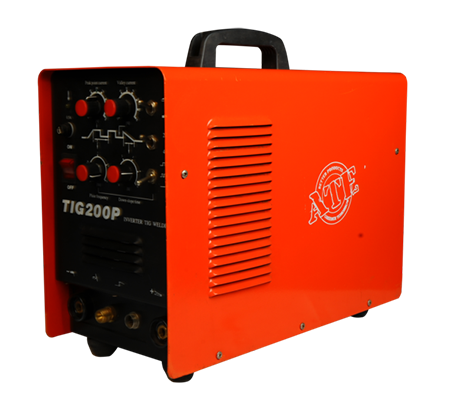 | TIG Welding Machine Precision and High-Quality Welding At ATE Welding Engineering & Robotic Automation, we specialize in TIG (Tungsten Inert Gas) welding machines,... View product → |
Frequently asked questions
Which automotive parts justify TIG welding in Pune production?
TIG suits stainless-steel exhaust components, thin-wall tubes, aluminium tanks, sensor housings, fuel-system parts, brackets and short chassis subassemblies where clean, low-spatter, leak-tight welds matter.
How does TIG compare with MIG, flux-cored and resistance welding?
TIG provides precise, clean welds at lower deposition rates. MIG and flux-cored welding support faster deposition, while resistance welding suits overlapping sheet-metal joints and high-volume repeat cycles.
How do you control TIG welding during Pune’s monsoon?
Store filler metal and tungsten dry, remove condensation from joints, protect the weld zone from drafts, and verify stable shielding-gas flow before production.
What quality checks belong on an automated automotive TIG system?
Check tungsten condition, welding current, travel speed, shielding-gas flow, arc stability, weld continuity and penetration using process monitoring and inspection records.
How do you specify an automotive TIG system for Pune conditions?
Define the metals, thicknesses, joint designs, production rate, allowable spatter, automation interface, gas monitoring, moisture controls and required inspection records before selecting equipment.